Thin Harness, Fat Skills · article
- Source
- x.com
- Author
- Garry TanTop Viber
- Date

Context
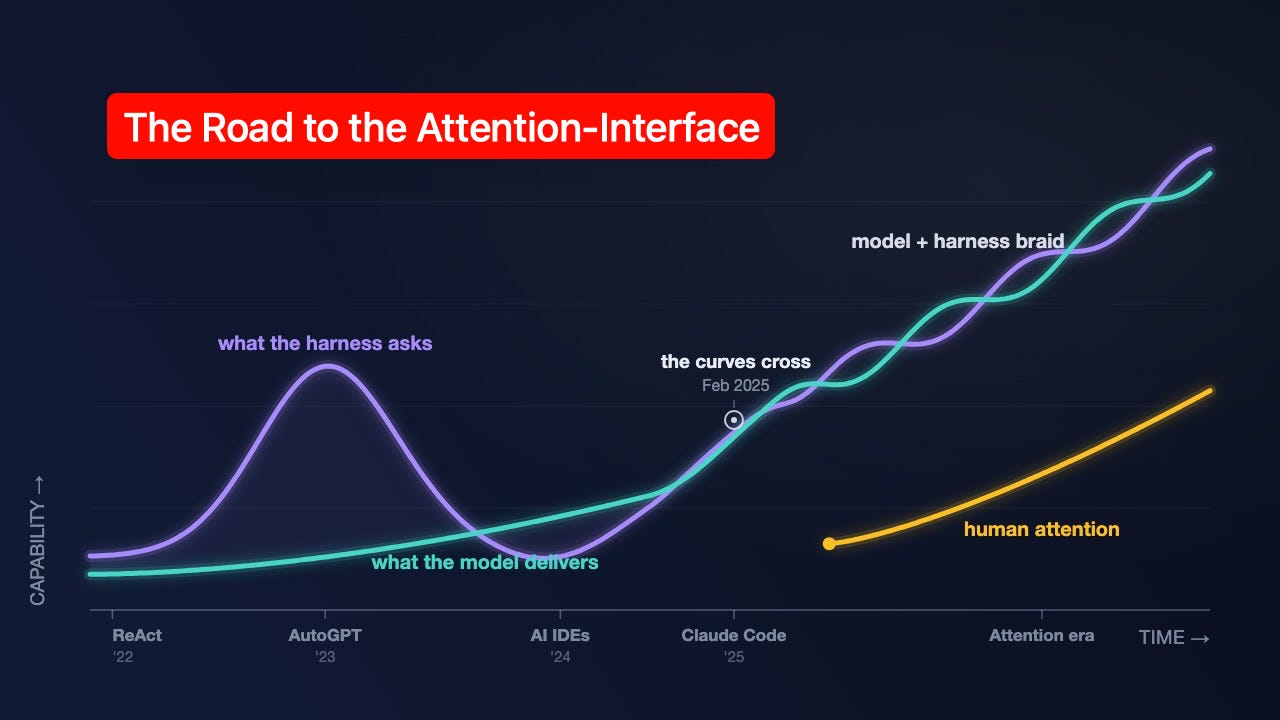
Garry Tan proposes putting reusable working procedures in files: plain-text instructions describing how to perform a task. The , the program running the AI agent, handles the model loop, files, and safety checks. Task-specific routing loads the relevant instructions when needed, keeping unrelated material out of the model's working context. This is the core of Tan's thin-harness proposal.
Tan's investigation example makes the division concrete: the same procedure can examine different subjects by changing the question and dataset. Database queries and calculations remain in conventional software; the model interprets the retrieved evidence. The proposed benefit is a reusable process whose judgment steps and executable operations can be improved separately.
- The 2x people and the 100x people run the same models. The gap is architecture around the model, not intelligence inside it — better context at the right moment, not more parameters.
- A thin harness does exactly four things: run the model in a loop, read and write your files, manage context, and enforce safety. Anything else you were about to put in it belongs in a skill instead.
- The fat-harness cost is concrete: 40+ tool definitions eating half the context window and multi-second MCP round-trips add up to roughly three times the tokens, three times the latency, and three times the failure rate.
- Narrow beats general in tooling. A purpose-built Playwright CLI at ~100ms per browser operation replaces a Chrome MCP that needs ~15 seconds for screenshot-find-click-wait-read — about 75x, for software cheap enough to build for one job.
- The author's CLAUDE.md hit 20,000 lines and the model's degraded until Claude Code told him to cut it. The fix was ~200 lines of pointers, with the resolver pulling the right document in only when it matters.
- agent skill — A reusable instruction file that teaches an agent how to do one job well — the procedure, the tools, and what counts as done.
- agent harness — The scaffolding around a model that turns it into a working agent — the loop, the tools it can call, and the rules for when to stop.
- context window — The maximum amount of text a model can consider at once — its working memory for the current conversation or task.
- attention — The mechanism that lets a model weigh which earlier words matter for the word it's currently processing — the core operation of a transformer.
“The 2x people and the 100x people are using the same models. The difference isn't intelligence. It's architecture — and it fits on an index card.”
“On March 31, 2026, Anthropic accidentally shipped the entire source code for Claude Code to the npm registry. 512,000 lines.”
“This is not prompt engineering. This is software design, using markdown as the programming language and human judgment as the runtime.”
“A confession: my CLAUDE.md was 20,000 lines. Every quirk, every pattern, every lesson I'd ever encountered. Completely ridiculous.”




Checking sign-in…
Loading comments…