Why Reliable AI Needs to Represent Its Own Doubt
- Source
- video.twimg.com
- Publisher
- Google DeepMind
- Author
- Google DeepMind
- Date
Context
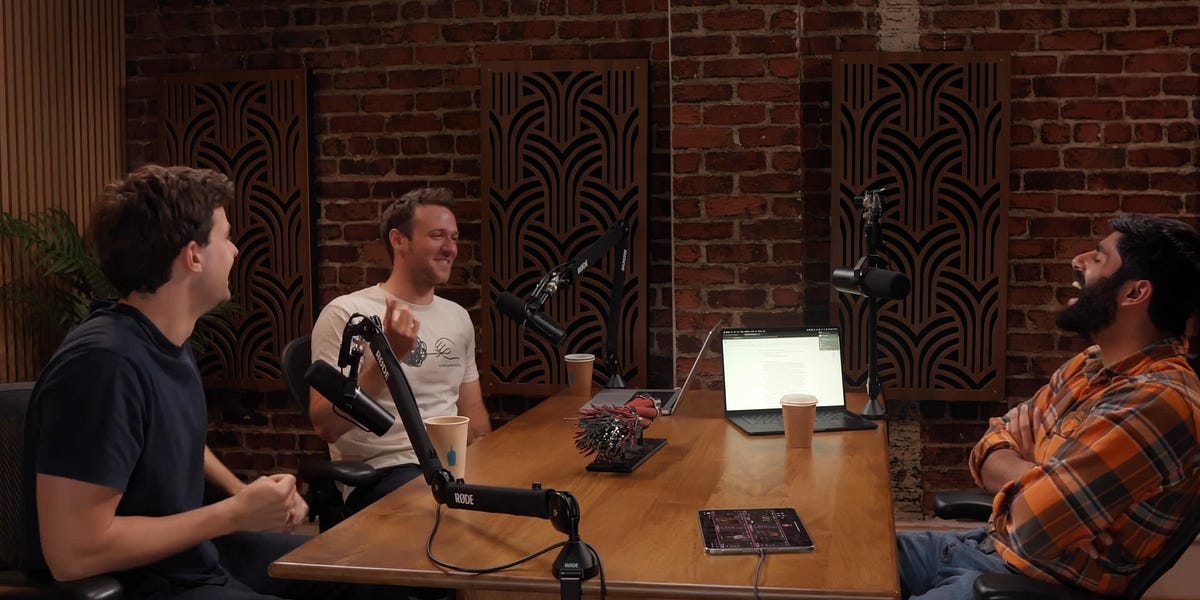
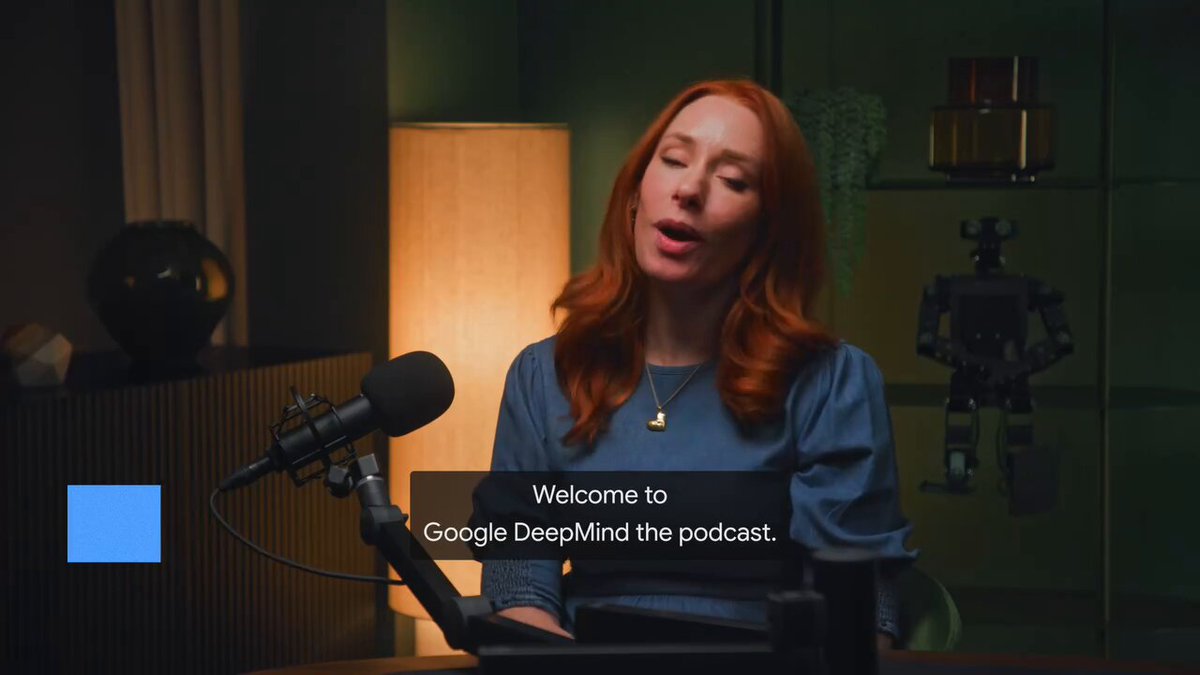
Zoubin Ghahramani, a Cambridge professor and vice president of research at Google DeepMind, argues in this episode of the lab's podcast that today's language models cannot tell you how much they believe what they say, and that fixing this is a design problem rather than something more data will solve (Google DeepMind on X). His starting point is decision-making: any system acting in the real world has limited perception, so it needs to represent its uncertainty, update it as evidence arrives, and act on it. He separates two kinds. Some uncertainty is plain randomness, like which way a pedestrian will turn, where the sensible move may be to stop trying to predict. Other uncertainty comes from the system's own ignorance, like a self-driving car meeting a horse in a hailstorm it was never trained on, where the right response is to slow down or gather more information.
Being correct and being confident are different measurements, and Ghahramani says current models blur them. He recalls the adversarial-example finding from more than a decade ago: change a few pixels of a school bus photo and an image classifier calls it a cheetah with 99% confidence. Large language models do compute probabilities, but only over the next word. Ask one how confident it is and the answer is more next-word prediction, which he calls faking it; push back and it may simply apologize and switch answers. He attributes this to training that rewards modeling text written by many people with conflicting beliefs, producing what he calls a soup. is a symptom, not the whole problem, since a request for fiction should get invented content. What he wants is a system that can attach a belief estimate to any statement, and he says plainly that it does not exist yet.
One existing approach reads confidence off the 's internals. Before each word, a model holds a probability distribution over candidates; a sharply peaked distribution suggests certainty and a spread-out one suggests doubt. Ghahramani describes this, but objects that it still depends on how often things co-occurred in training data, like a calculator that learned arithmetic only from examples. A recent paper shows both the promise and the limit: it trained small open models to decline answering when their own confidence was low, performed about as well as training with correctness labels on short factual questions, and could not catch facts a model gets wrong with high confidence (related Intel). The principled alternative is Bayesian updating: start with prior beliefs, weigh each new piece of evidence by how likely it is under each possibility, and carry the result forward as the next prior. He says this was abandoned because representing probabilities over everything was computationally intractable, and that he is exploring ways to revisit it, though the ideas are not yet well formed.
Weather forecasting is his example of the approach already working. He says DeepMind's GenCast forecasts 15 days ahead in about eight minutes instead of hours on a supercomputer, and that a key ingredient is producing an ensemble of possible forecasts, such as many candidate tracks for Hurricane Melissa, which is then updated as new observations arrive. Admitting uncertainty there made the predictions more accurate, because the model is honest about chaotic weather and sparse sensors. The transcript available here stops about 30 minutes into the episode, so the rest of its real-world uncertainty discussion and the closing chapter on future research and AGI were not reviewed, and nothing in the covered portion reports a measured result for language models.
- Training — The process that adjusts a model using examples and a measure of how well it performs.
- Hallucination — Generated content that is false or unsupported, even when it sounds plausible.
- Model — A computational system that uses learned patterns to produce an output from information supplied to it.
- calibration — How well a model's confidence matches reality — a calibrated model saying "90% sure" is right about 90% of the time.