Thariq's deep dive: how effort levels shape Claude Code's behavior
Source
Thariq
Author
Thariq
Date
Key takeaways · AI-distilled
Thariq finds that raising effort mostly buys verification: across Terminal-Bench 3.0 results, more effort tended to cut failures from missed edge cases but did not fix runs where the model took the wrong approach.
On the html-js-filter sanitizer task, Fable 5.1 went from 1/5 at low to 5/5 at xhigh. Low runs took about 2 minutes and tested one page; the traced high run took about 33 minutes and added an XSS suite and a fuzzer.
His suggested feature loop: have Claude interview you on a spec, implement and iterate on low effort, review the gist, then run verification and testing on high effort.
With a detailed interview-derived spec, models and effort levels produced similar builds. On an underspecified prompt, higher effort built far more and made more product choices on the user's behalf.
His rule of thumb: low for brainstorming and easy edits, medium for most feature work, high for brownfield bug fixes and edge-case-heavy work, max for fully autonomous build-and-verify or security hunting.
Terms in this piece · Glossary
benchmark — A standard public test set for comparing AI models — the shared scoreboards behind every "model X beats model Y" claim.
Why it matters
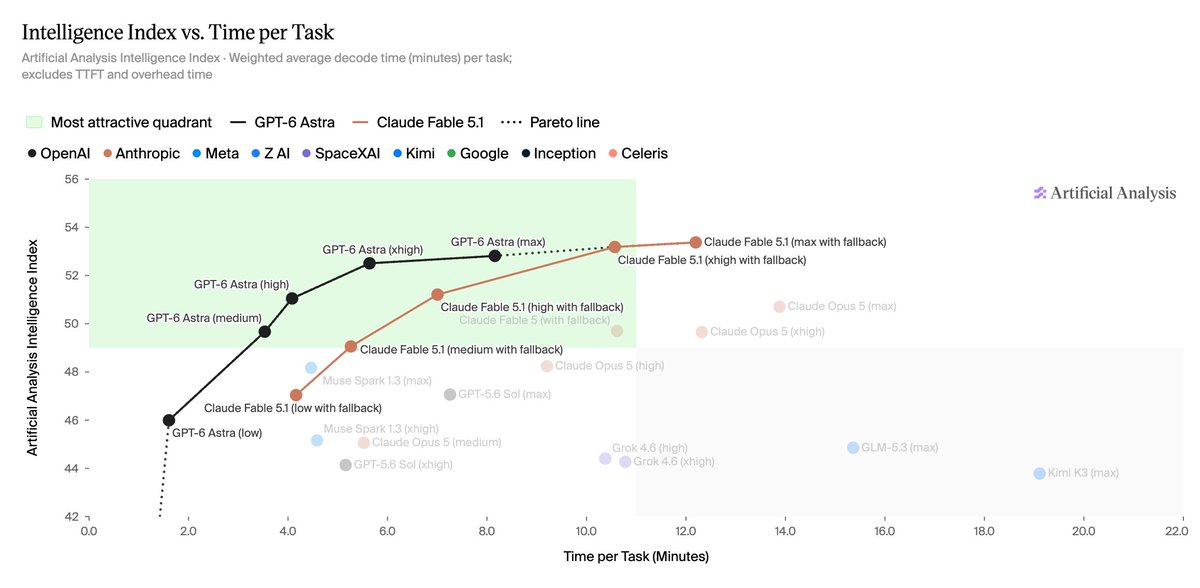
Explains that effort mainly controls verification and edge-case testing rather than raw capability, with benchmarkA standard public test set for comparing AI models — the shared scoreboards behind every "model X beats model Y" claim.Full definition → data showing where higher effort helps versus wastes cost.