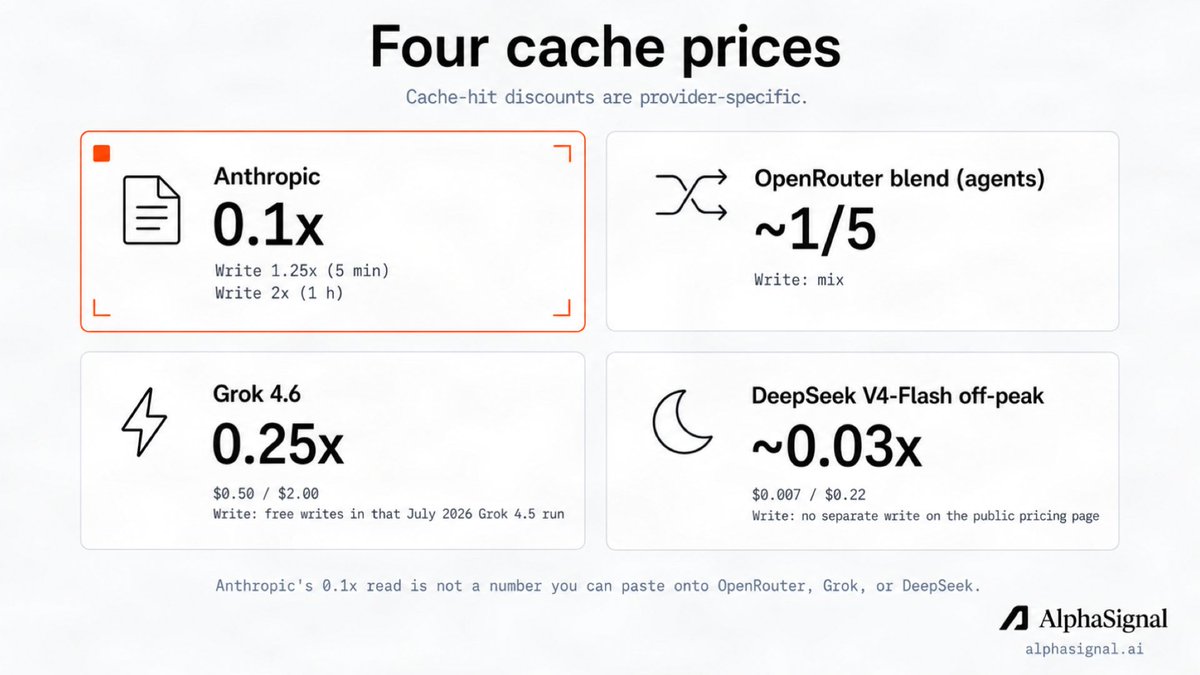
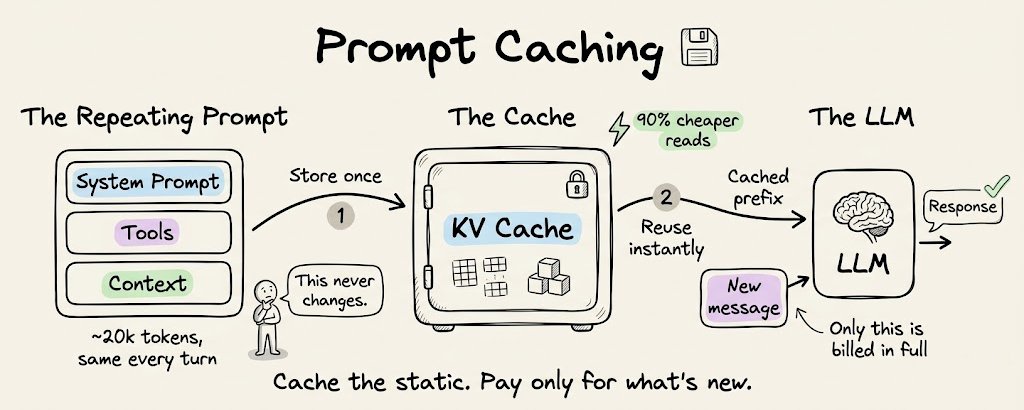
OpenRouter'scaching guide explains why repeating the same prompt does not necessarily produce a cache saving: the next request may reach a different provider that lacks the stored content. Sticky routing tries to send subsequent requests back to the provider that holds it.
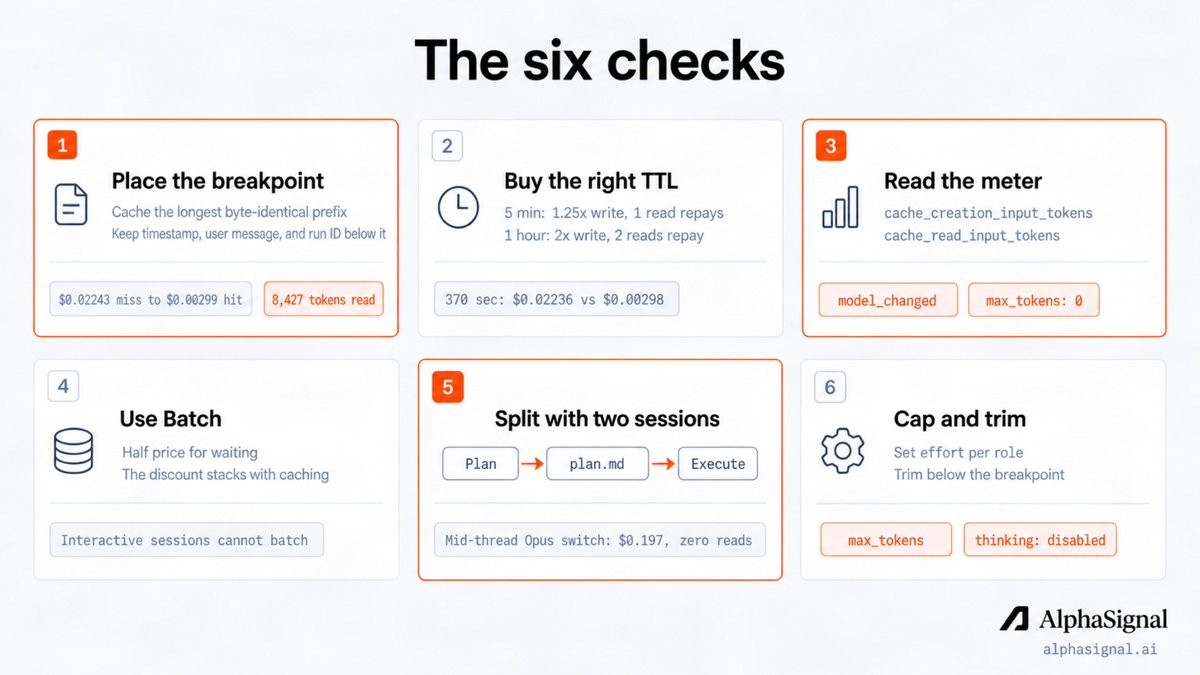
A stable session_id identifies the conversation even when an AI agentAn AI system that doesn't just answer once but works toward a goal in a loop — taking actions, reading the results, and deciding what to do next.Full definition → rewrites its opening messages. With that identifier, routing becomes sticky after the first successful request. The reusable prompt content must still satisfy the provider's caching requirements and remain available before expiry. The cached_tokenThe chunk of text a model reads and writes in — roughly three-quarters of a word — and the unit AI usage is billed in.Full definition → usage field shows whether reuse actually occurred; keeping requests together is only one part of making caching work.
Terms in this piece · Glossary
AI agent — An AI system that doesn't just answer once but works toward a goal in a loop — taking actions, reading the results, and deciding what to do next.
token — The chunk of text a model reads and writes in — roughly three-quarters of a word — and the unit AI usage is billed in.
prompt caching — Reusing the model's processed form of a repeated prompt prefix so subsequent calls skip re-reading it, cutting cost and latency substantially.