Tuhin Srivastava (Baseten) on Production Inference Economics
- Source
- youtube.com
- Author
- Stanford Online
- Date
Context
Baseten, a platform for running AI models, describes specialization as a process that starts with the customer's definition of a good result. In its founder's account, customers provide data, choose a base model and specify what training should optimize. Baseten supplies the training infrastructure and connects the resulting model to production serving.
The customer's contribution is knowledge of its product and users: the platform cannot decide which errors matter most. A menu-extraction case study from a different company's founder illustrates how business-specific corrections can become a training objective.
- inference — Running a trained model to get answers — the phase where AI is actually used, as opposed to trained.
“there's language models, there's audio models, there's um there's actually I think three or four language models in the middle there and two audio models to make that happen and all of them run on base 10.”
Stanford Online
“Um and today about 90% or 95% of spend on inference is going to frontier models and about 5% is going to custom models”
Stanford Online
“open source models about 90 90 days behind um Frontier models and you can run them about 70 to 70 to 90% cheaper.”
Stanford Online
“the leading coding companies that are not the frontier model companies themselves are, you know, still rumored to be negative gross margin and so I imagine is existential for them to to to be a viable business”
Stanford Online
“we put out a post yesterday about the world of many models. We think intelligence shouldn't be owned by two people.”
Stanford Online
 videoStanford Webinar - Building Trustworthy AI: Navigating Security in the Agentic Era
 videoStanford CS547 HCI Seminar | Autumn 2025 | HCI Systems in the Age of AI Code Generation
 videoStanford CS25: Transformers United V6 I Advancing Science and Medicine with Collaborative AI Agents
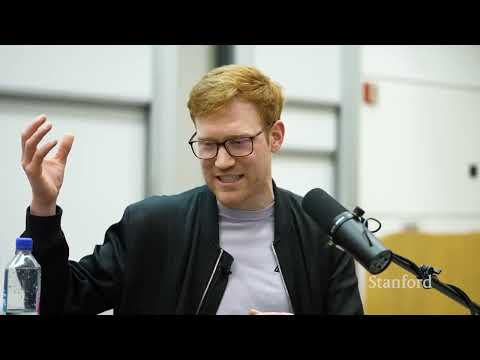 videoStanford CS153 Frontier Systems | Andreas Blattmann from Black Forest Labs on Visual Intelligence
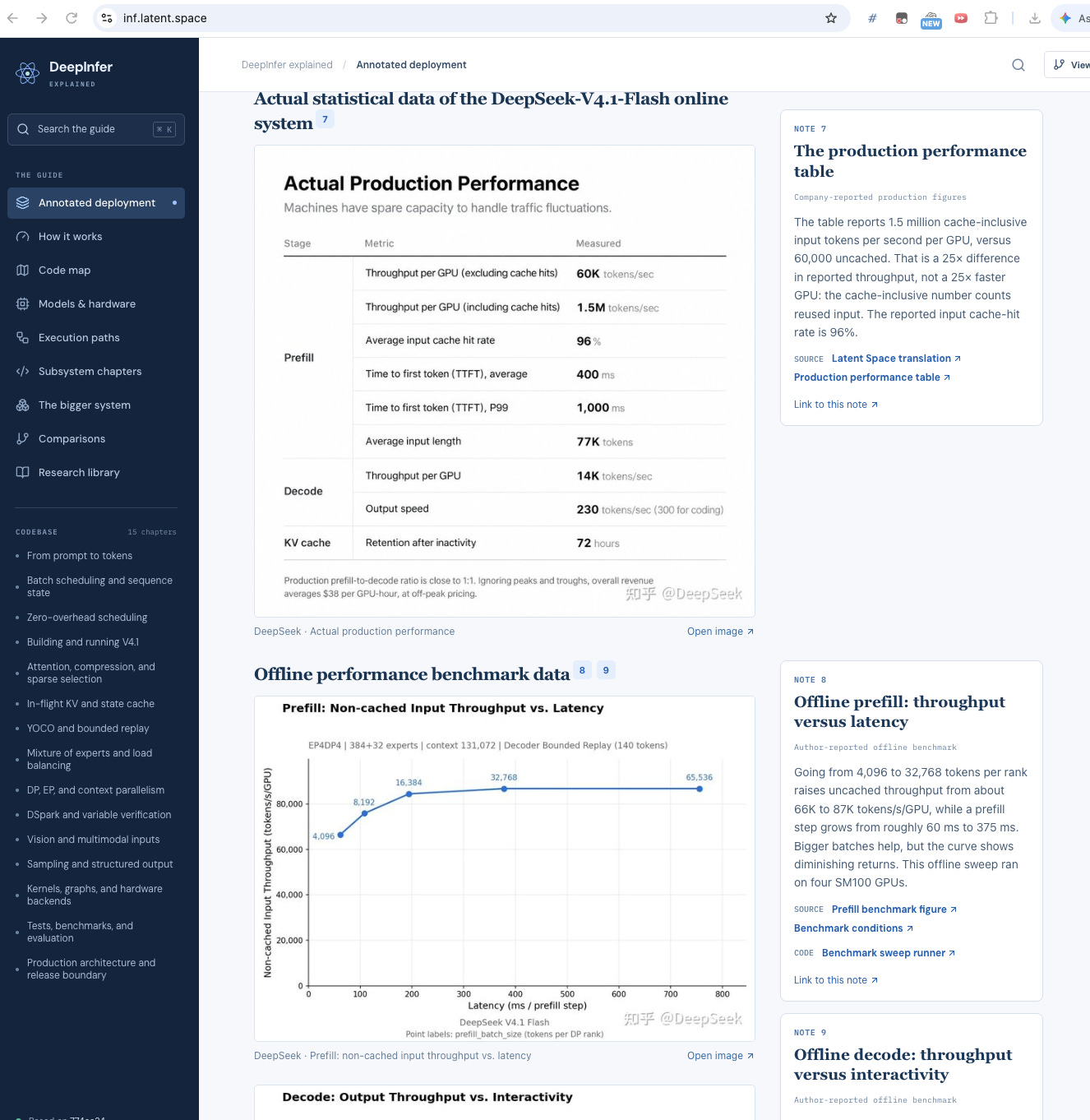 article[AINews] DeepSeek DeepInfer: Open Source SOTA Inference running 155T toks/day/cluster making $22m/day at ~80% margin for a 81 day paybackwww.latent.space
 videoWhat Makes Open Models Fast in Production — Sujee Maniyam, NebiusAI Engineer
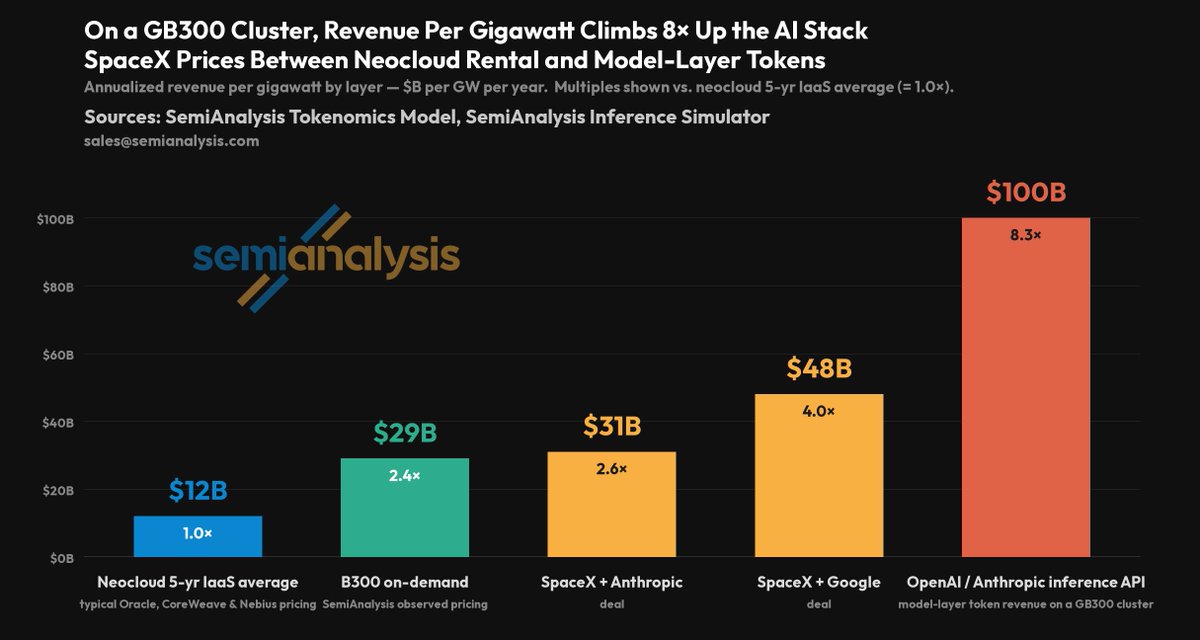 postWhy would anyone pay for that much compute? Inference is unbelievably profitableSemiAnalysis_
Checking sign-in…
Loading comments…