Give your agents controlled access to analyze your data and move funds
- Source
- stripe.com
- Date
Context
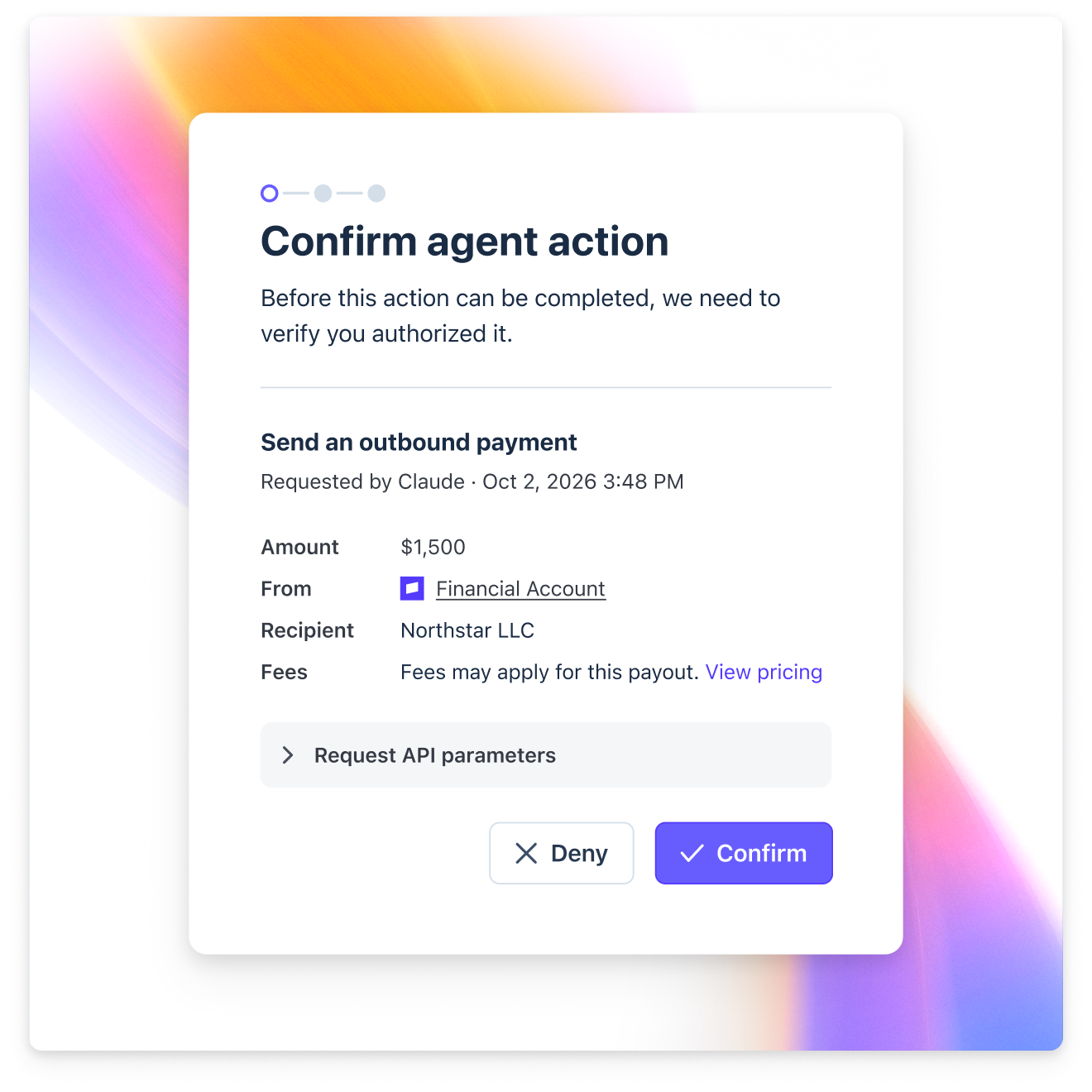
Stripe now lets AI agents move a business's money through Stripe Treasury, its banking product for businesses, in addition to reading its financial data (Stripe's announcement). Stripe says more than 24,000 businesses already give agents read access through Treasury for tasks such as reviewing transactions and reconciling payments. The new write access, in public preview, lets an transfer funds, convert currencies and pay vendors within limits the business sets. A business connects a compatible AI tool such as Claude or Codex through Stripe's server, the service that exposes Stripe's data and actions to agents, and chooses what the agent can see, what it can do, and when a person has to approve.
What an agent can do without a person depends on how it is connected. An agent connected through OAuth, the sign-in flow that lets an app act for a user, inherits that user's permissions, and the user has to confirm every action that moves money, including a refund or payout. An agent given its own agent API key gets permissions, an expiry date and a rotation schedule set on the key, and can work in the background without anyone prompting it. Its refunds, payouts and outbound transfers require human approval by default, but with these keys a business can change the rules, for example letting an ACH bank transfer under $50 go through automatically and sending larger ones for approval.
Stripe's approval documentation explains how that approval works. When an action from an agent key matches a rule, Stripe pauses it, returns an `approval_required` error, and creates a request that a designated reviewer approves or denies in the Dashboard or the mobile app. A request nobody approves within 14 days expires. Nobody can approve their own request, and the documentation treats an agent key as a separate actor from the account's administrator, so even a business with a single team member can require approval for its agent. The default rules for agent keys also cover subscription cancellations, outbound payments and currency conversions, and a business can change their conditions and reviewers or delete them.
An October post on Stripe's developer blog had already described agents sending money through Treasury, with the same split between OAuth confirmation and approval rules on agent keys. The new announcement presents that write access as a public preview open to Stripe businesses, with the defaults above. Because those defaults can be loosened or deleted, an agent's real limit is the set of rules a business keeps, and the announcement gives no figures on how many businesses use the write access or which limits they choose.
- Stripe says more than 24,000 businesses already give agents read access to financial data through Treasury for agents. A new public preview adds write access, so agents can transfer funds, convert currencies and pay vendors within limits the business sets.
- Stripe offers two ways to connect an agent. Through OAuth, the agent inherits an authorized user's permissions and that user must confirm every money-moving action. An agent API key gives it its own permissions, expiry and rotation schedule, so it can work in the background.
- By default, agent-initiated refunds, payouts and outbound transfers require human approval. With agent API keys a business can change those rules, for example letting ACH transfers under $50 go through automatically while larger ones are routed to an approver.
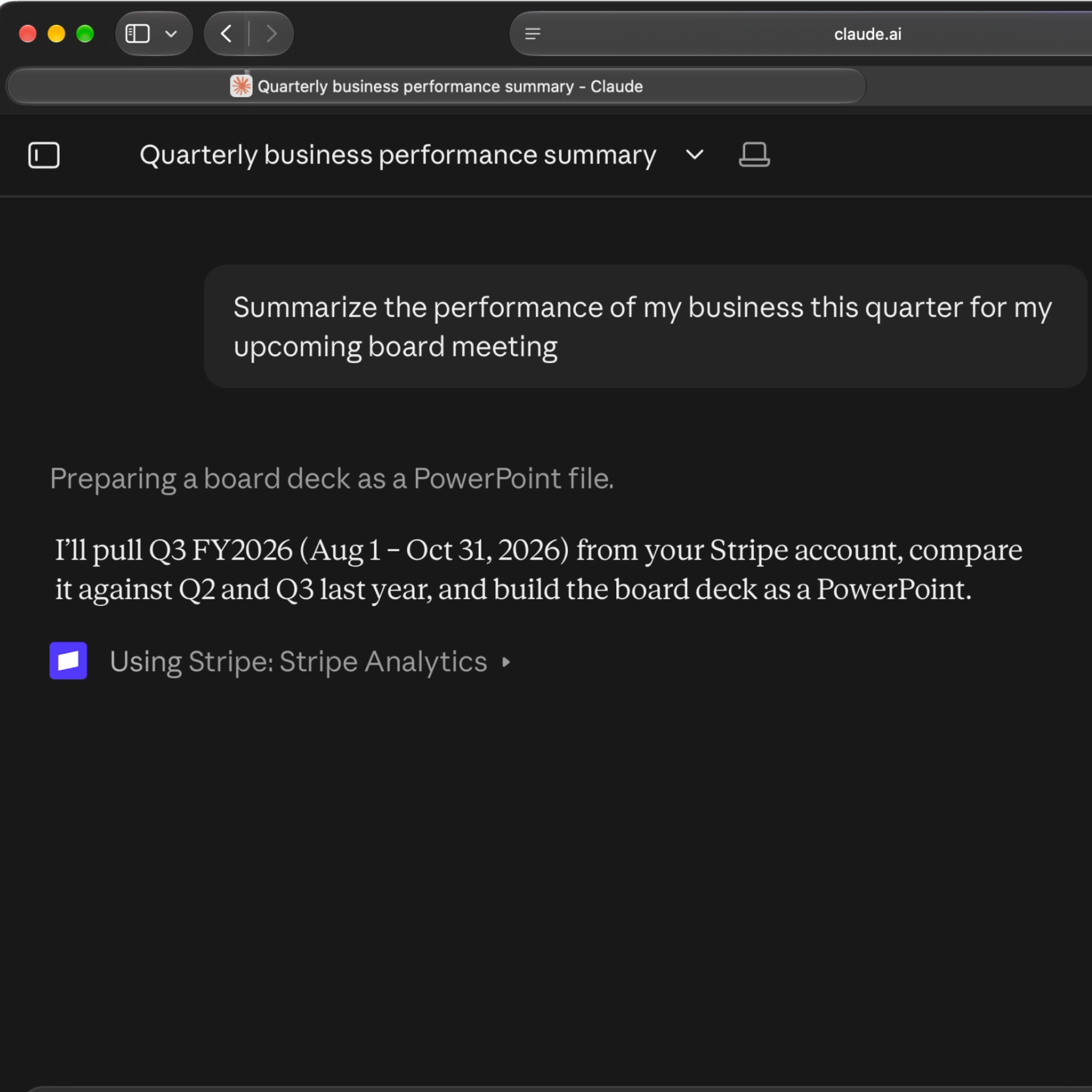
- Businesses grant access by connecting a tool such as Claude or Codex to Stripe's MCP server and choosing what data the agent sees, what it can do, and when approval is required. Stripe says it will next expand agent actions, including creating cards with spending limits.
- AI agent — An AI system that doesn't just answer once but works toward a goal in a loop — taking actions, reading the results, and deciding what to do next.
- MCP — The Model Context Protocol — an open standard that lets any AI assistant plug into any tool or data source without custom integration code.

Checking sign-in…
Loading comments…