NVIDIA CUDA 13.5 Brings NVIDIA Vera Rubin GA Support
- Source
- developer.nvidia.com
- Author
- Shara Tibken
- Date

Context
NVIDIA says CUDA Toolkit 13.5 moves support for its Vera Rubin GPU architecture from early developer access to general availability, which its announcement describes as ready for enterprise production. CUDA is the toolkit of compilers, libraries and developer tools that software uses to run on NVIDIA GPUs. Vera Rubin is NVIDIA's successor to Blackwell; its rack-scale system pairs 72 Rubin GPUs with 36 Vera CPUs, as described in Artificial Analysis's first serving benchmarks of that rack. The post does not list what was missing during early access. It does name one compatibility break: Rubin and later GPUs do not support the Tesla Compute Cluster (TCC) driver mode on Windows, so deployments that assume TCC need to use WDDM or the compute-only MCDM mode instead. cuBLAS, the matrix-math library, gets updated heuristics and kernel tuning that NVIDIA says improve NVFP4 and MXFP8 matrix multiplication on Vera Rubin, including the shapes used to train models, but the post gives no figures.
Much of the rest of the release concerns dividing one GPU among workloads. A GPU's compute is organized into multiprocessors (SMs), and CUDA can split them into partitions per locality domain. By default, those partitions get the same guaranteed SM count in every domain, and any extra SMs sit outside them. A new flag lets each selected domain include its extra SMs, so an application can use every SM on the device at the cost of partitions that may differ in size, and a discovery mode in the partitioning API reports each partition's count so work can be split to match. The choice is between predictable, equal partitions and using all of the hardware.
The Multi-Process Service (MPS), which lets several processes run on one GPU at the same time, reaches version 3. Weighted timeslicing gives longer compute turns to the MPS servers that need them. SM partitions can now borrow capacity beyond their base allocation and lend their SMs while no clients are attached, and MPS takes borrowed capacity back before reassigning it. Cgroup-based routing maps a cgroup v2 subtree, the Linux mechanism a workload launcher can use to group processes, to an MPS namespace, so clients are sent to the right resource policy automatically, and an SM partition can be assigned once per namespace instead of through an environment variable on every client. A polling fallback reads memory usage directly when cgroup notifications are missing or unreliable, at some extra cost per eviction decision. CUDA 13.4 had already added per-workload memory limits to MPS, which NVIDIA uses for fractional GPU sharing in Kubernetes.
For kernel authors, CUDA Tile kernels can now read and write memory on other GPUs connected by NVLink, with multicast operations on NVSwitch fabrics, so communication and computation can be combined in one kernel. A public preview lets Tile kernels call device functions from conventional SIMT libraries such as NVSHMEM and the MathDx libraries. The preview covers only library functions; calling your own device functions is planned for a later release, and NVIDIA says each library will enable the interop soon. The CCCL 3.5 libraries add a batched Top-K selection, an operation used to pick tokens during text generation, which NVIDIA says is already integrated into the FlashInfer kernel library, along with run-to-run reproducible floating-point scans on the same GPU, input and build.
- Locality domains now pose a tradeoff: by default localized green- partitions take an equal guaranteed SM count and leave supplemental SMs outside them, while a new flag includes those SMs at the cost of unequal partition sizes.
- MPS v3 adds borrowing and lending between SM partitions: --max-chunks enables borrowing and --shareable=true lets a partition lend while no clients are attached. MPS reclaims borrowed SMs before reassigning them.
- Tile-to-SIMT interop, in public preview, lets Tile kernels call device functions from NVSHMEM, CCCL Coop, Warp and MathDx on data already in registers or shared memory instead of handing it off through global memory between kernels.
- CUB reductions can read their element count from device memory with cuda::args::deferred, so a captured reduction can process a different count on each CUDA Graph replay without updating or recapturing the graph.
- Tesla Compute Cluster mode is gone from Rubin onward: NVIDIA says applications and deployment tools that assume TCC must move to WDDM or the compute-only MCDM driver model.
- mixture-of-experts — A model built from many specialist sub-networks where only a few activate per token, giving big-model capability at small-model running cost.
- streaming — Sending a model's response token by token as it is generated, so the reader sees text immediately instead of waiting for the whole answer.
- inference — Running a trained model to get answers — the phase where AI is actually used, as opposed to trained.
- context window — The maximum amount of text a model can consider at once — its working memory for the current conversation or task.

 articleCUDA Toolkit 13.4 Adds Windows on Arm Support and Greater Control over Shared GPUsJonathan Bentz
 articleTo Infinity and Beyond: ThunderKittens Now on NVIDIA Vera Rubin NVL72!www.together.ai
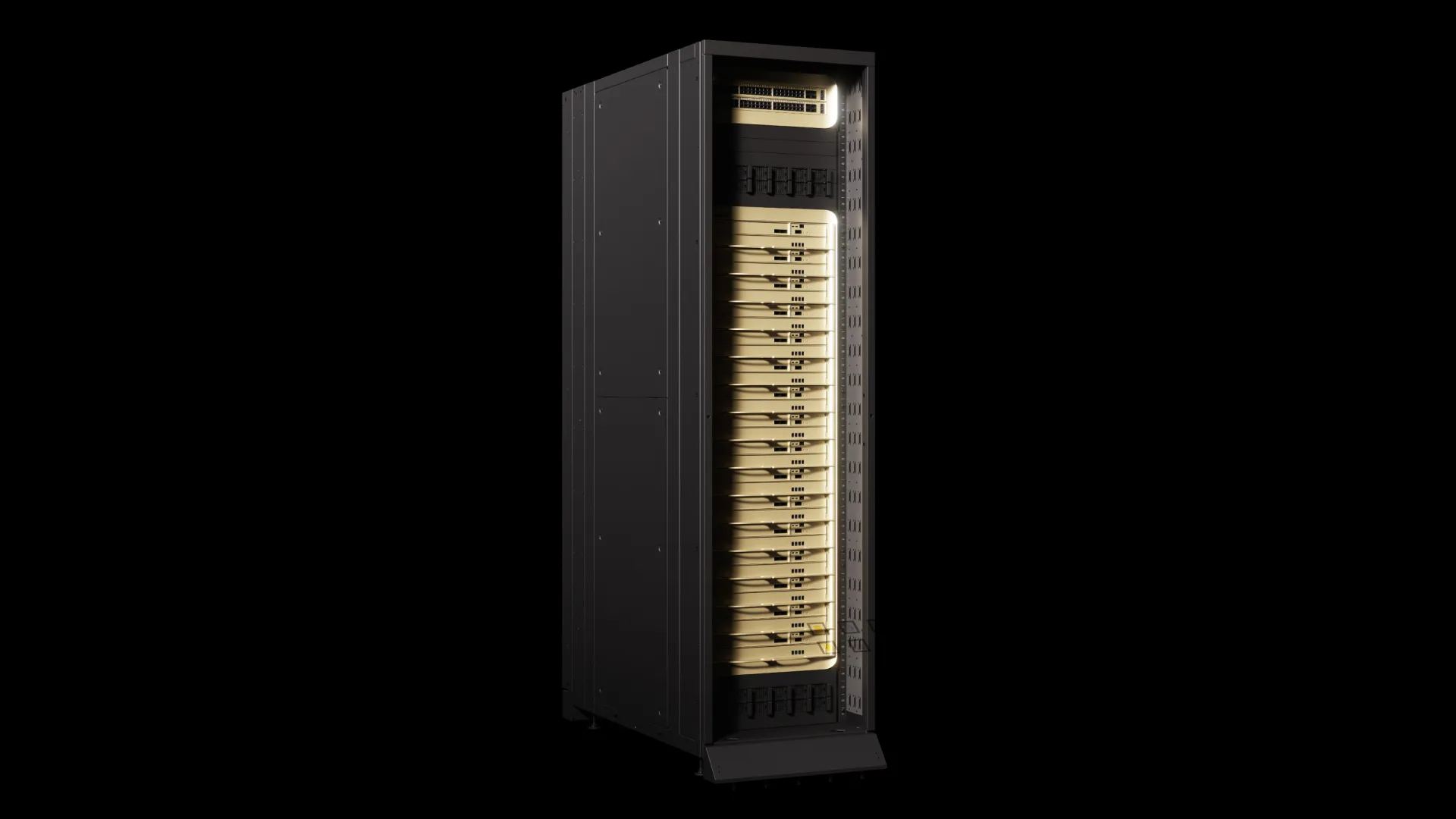 articleHow NVIDIA Groq 3 LPX Deterministic Execution Drives Power-Efficient High-Interactivity Inference on NVIDIA Vera RubinTanya Lenz
Checking sign-in…
Loading comments…