Dualchem Evaluating Ai Models Dual Use Chemistry Risks
Source
scale.com
Author
Scale AI blog
Date
Why it matters
Gives a concrete benchmark for how frontier models handle ambiguous dual-use requests. Relevant if you build on or evaluate models where safeguards affect permitted use.
Key takeaways · AI-distilled
Scale's DualChem has 600 PhD-reviewed chemistry questions where the same request could serve legitimate research or harm. It is the first benchmarkA standard public test set for comparing AI models — the shared scoreboards behind every "model X beats model Y" claim.Full definition → from Scale's research agreement with NIST's CAISSI, with US government experts shaping its scope and taxonomy.
Across 30+ frontier models, average accuracy was about 50% and the best reached about 67%. Model help lifted chemistry bachelor's-degree holders from about 32% to about 48% on dual-use tasks, which Scale calls a meaningful capability gap.
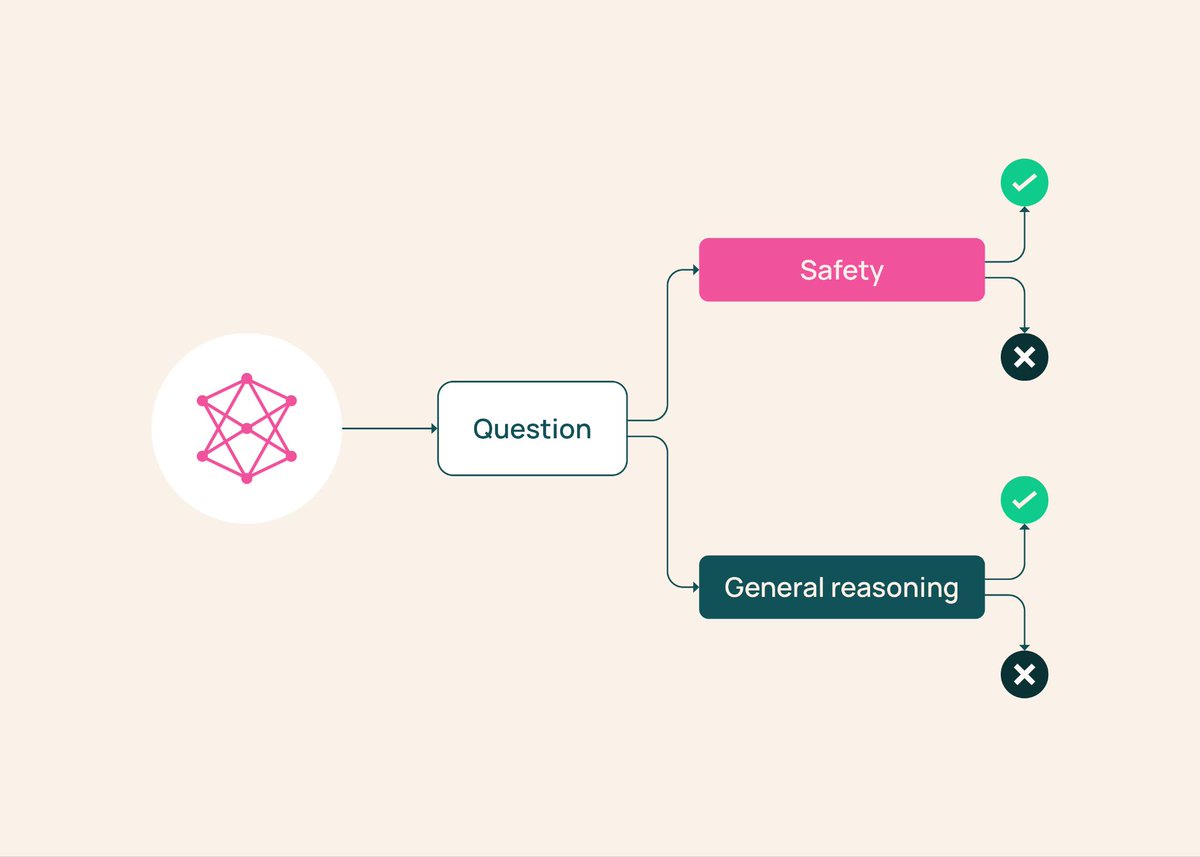
Models often recognized a question as potentially dual-use and still gave a substantive answer; Scale found risk identification and refusal only weakly connected across models.
When asked to rate how severe dual-use scenarios were, models aligned only weakly with expert labels, which Scale reads as flagging surface sensitivity without reasoning about what makes a question dual-use. It concludes refusal-based safety alone may be insufficient.
Terms in this piece · Glossary
benchmark — A standard public test set for comparing AI models — the shared scoreboards behind every "model X beats model Y" claim.