One reason we trust it more than manual approval: in a study with 1,053 paid tes
- Source
- x.com
- Date

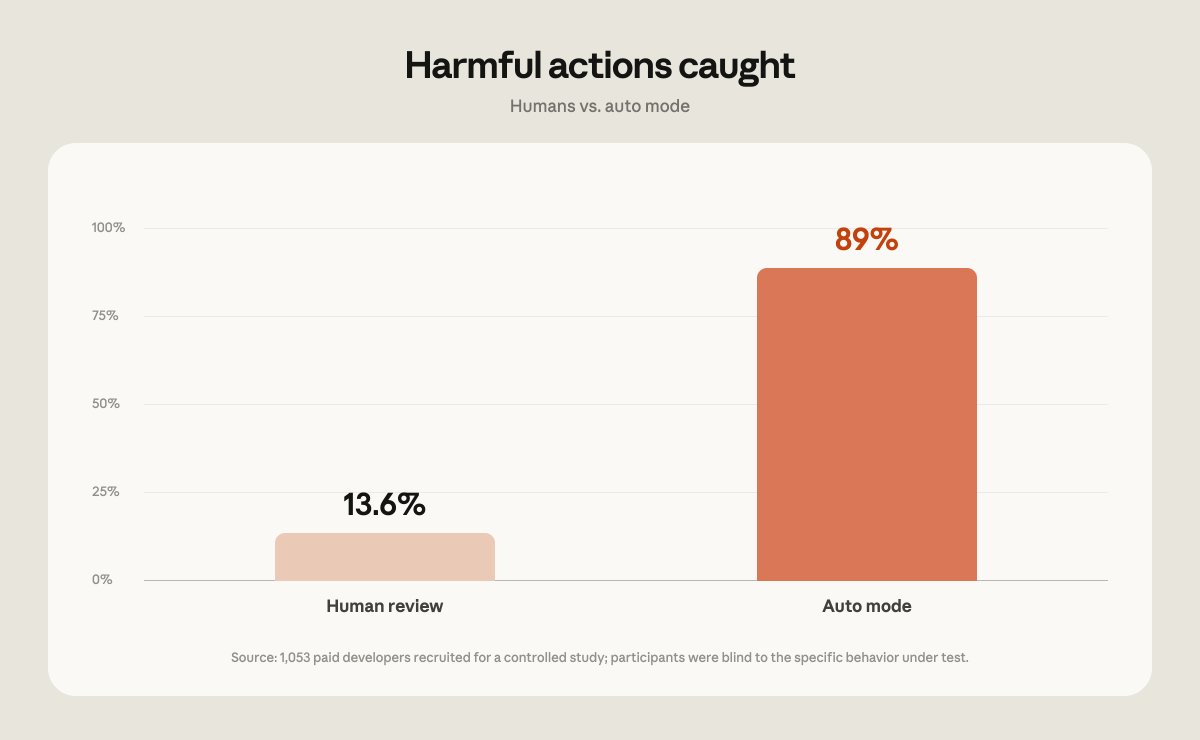
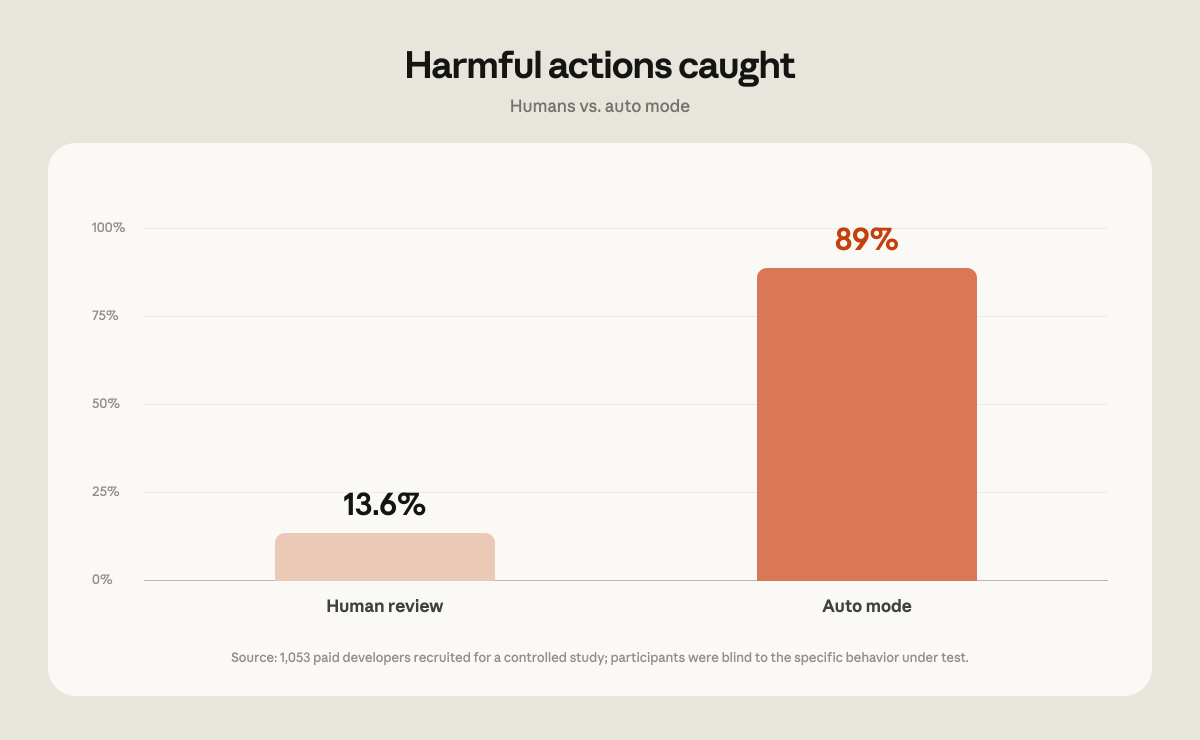
Starting August 14, auto mode will be the default permission mode in Claude Code for Pro, Max, and Team users. Auto mode reviews shell commands and actions with a separate classifier. In testing, it caught 89% of dangerous commands. Manual approval caught 14%.
One reason we trust it more than manual approval: in a study with 1,053 paid testers, we swapped a permission prompt for a clearly dangerous command (text only, nothing actually ran). Testers caught it 13.6% of the time, and closer to 5% after 50 prompts. Auto mode blocked the same commands 89% of the time, flat across session length.
Context
Anthropic argues that a classifier is a better safeguard than asking people to approve each command, because in its testing people missed most dangerous commands in approval prompts, and missed more as the prompts piled up. In an August thread, its ClaudeDevs account announced that from August 14 auto mode would become the default permission mode in Claude Code for Pro, Max and Team users. In auto mode, a separate classifier reviews the commands and other actions Claude Code proposes, instead of showing each one to the user for approval.
The thread backs the change with a study of 1,053 paid testers. Anthropic replaced the text of a permission with a clearly dangerous command; nothing actually ran. Testers caught it 13.6% of the time, and closer to 5% once they had already seen 50 prompts. Auto mode blocked the same commands 89% of the time, and its rate stayed flat however long the ran. The decline in human detection is the core of the argument: the more prompts a person has already seen, the less likely they are to notice a dangerous one, while the classifier's rate did not fall.
The figures come from Anthropic's own testing, and the thread does not describe the commands used or how the classifier was evaluated beyond these numbers. They also show that auto mode is not a complete barrier: it let through about 11 of every 100 dangerous commands in this test.
- Terminal and shell — A text interface for navigating files and running programs.
- Prompt — Information or instructions supplied to a model; in a chat, the request you type is often called your prompt.
- Session — One conversation or piece of work as a harness keeps it: a record of messages, tool calls and observations that can be saved and resumed.

Checking sign-in…
Loading comments…