The encrypted reasoning blobs your secret scanner can't read
- Source
- x.com
- Date

AI labs hide the model's scratchpad (reasoning), then send you an encrypted copy so the next turn can continue. Public agent logs hid 315,320 of those copies. Cleaning the chat never opens them, and password scanners scored 0. A research paper decoded those copies from 6,708 posted agent sessions. 4.9% of those sessions (328) leaked at least one real secret. We ran five password-style regexes on a fake session that held three long envelopes labeled FAKE. > Chat cleaned, envelope stayed > 64 artifacts never in chat > Writing laptop still holds them We grepped Claude Code and Codex folders used for research and content writing. Counts only. We did not read the blobs. Zero Data Retention still leaves the unread copy on the client. One AWS page calls the same field a hash. What is actually inside that sealed copy? What do you strip before git, evals, or a zip? Does Bedrock make the laptop copy go away? Full Breakdown ↓↓

Context
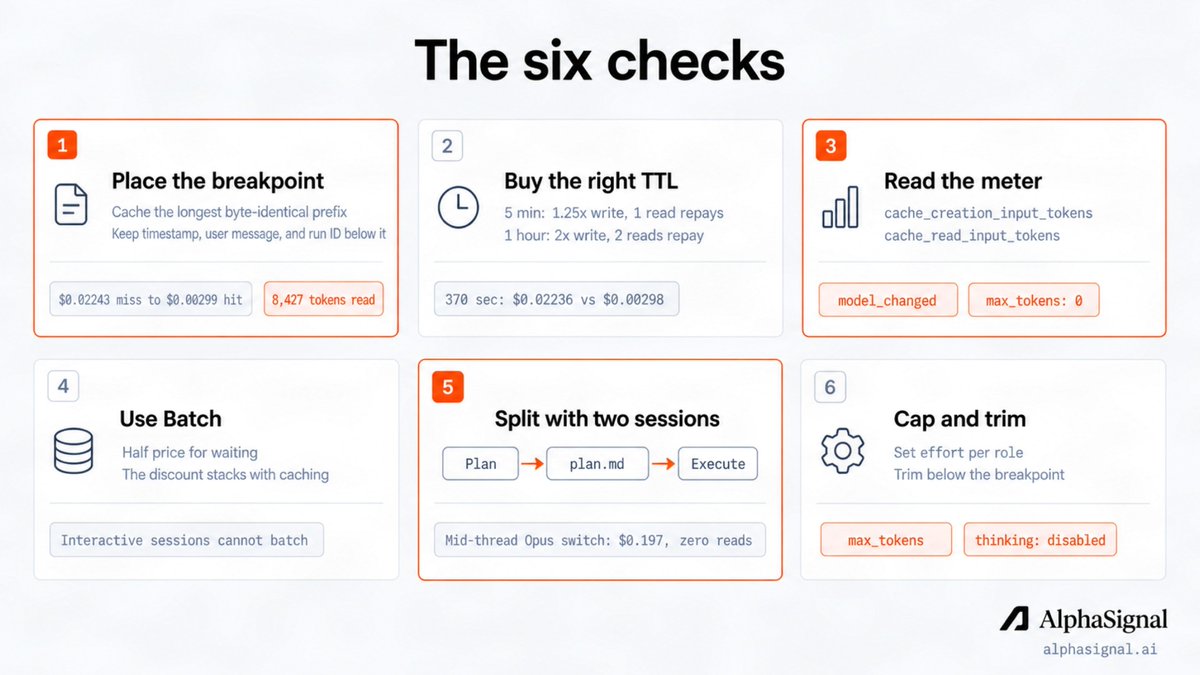
When reasoning models think before answering, providers such as Anthropic, OpenAI and Google can keep that reasoning hidden from the developer but still hand back an encrypted copy, which the must send with its next request so the model can continue where it left off. AlphaSignal's post and its accompanying graphic name the fields involved, such as Anthropic's thinking-block signature and OpenAI's encrypted reasoning content. Because these blocks travel with the conversation, they are saved wherever the conversation is saved, including agent logs. The post's point is that ordinary log cleaning misses them: redacting secrets from the visible chat leaves the encrypted copies untouched, and pattern-based scanners cannot read inside them.
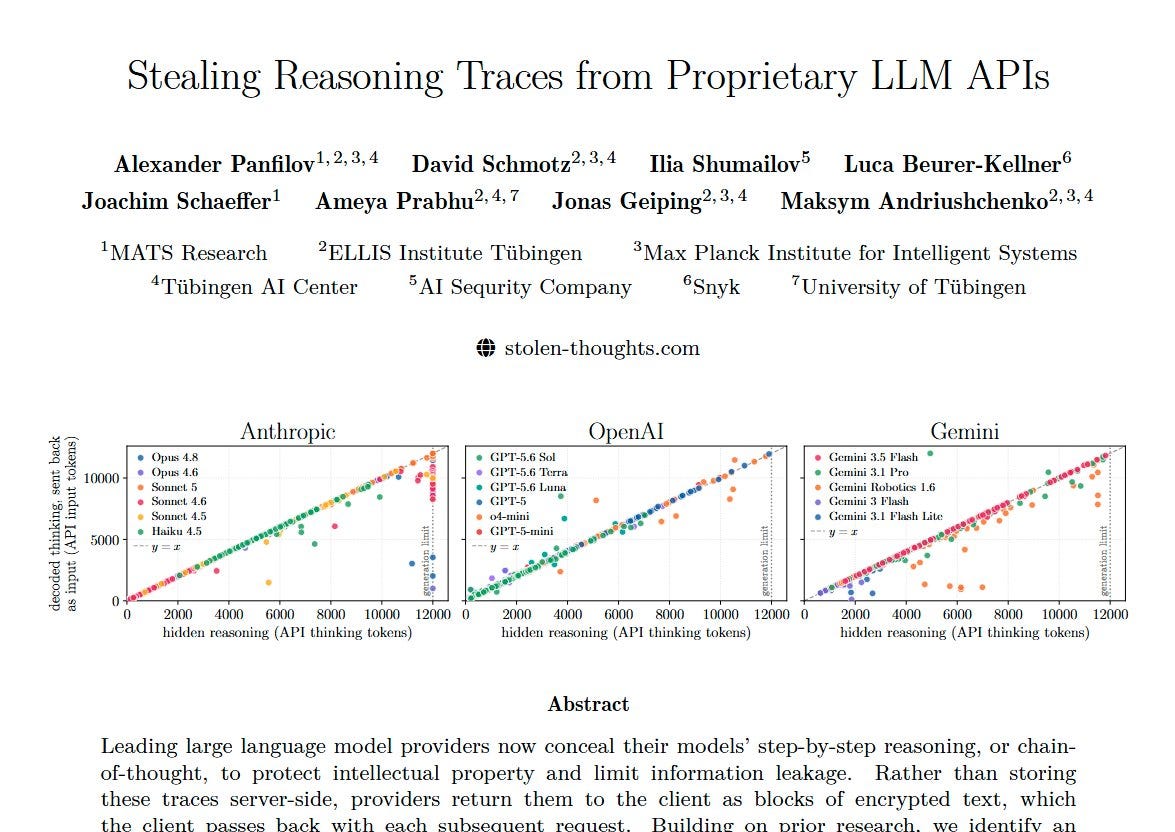
The evidence comes from a paper by Alexander Panfilov and colleagues, published in August 2026. The authors found they could decode the encrypted blocks by passing a block from a stronger model to a weaker model from the same provider, which then wrote the reasoning out as plain text. Applying this to 6,708 public agent sessions collected from GitHub and Hugging Face, they decoded 315,320 reasoning blocks and report that 4.9% of the sessions, 328 in all, leaked at least one real sensitive item such as personal data or a . In genuine user sessions, 64 of the 704 sensitive items recovered from the reasoning never appeared in the visible chat history, so no cleaning of the visible text could have caught them.
The paper also limits that finding. It says the attacks stopped working after providers put mitigations in place following the authors' disclosure, and the authors cannot guarantee that decoded text matches the model's private reasoning exactly. Their recommendation is to strip reasoning blocks and other opaque reasoning fields from transcripts before releasing them whenever the agent saw private information, and not to treat the encryption as safe storage. AlphaSignal's own test was small: it ran five password-style patterns over a fake session holding three such blocks and reports that they caught nothing, and it counted, without opening, the blocks saved in its own Claude Code and Codex folders.
- Client — The program that sends a request to a server and receives its response.
- Session — One conversation or piece of work as a harness keeps it: a record of messages, tool calls and observations that can be saved and resumed.
- Secret — A value such as a password, key or token that lets its holder act as someone; it must be kept out of code and shared files.
- Credential — Something presented with a request to prove that the sender is a particular identity, such as a password or a generated key.

Checking sign-in…
Loading comments…