Liquid AI's d1 decision model adds vision at a fraction of frontier cost
- Source
- x.com
- Date

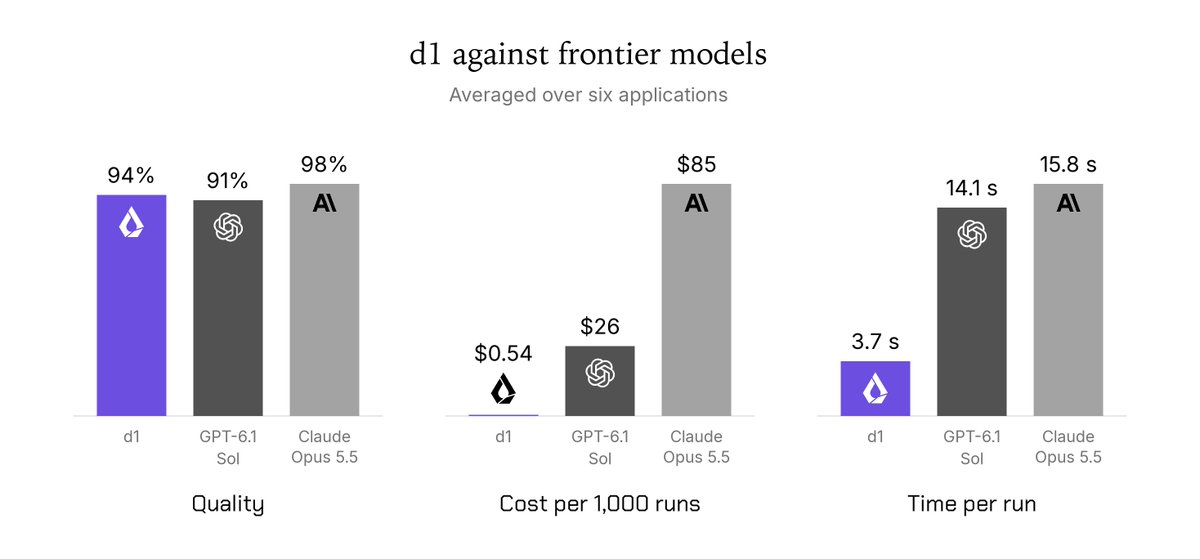
Announcing d1 with vision. 👁️👁️ Our first decision model now supports images, text or both as inputs. We tested d1 against GPT-6.1 Sol and Claude Opus 5.5 on six real applications, from filtering support tickets to inspecting circuit boards. d1 matches or beats GPT-6.1 Sol on four of them. It costs 19x to 200x less than both models and answers significantly faster on every task. > probabilities for yes/no, choice, or score questions > one forward pass, without generating tokens > text decisions in 200 to 300 ms > Liquid API: https://t.co/HxYWoaUnAU 🧵
Context
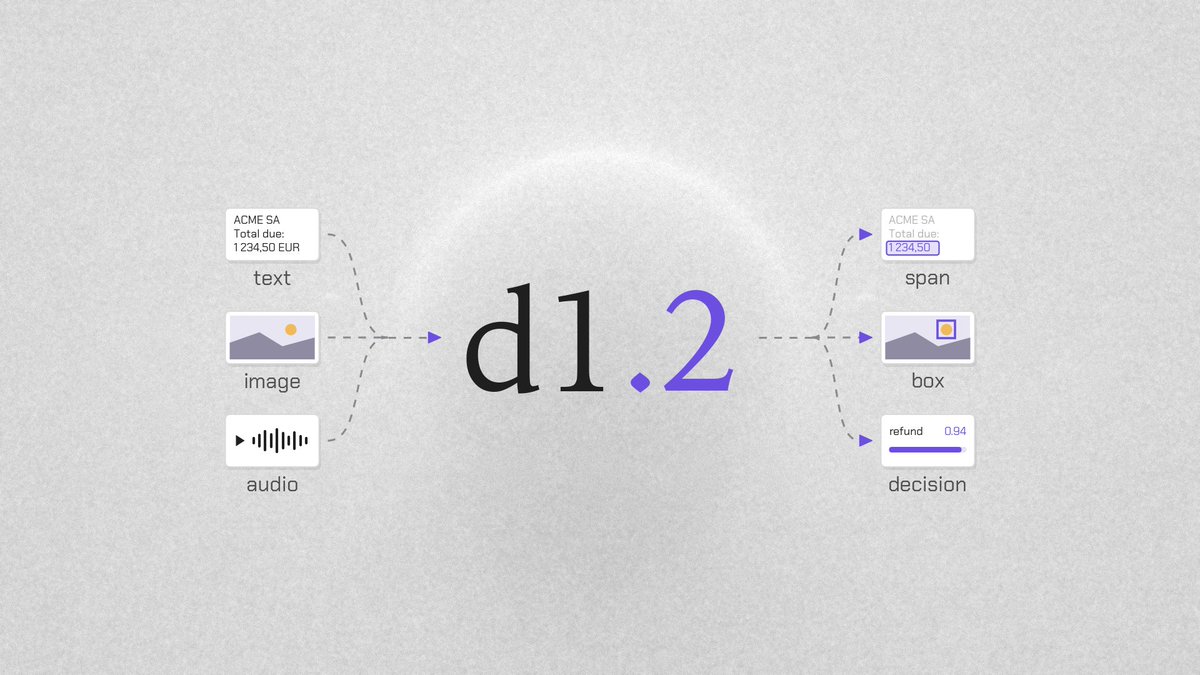
Liquid AI pitches d1 as cheap and fast because it does not write answers. It is what Liquid calls a decision model: given a yes or no question, a multiple choice or a request for a score, it returns probabilities for the possible answers in a single forward pass, one run through the network, instead of generating text by token. Liquid launched d1 on October 1. In its October 5 announcement, it says the model now accepts images, text or both, so the same kind of quick verdict can be asked about a picture, such as whether a circuit board looks defective.
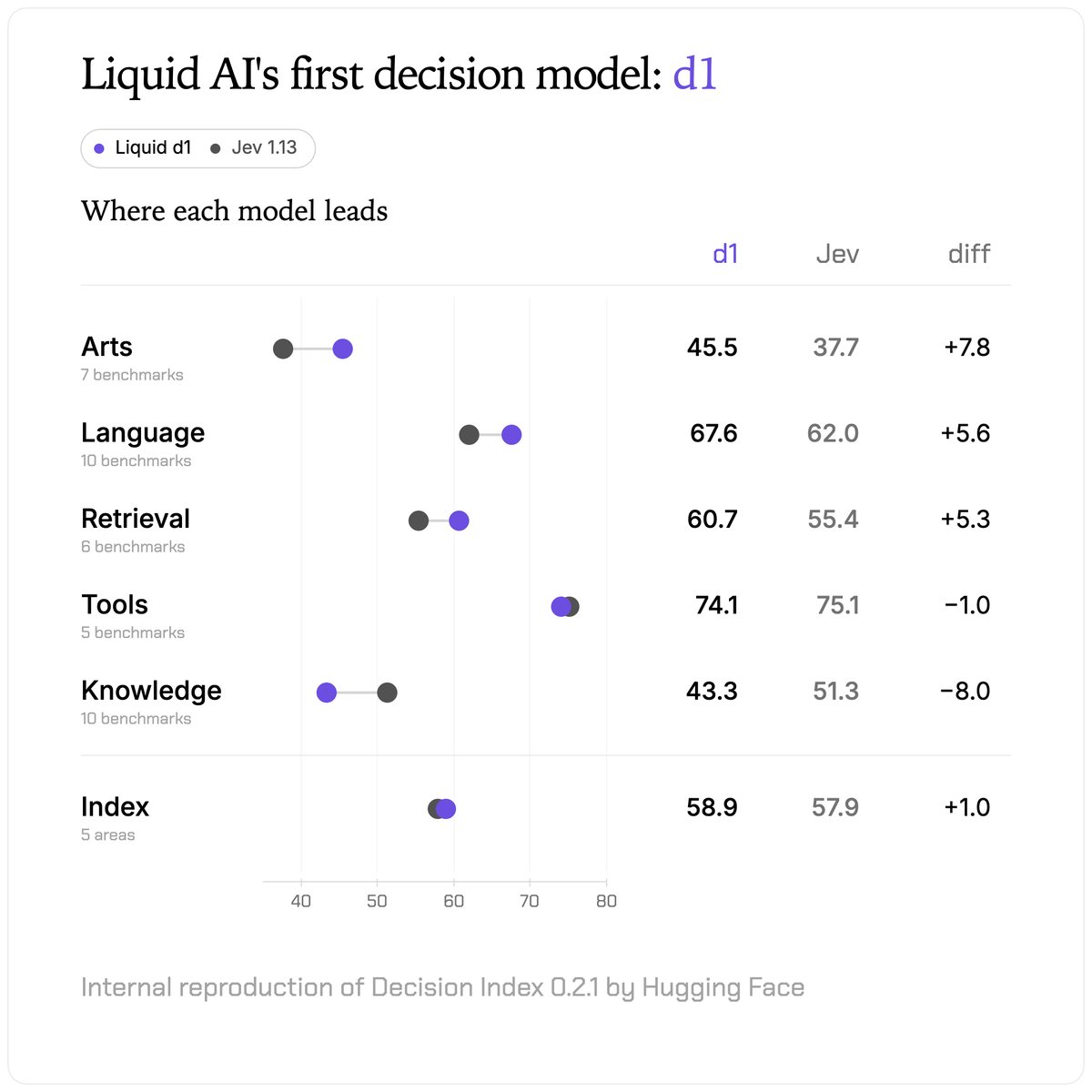
The comparison Liquid offers is its own. It says it tested d1 against GPT-6.1 Sol and Claude Opus 5.5 on six real applications, ranging from filtering support tickets to inspecting circuit boards, and that d1 matched or beat GPT-6.1 Sol on four of them while costing 19 to 200 times less than both models and answering significantly faster on every task. The post does not name all six tasks, give scores, or say how d1 did against Claude Opus 5.5 on quality, so the result supports a narrower reading: on some classification-style jobs, a model built only to pick among fixed answers can come close to general frontier models at a small fraction of their price. The 200 to 300 millisecond response time Liquid quotes is for text decisions; the post gives no figure for image inputs.
The trade-off is scope. A decision model only works when the task can be posed as a fixed question with a fixed set of answers, which suits routing, filtering and pass or fail checks but not drafting or open-ended reasoning. The thread marker suggests Liquid posted more detail, but only the first post was available for this explanation, and its attached image could not be inspected.
- token — The chunk of text a model reads and writes in — roughly three-quarters of a word — and the unit AI usage is billed in.
Checking sign-in…
Loading comments…