Liquid AI ships d1-ultra, a calibrated decision model priced on input only
Source
liquid.ai
Author
Liquid AI
Date
Why it matters
Decision models return calibrated probabilities in one call with no generated tokens, so engineers can set a confidence threshold, automate above it, and escalate the rest. Priced at $0.042 per 1M input tokens, it targets routing, guardrailsThe checks around a model that block bad inputs and outputs — filters, validators, and permission rules the model itself can't override.Full definition → and judging.
Key takeaways · AI-distilled
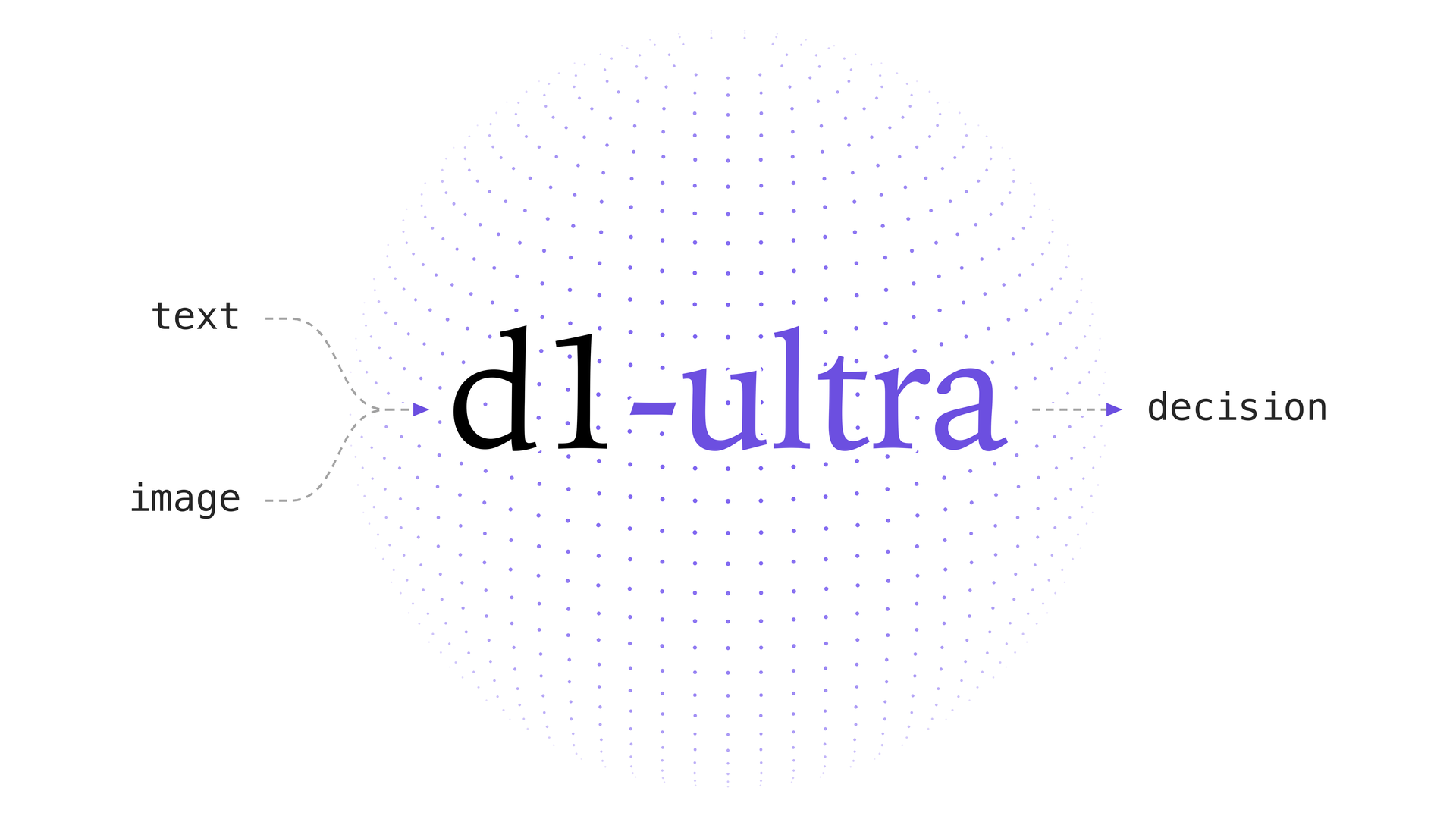
d1-ultra answers three question types, yes/no, one label from many, and a position on a scale, reading text, images or both in a single forward pass and returning a probability for each possible answer.
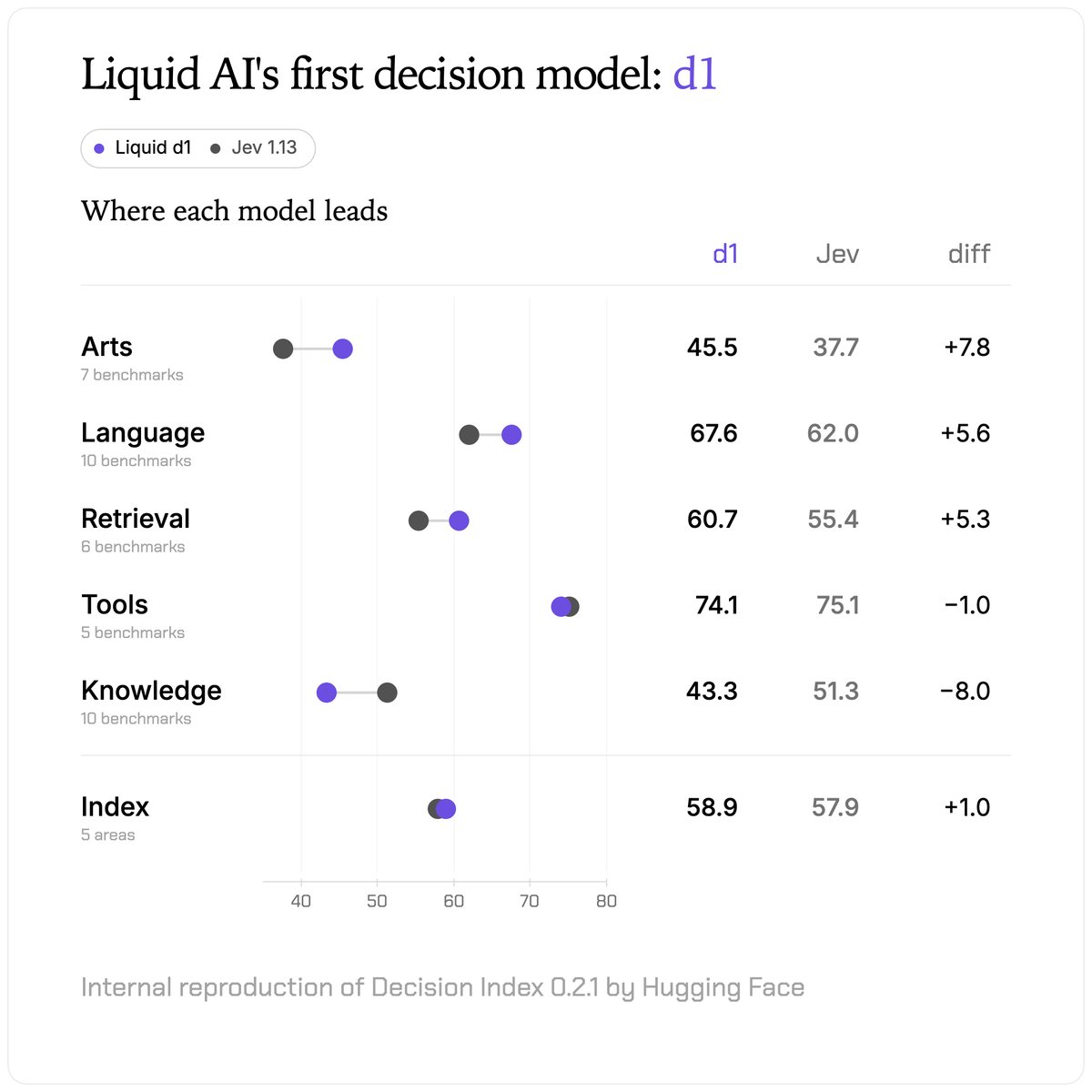
Liquid AI says most decision models are overconfident, so it trained d1-ultra specifically for calibrationHow well a model's confidence matches reality — a calibrated model saying "90% sure" is right about 90% of the time.Full definition → probabilities and built it on a larger open weightsA model whose trained parameters are published for anyone to download and run — unlike API-only models you can access but never possess.Full definition → base than d1 for gains on knowledge-heavy tasks.
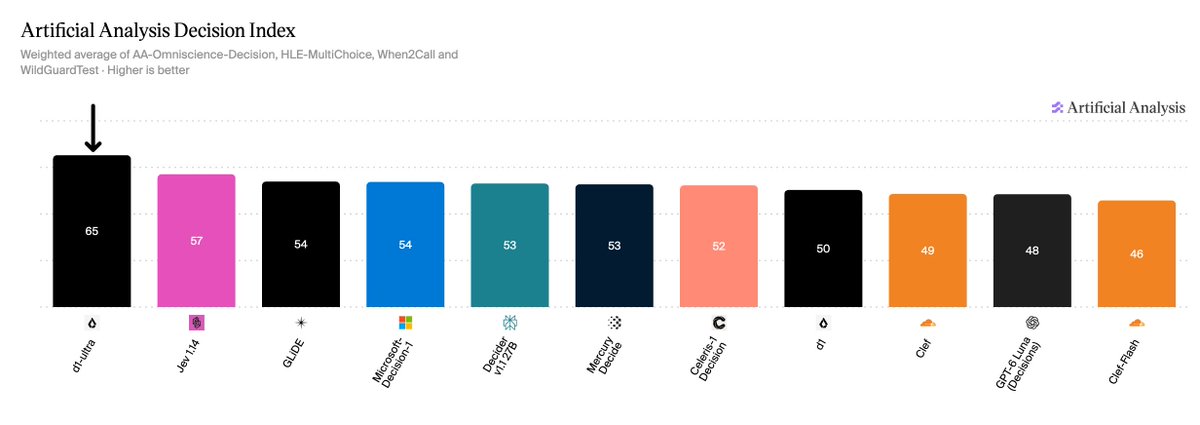
Liquid AI reports d1-ultra beats Jev 1.14 on both accuracy and calibration across 112 evaluations at the same price, and leads every other model on the Artificial Analysis Decision Index by at least 8 points.
Images bill as input at 1.5 tokens per 32x32 patch, so a 1024x1024 image costs 1,536 tokens, and each question is billed as its own prompt including its text and all images, so asking several questions multiplies cost.
Terms in this piece · Glossary
multimodal — A model that works with more than text — reading images, audio, or video, and sometimes generating them too.
calibration — How well a model's confidence matches reality — a calibrated model saying "90% sure" is right about 90% of the time.
guardrails — The checks around a model that block bad inputs and outputs — filters, validators, and permission rules the model itself can't override.
open weights — A model whose trained parameters are published for anyone to download and run — unlike API-only models you can access but never possess.
 articleLiquid AI ships LFM2.5-24B-A2B open weights for local agents
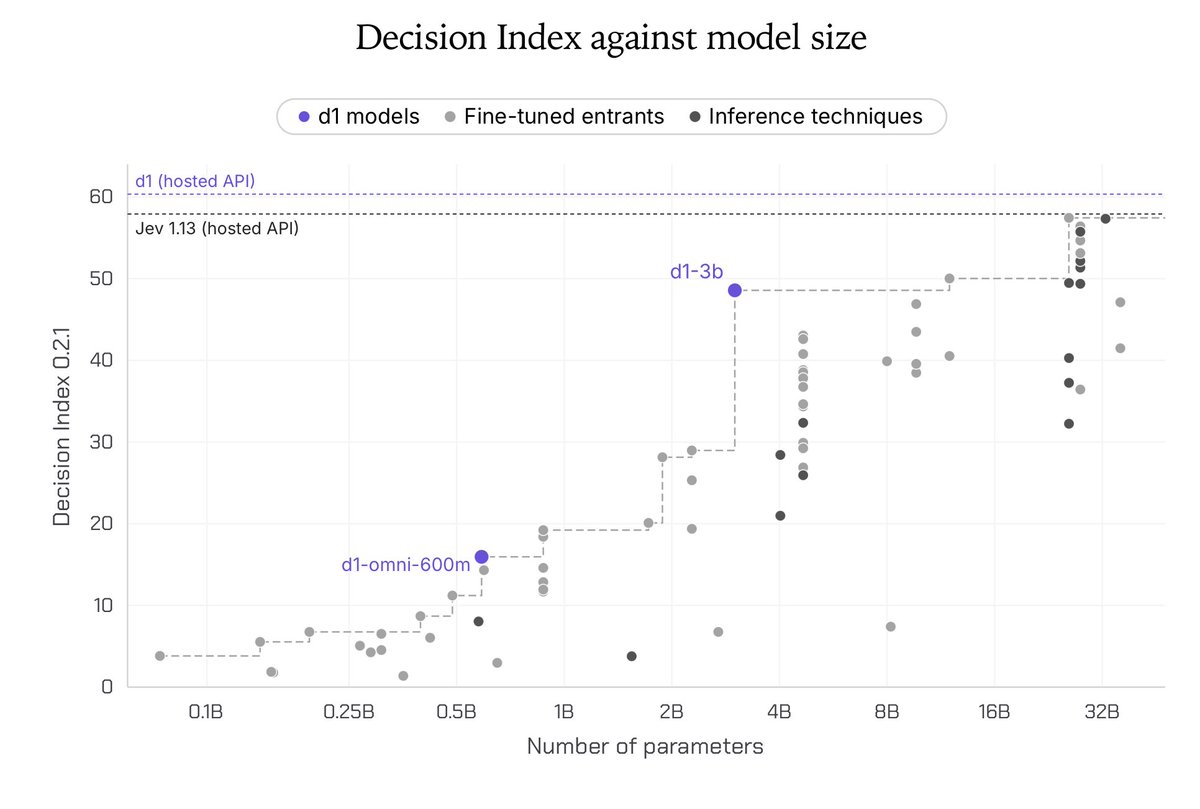 postToday we release Open d1: two open-weight multimodal models in our d1 decision…
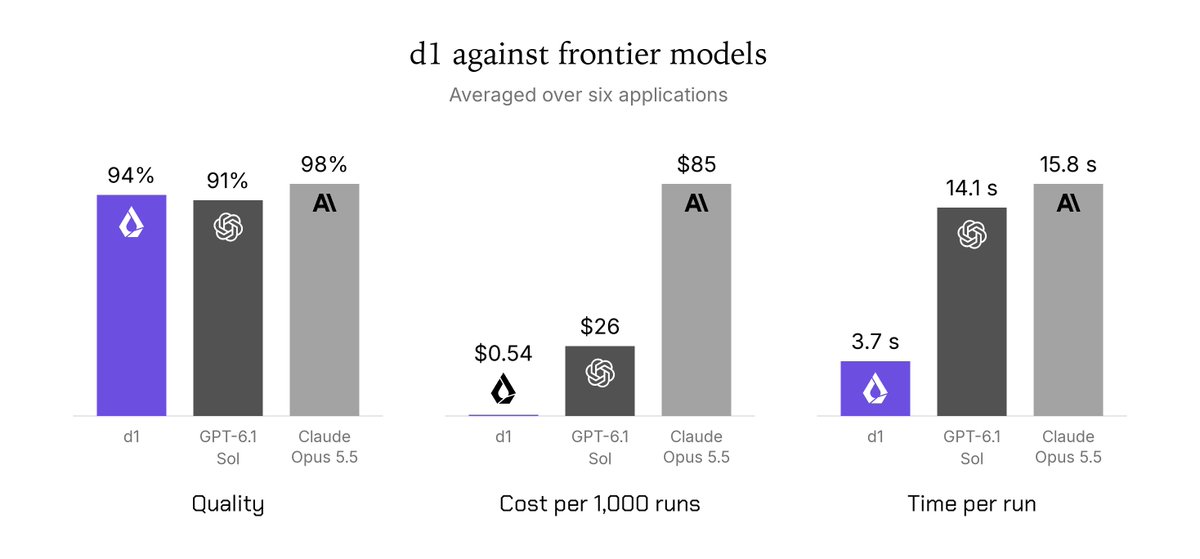 postLiquid AI's d1 decision model adds vision at a fraction of frontier cost
 articled1 is now available on @vercel AI gateway!We worked with the amazing vercel…