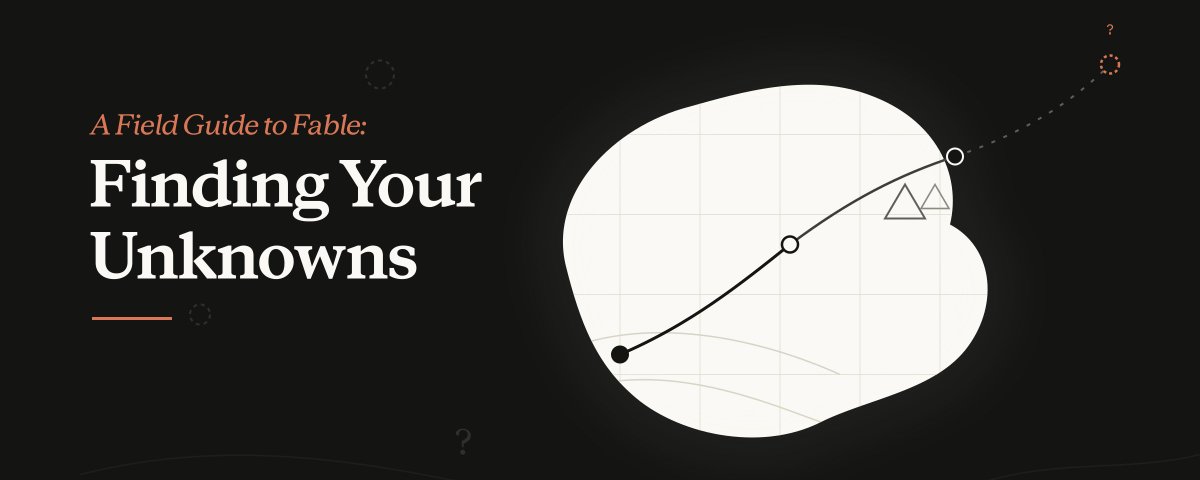
A Field Guide to Fable: Finding Your Unknowns
- Source
- x.com
- Author
- Thariq
- Date
Context
Some requirements become clear only when you see a possible result. In a field guide, Thariq describes using Anthropic's Claude to expose those uncertainties before committing to an implementation. A lightweight interface mockup, for example, lets someone react to a layout before the connects it to the rest of the application.
Thariq extends the same process into implementation by having the agent record decisions that depart from the plan. Those notes give the human something specific to review and help explain why the finished work differs from the initial request. The approach treats a prompt as a starting description that can be clarified through prototypes and discoveries.
- The map is your prompts, skills and ; the territory is the codebase and its real constraints. The gap between them is where Claude has to guess — and it widens with the amount of work you hand over.
- Four categories, not two. Known knowns are what you put in the prompt. Known unknowns are gaps you can name. Unknown knowns are so obvious you would never write them down but would recognize instantly. Unknown unknowns you have not considered at all.
- Planning up front does not eliminate unknowns. They surface deep in implementation, and sometimes what they reveal is that the problem should be solved a different way entirely.
- Catch unknown knowns during brainstorming and prototyping, not during implementation. A small change to a spec can force a drastically different implementation, so the taste you can only articulate on sight is cheapest to surface before code exists.
- Give Claude your starting point — how familiar you are with this problem and this codebase — so it can calibrate. It searches the repo and the web faster than you and knows more about the average topic, but only if it knows where you actually stand.
- AI agent — An AI system that doesn't just answer once but works toward a goal in a loop — taking actions, reading the results, and deciding what to do next.
- context window — The maximum amount of text a model can consider at once — its working memory for the current conversation or task.
“Fable is the first model where I find the quality of the work is bottlenecked by my ability to clarify its unknowns.”
“If you are too specific, Claude will follow your instructions even when a pivot may be more appropriate. If you are too vague, Claude will often make choices and assumptions based on industry best practices that may not be a fit for your task.”
“In many ways, reducing and planning for your unknowns is the skill of agentic coding.”
Checking sign-in…
Loading comments…