How Claude Science Agents Built a Complete UV Sky Map
- Source
- anthropic.com
- Author
- AnthropicAI
- Date
Context
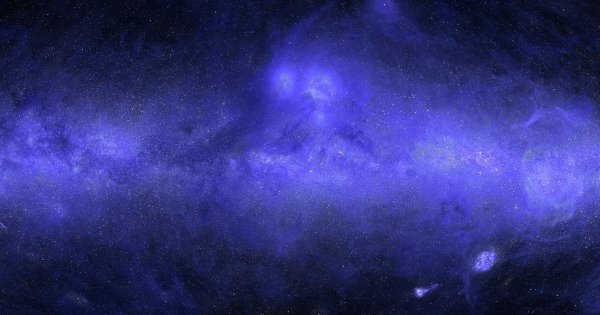
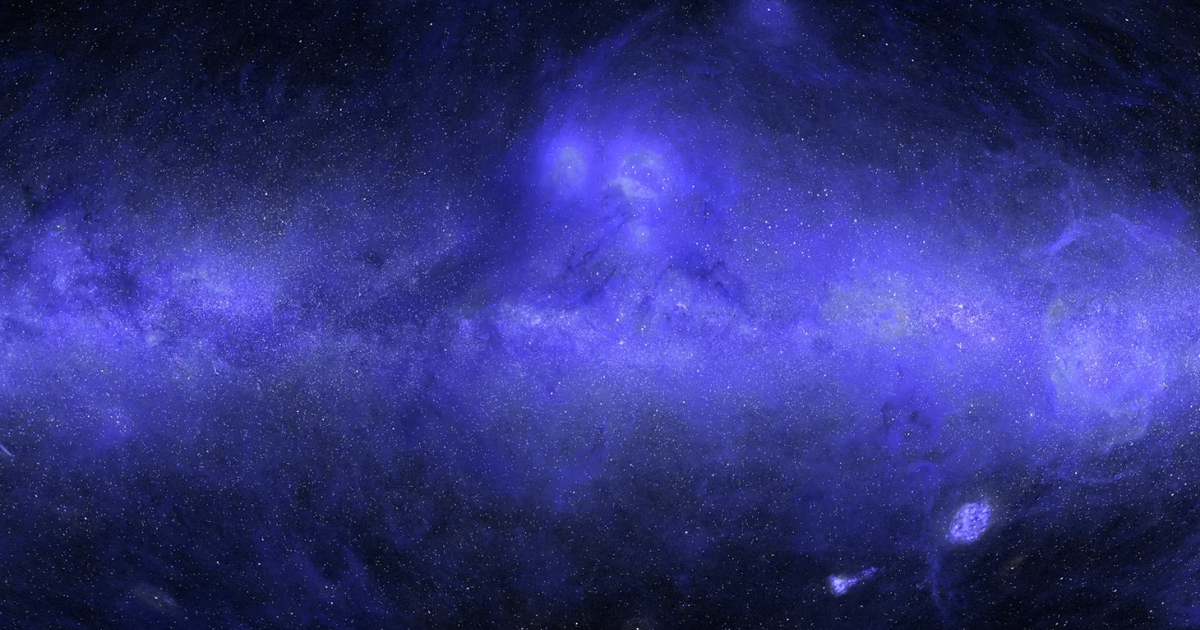
Ultraviolet light is absorbed by the ozone layer, so it can only be observed from space, and no telescope has covered the whole sky. NASA's GALEX mission imaged about two-thirds of it from 2003 to 2013 in some 38,000 observations, but it deliberately avoided very bright stars, including the plane of the Milky Way, to protect its detectors. Brice Ménard, a Johns Hopkins astrophysicist who is also a researcher at Anthropic, describes how he used Claude Science, the AI workbench for scientists that Anthropic made available in June, to produce what he calls the first complete UV map of the sky.
Completeness here comes from prediction. Agents directed by Claude found the public UV surveys, removed glare around bright stars, cross- the different instruments and merged them onto one grid. For the roughly one third never observed, Claude learned, from the sky that has both kinds of data, how UV brightness relates to visible, infrared and radio observations, then applied that relationship to the gaps using inpainting, a machine-learning method that reconstructs missing parts of an image from their surroundings. Estimated UV light from more than 100 million stars measured by ESA's Gaia satellite was layered on top. About a third of the published map, including much of the galactic plane, is therefore predicted, and extra layers mark each pixel as measured or predicted with an uncertainty estimate.
To test the method, Claude hid parts of regions that do have UV data and filled them back in; after several rounds of refinement the estimates landed within about 10 percent of the real measurements. That check was run on regions that already have UV data, while much of the predicted third lies in the galactic plane that GALEX avoided. The post also shows the limits of self-review: faint circles left by uncorrected atmospheric glow in individual GALEX observations passed two rounds of review by other agents, even though Claude had flagged the issue at the start, and were caught only when Ménard looked at the images. Claude then corrected all 38,000 observations.
Ménard's case for the project is that maps like this sit in most fields' backlogs because the careful calibration takes weeks and rarely outranks research. Anthropic's announcement says the work would have taken humans weeks but took a few days with Claude while Ménard did other things; he describes more than a dozen successive versions, with Claude running hours of computation between his planning sessions.
- calibration — How well a model's confidence matches reality — a calibrated model saying "90% sure" is right about 90% of the time.
- Agent — A system in which a model repeatedly chooses operations, a harness carries them out, and the results return to the model to inform its next choice.
- videoAnthropic's co-founders recount the company's story, from scaling bet to Mythos
 articleClaude Solves a Bacterial Vault Structure, Mistakes Included
- articleClaude Agents Red-Team Training-Data Monitors With Benign-Looking Poison
 articleAnthropic's self-assessment: cheap misuse monitoring using the model itself
Checking sign-in…
Loading comments…