NVIDIA Expands Open Source Commitment With OpenShell Donation and New AI Infrastructure
- Source
- blogs.nvidia.com
- Author
- Warren Barkley
- Date
Context
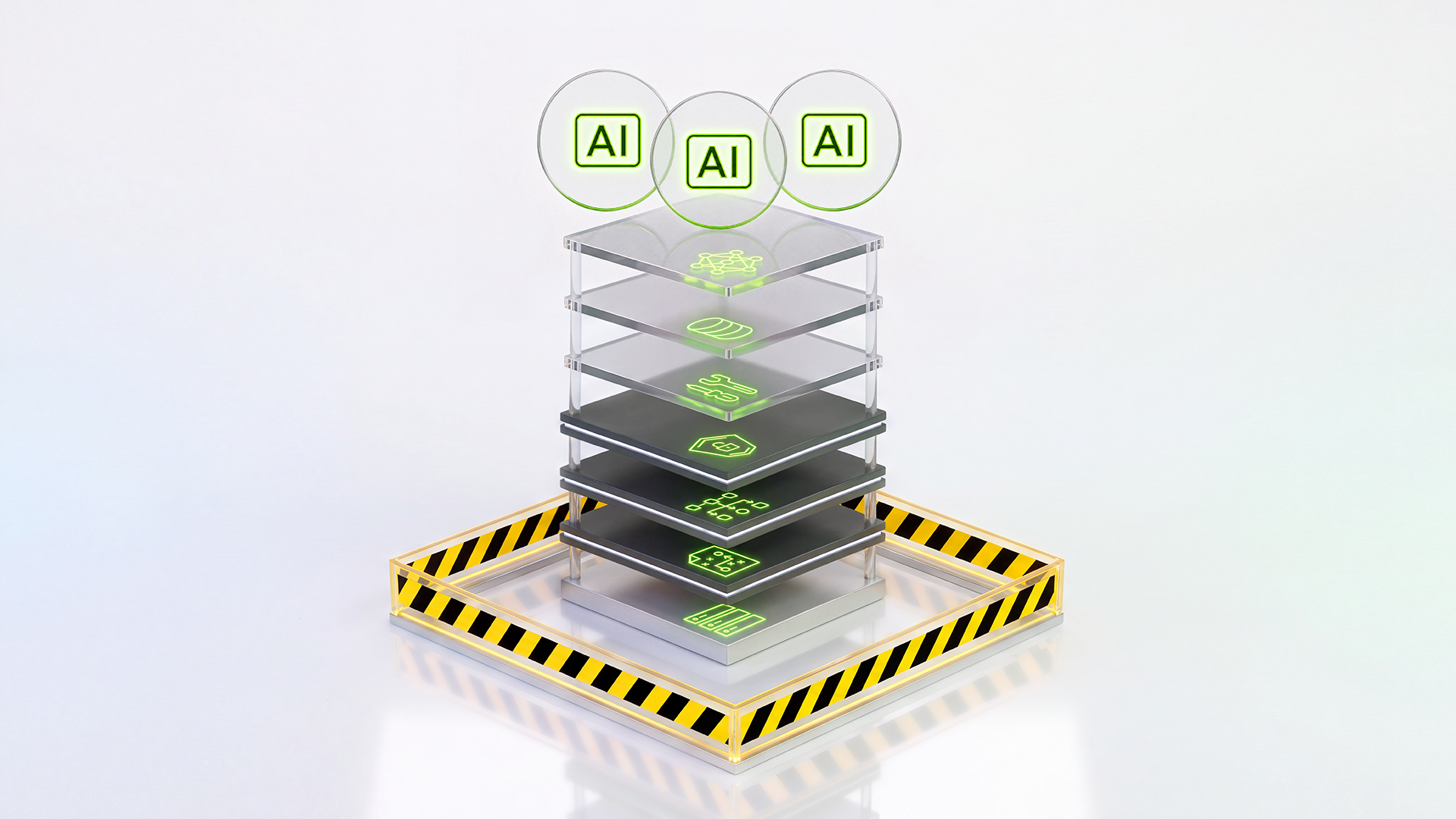
NVIDIA is handing OpenShell, its open-source runtime for controlling what AI agents are allowed to do, to the Cloud Native Computing Foundation, the Linux Foundation body that hosts Kubernetes. The practical change is ownership. As a CNCF project, OpenShell will be governed by the organizations building it into their products rather than by NVIDIA alone, which matters to a company deciding whether to make another vendor's security layer part of its own stack. OpenShell sits between an agent and the things it touches. It applies fixed rules, which NVIDIA calls deterministic controls, as the agent calls tools, reaches services and runs workloads, so a policy is enforced by the runtime instead of depending on the model following instructions. Teams can plug in their own compute, inference providers, credential storage and monitoring. NVIDIA says hundreds of organizations use OpenShell and that the project has received tens of thousands of contributions in less than a year.
The second announcement deals with running many agents at once. NVIDIA is contributing to Agent Substrate, a Google-led project also accepted into the CNCF Sandbox, which keeps each agent's working environment between tasks but releases its compute while the agent is idle, then resumes it from a shared pool. That avoids keeping a dedicated machine running for every agent session. NVIDIA is making it work with its Dynamo inference software and KAI Scheduler, and the two companies are building an integration so the same OpenShell policies can govern agents that Agent Substrate runs across clouds and on-premises systems.
NVIDIA also announced three open-source pieces for companies that sell GPU capacity on Kubernetes. Two of them, NVIDIA Kubernetes Engine and NVIDIA Kubernetes Recipes, are in public preview and automate building and maintaining managed Kubernetes clusters on GPU hardware. The third, NVIDIA Snapshot, restores a checkpointed copy of a running inference server instead of reloading the model and warming it up, steps that NVIDIA says can delay scaling and recovery. Two design partners report large gains on NVIDIA HGX B300 systems. Crusoe says a GLM-5.3 workload became ready in 31 seconds instead of roughly eight minutes, and Saturn Cloud says vLLM startup fell from between two and 8.5 minutes to between six and 34 seconds. Those figures come from partners' own tests reported by NVIDIA, not an independent measurement.
- NVIDIA says OpenShell applies deterministic controls to agent activity as agents use tools, reach inference services and run workloads, and lets teams plug in their own compute, inference providers, credential storage and monitoring so one policy layer spans environments.
- Agent Substrate, a Google-originated CNCF Sandbox project NVIDIA is contributing to, keeps each agent's environment between tasks but releases compute while it idles, suspending and resuming environments across a shared pool instead of dedicating compute to every session.
- NVIDIA Snapshot restores checkpointed inference replicas without reloading or warming the model. Crusoe reported GLM-5.3 readiness dropping from about eight minutes to 31 seconds, and Saturn Cloud cut vLLM startup from 2 to 8.5 minutes down to 6 to 34 seconds.
- NVKE and NVKR, now in public preview, are open source building blocks for offering managed Kubernetes on GPU infrastructure: they automate cluster lifecycle management and ship signed, version-pinned images, with several infrastructure vendors announcing integration plans.
- sandbox — An isolated environment where AI-generated code or agent actions run without being able to touch anything real.
- AI agent — An AI system that doesn't just answer once but works toward a goal in a loop — taking actions, reading the results, and deciding what to do next.
- inference — Running a trained model to get answers — the phase where AI is actually used, as opposed to trained.
Checking sign-in…
Loading comments…