Long-running agents need durability across crashes and deployments, and the event log holds sensitive step data. Version 5 targets security, reliability and performance for exactly these workloads.
Key takeaways · AI-distilled
Self-hosted Worlds get the same encryption by implementing getEncryptionKeyForRun() and returning a stable 32-byte key per run so replays can decrypt. Separately, setting experimental_retention: 0 deletes a run's inputs, outputs and stream contents once it completes or fails.
In v4 every run's event log, queue and streams lived in iad1. In v5 each run has a home region, by default where it started, and start() takes a region option. That option sets where data lives, not where steps execute, and existing v4 runs stay in iad1.
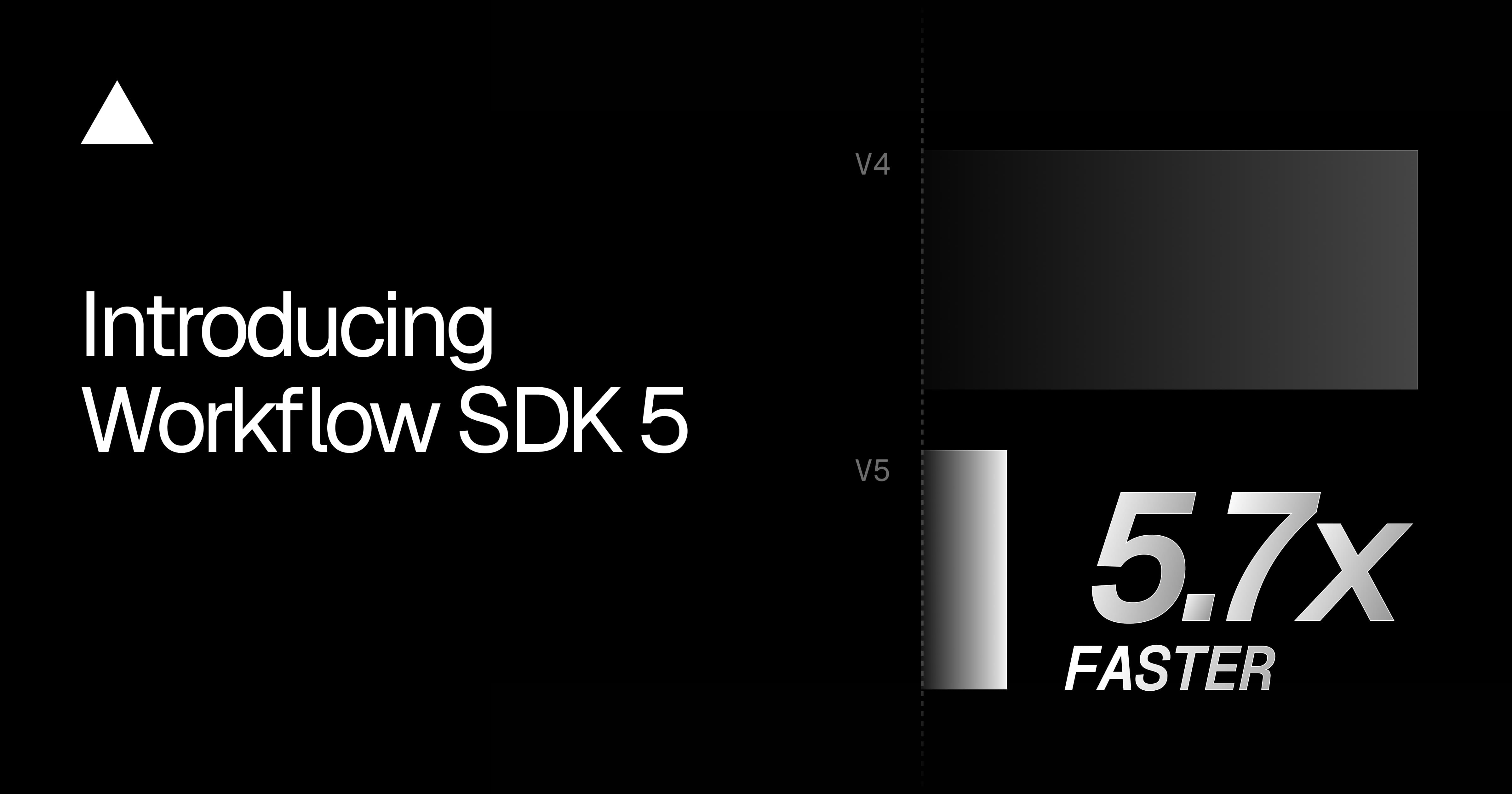
Vercel says v5 can run several steps inline per invocation instead of a queue hop per step, cutting p75 step-to-step overhead from 618 ms to 109 ms in a five-step test, and incremental replay held late-run overhead to 70 ms on a 1,020-step run versus 1,748 ms on v4.
Vercel cautions that its v4.8.12 versus v5.2.0 benchmarks cover one workload in one region against its managed World, with 1 KB JSON step payloads, so they show runtime overhead rather than predict results for every application.