Sakana AI Starts Pre-Training Its Own Agent-Native LLM Series
- Source
- sakana.ai
- Author
- Sakana AI
- Date
Context
Sakana AI, a Japanese AI company, is expanding from post-training other companies' open models into its own. At an October 26 symposium in Tokyo, Chief Scientist Takuya Akiba introduced Sakana Sawara, a provisional name for a model series built from scratch. Sakana's earlier Namazu model was an existing open model that it post-trained, mainly for Japanese users. Sawara will not be adapted from any other model, which Akiba says gives Sakana full control over the model and its training recipes, according to the company's event report.
Akiba calls Sawara -native, meaning it is designed from the start for agentic work such as reasoning with tools, coding and long tasks. It has two jobs: to underpin Sakana's products, and to serve as the base for its research on recursive self-improvement, systems that get better at getting better. In his account, owning the whole model and recipe, with every step visible to the team, would let that research take a broader scope. He describes a gradual version he calls fractional RSI: Sakana's researchers already work with AI that is probably not their own, part of that AI could next be Sawara, and a later Sawara could be developed with help from an earlier one.
There is nothing to evaluate yet. Akiba said he had little to share because the model is still under development, and the report gives no model size, training data or figures. Pre-training of the first model, Sawara Small, is scheduled to start in December, with the weights released next spring if everything goes smoothly; Sakana's announcement post puts that release in spring 2027. A larger Sawara Large is planned without a date. The announcement is a statement of intent with a timeline, and the first real test is whether the small model ships on schedule.
- Sakana AI will pre-train its own series, provisionally named Sawara, rather than only post-training other labs' open models as it did with Namazu. Pre-training of Sawara Small starts in December, with weights planned for spring 2027 if all goes smoothly.
- Chief Scientist Takuya Akiba says Sawara is designed from the start for agentic work such as tool-integrated reasoning, coding and long-horizon tasks, and that owning the full recipe lets Sakana use it as the base for its recursive self-improvement research.
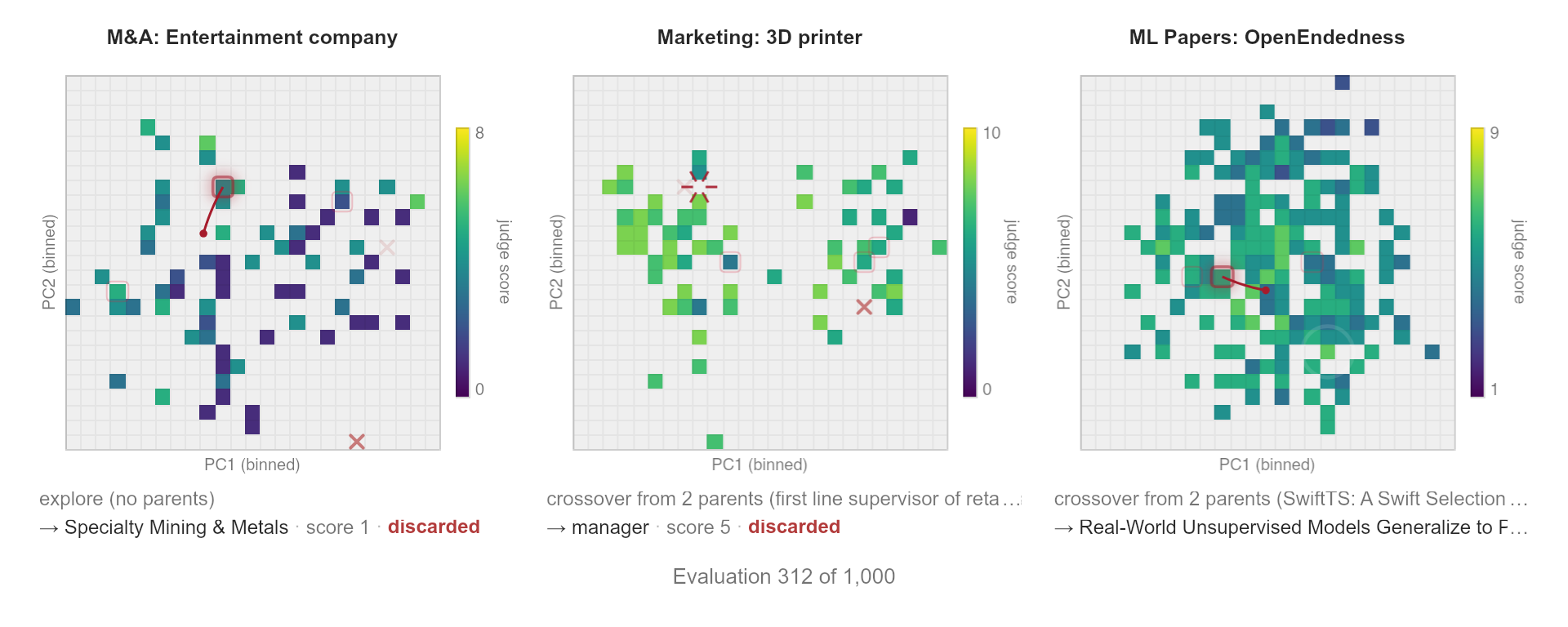
- Akiba argues model building is a research competition, not only a scaling race: citing Epoch AI, he says OpenAI's final training runs are estimated at about 10% of its R&D compute, so how much each experiment teaches matters as much as GPU count.
- Sakana's Physical AI team pairs a small, fast vision-language model that proposes plans with a world model that predicts outcomes and filters out many plans before any hardware trial; a frozen gate requiring repeated, held-out gains guards against reward hacking.
- Robert Tjarko Lange says version 3 of Sakana's AI Scientist is built for co-discovery with humans and verifies its claims and runs ablations; a paper it wrote, checked by the team before submission, was accepted to the ALIFE 2026 main conference.
- pretraining — The first, biggest phase of building a model: training it on enormous amounts of text so it learns language, facts, and reasoning in general.
- AI agent — An AI system that doesn't just answer once but works toward a goal in a loop — taking actions, reading the results, and deciding what to do next.
- benchmark — A standard public test set for comparing AI models — the shared scoreboards behind every "model X beats model Y" claim.
- LLM — A large language model — the neural network behind tools like Claude and ChatGPT, trained on huge amounts of text to predict what comes next.
Checking sign-in…
Loading comments…