We Visited China’s Stargate in Inner Mongolia
- Source
- newsletter.semianalysis.com
- Author
- Everlyn Tan
- Date
Context
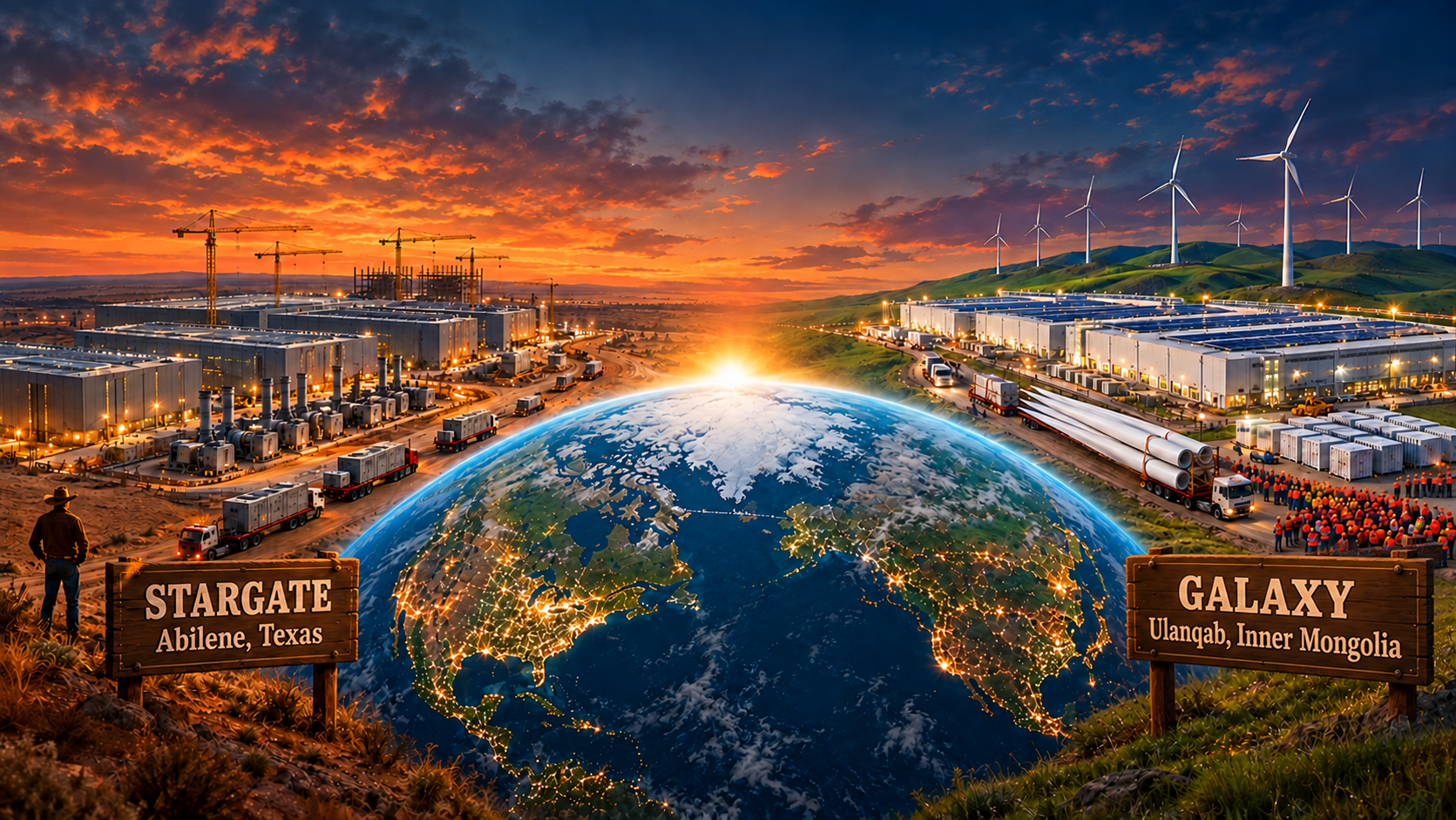
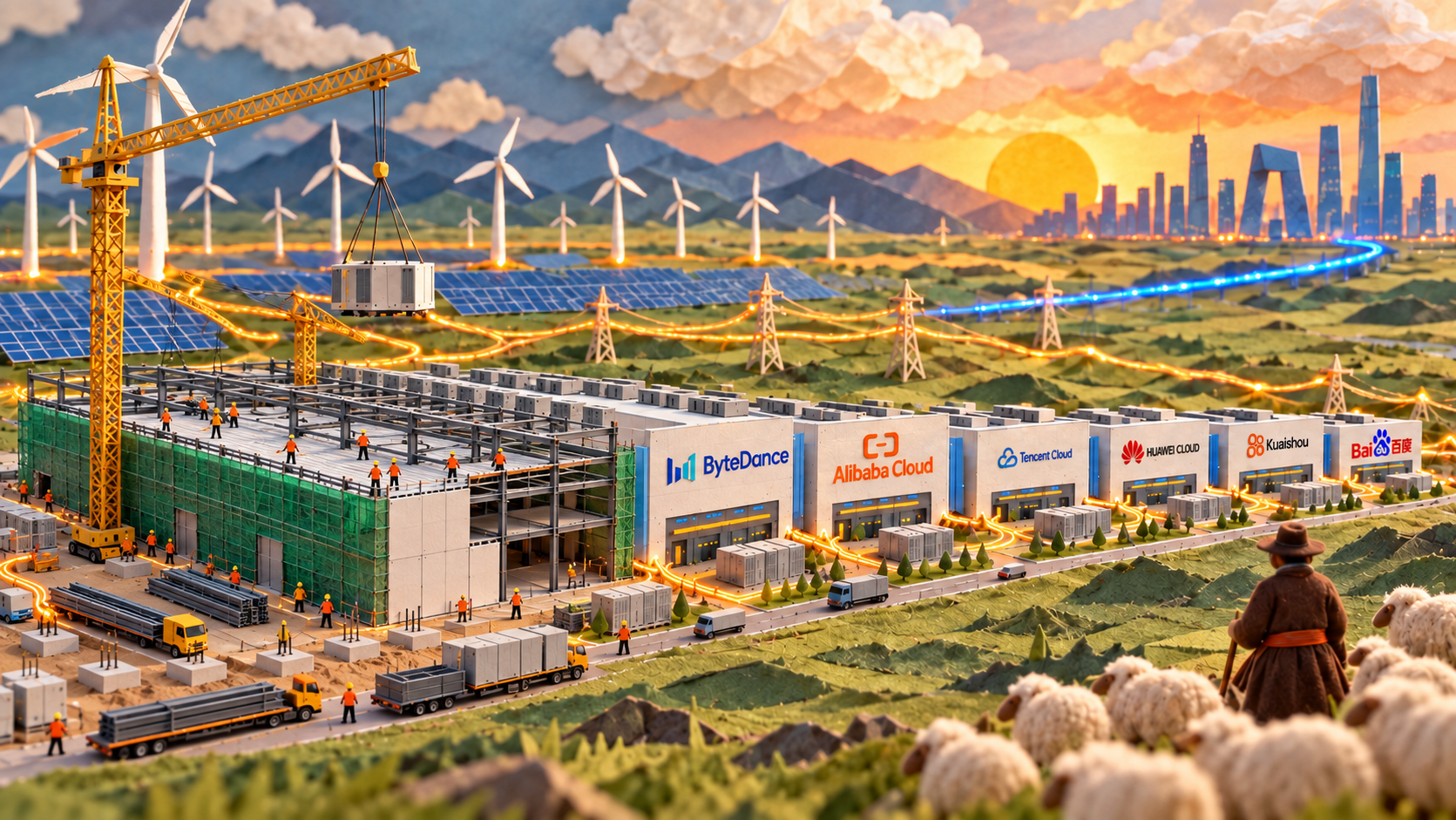
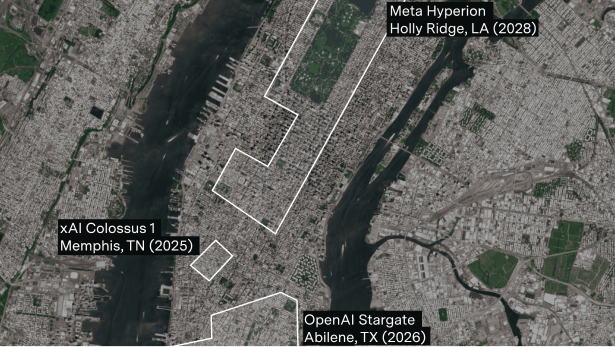
SemiAnalysis went to Inner Mongolia to see a Chinese campus on the scale of Stargate Abilene, and its answer to what sets the two apart is vertical integration. Galaxy, in Ulanqab, is planned for up to 800MW of IT capacity. SemiAnalysis puts that on par with the roughly 820MW of critical IT capacity at Abilene, the Texas campus Crusoe began building in mid-2024 and leased to Oracle, which runs it for OpenAI (Epoch AI's survey of the Stargate sites tracks how far Abilene had progressed). Galaxy's owner, Envision Group, is a renewable systems integrator with more than 100GW of wind turbines installed worldwide, and it makes or designs much of what the campus runs on, from the wind farms and the dedicated line that feed it to the battery storage and power equipment inside. In the free section of its report, SemiAnalysis says the first 120MW phase was delivered within a year at a fifth of US costs, and that all four phases are built-to-suit for two internet giants, which that section does not name. The full campus is expected to be finished by the end of 2027.
The power arrangement is a model China calls source-grid-load-storage (SGLS): one project builds its own wind or solar farm, battery storage and datacenter, and connects them through a dedicated line instead of the public grid. SemiAnalysis says the appeal for hyperscalers is long-term power at a largely fixed cost that also counts toward green targets. The difficulty is that wind is intermittent. Ulanqab wind farms have a capacity factor of 35 to 40%, meaning they produce that share of what they would if they ran at full output all year. Envision aims to supply over 60% of the first two phases' power from its own wind. It plans to get there by oversizing, with 420MW of turbines for a 240MW load, by placing two wind farms about 80km apart so there are fewer hours when neither has wind, and by adding a 4-hour battery that shifts surplus power into calmer hours. That 60% is a target. SemiAnalysis also notes that a battery of that size cannot help much when the wind stays calm for days.
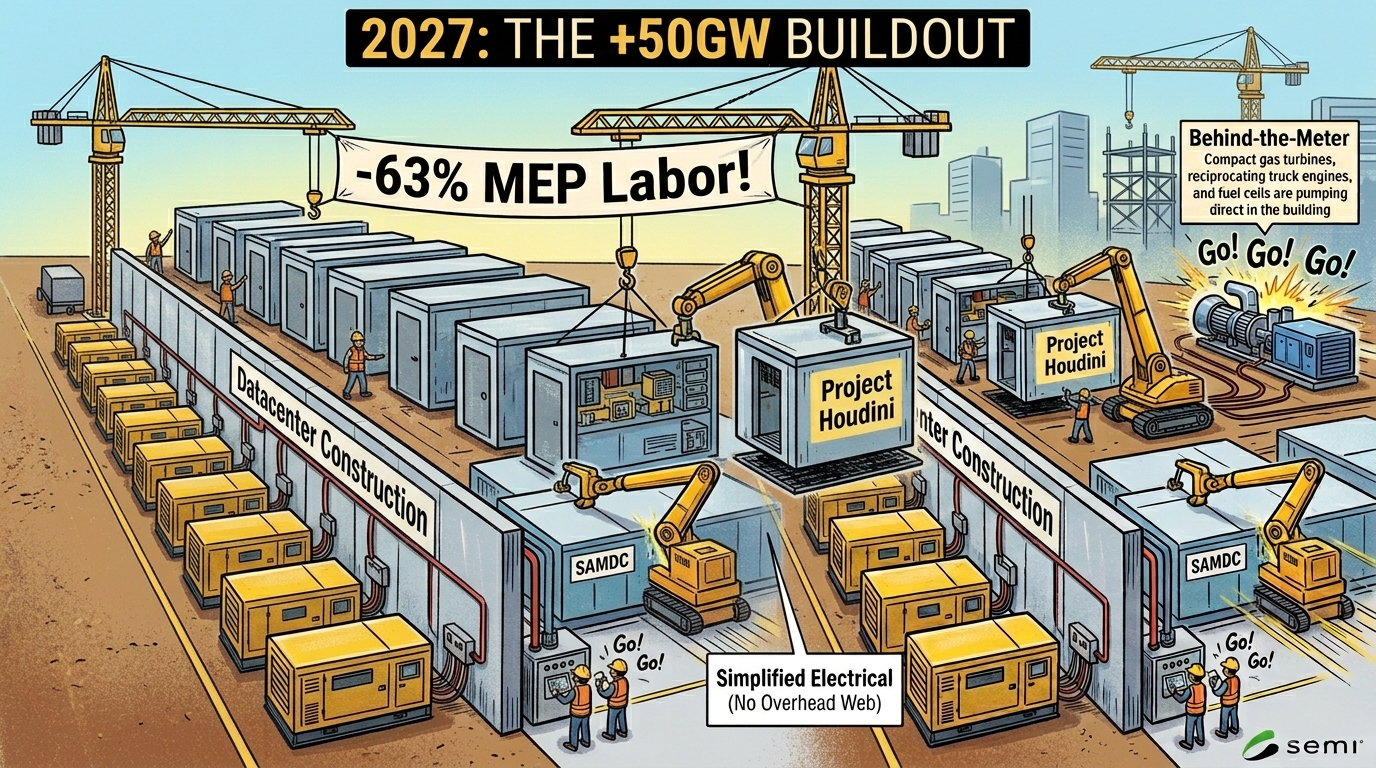
Inside the campus, the notable piece is a 5MW hall running 800V DC to the racks. Conventional datacenters bring in alternating current (AC) and pass it through several stages: transformers step it down, an uninterruptible power supply (UPS) provides backup, and rectifiers turn it into the direct current (DC) the servers use. At Galaxy, solid-state transformers (SSTs), which do a 's job with power electronics, take 10kV AC from the grid and convert it straight to 800V DC, removing the stages in between. SemiAnalysis says Nvidia is pushing 800V DC for next-generation racks of around 600kW, which cannot be served efficiently at today's voltages, and that this architecture is still on the US roadmap. China has a head start on DC power: SemiAnalysis estimates that roughly a quarter of Chinese datacenters built in the past decade run on DC, against about 97% of US datacenters that still use AC UPS. Envision also co-designed a prefabricated substation that is built and tested as factory modules and connected on site in under 3 months, compared with about 6 months for a conventional indoor one. SemiAnalysis says factory pre-configuration is Envision's core selling point, because getting parts from separate vendors to work together on site can take 3 to 6 months.
SemiAnalysis does not claim integration has already paid off. It says it is too early to tell whether vertical integration will become a meaningful advantage in China's datacenter market, where rents have roughly halved in five years to about $40/kW/month and returns are thin, and that hyperscalers still choose vendors mainly on resources and track record. Envision's reward, it argues, is new demand for the power and equipment it already produces. The report is about buildings and power, and the free section does not say which chips Galaxy will hold. That matters for reading it as a measure of China's AI capacity: Epoch AI's estimate for Huawei's Horinger campus, also in Inner Mongolia, argues that China's compute gap with the US comes from chips rather than power. Much of SemiAnalysis's supporting detail is behind the paywall. The free section says the paid part follows Galaxy from land auction to customer acceptance, explains why capex keeps falling, covers China's earlier move to 240V DC and the 5MW pilot, and examines a cooling design that has no central chiller plant.
- In one 5MW hall at Galaxy, solid-state transformers convert 10kV grid AC straight to 800V DC for the racks, removing the low-voltage transformer, UPS and rectifier stages. SemiAnalysis notes the same architecture is still on the US roadmap.
- Envision aims to supply over 60% of Galaxy's first two phases with its own wind by pairing two wind farms about 80km apart, oversizing them to 420MW against a 240MW load, and adding 4-hour battery storage.
- Galaxy cools liquid- and air-cooled servers on one shared water loop with no central chiller plant, a design SemiAnalysis says has run at scale in northern China for years while most US sites keep a chiller.
- SemiAnalysis puts Chinese datacenter rents at about $40/kW/month excluding power, roughly half their level five years ago, with capex down about 25% to under $3mm per MW and Inner Mongolia power at about $0.055/kWh all-in.
- transformer — The neural network architecture behind modern AI models, built on attention — letting every word directly consider every other word in parallel.
Checking sign-in…
Loading comments…