← All IntelIntel / article
Realtime
- Source
- elevenlabs.io
- Author
- ElevenLabs editorial sitemap
- Date
Why it matters
Replaces the separate ASR, turn-taking, and TTS stack with one speech-to-speech model, and the OpenAI-compatible endpoint means trying it can be a model-name and URL change.
Key takeaways · AI-distilled
- Eleven Realtime ships as two speech-to-speech models: v1 Mini for low-cost conversation and v1 Max for multi-step, process-following work like support and lead qualification. Both cover 90+ languages and the full voice library.
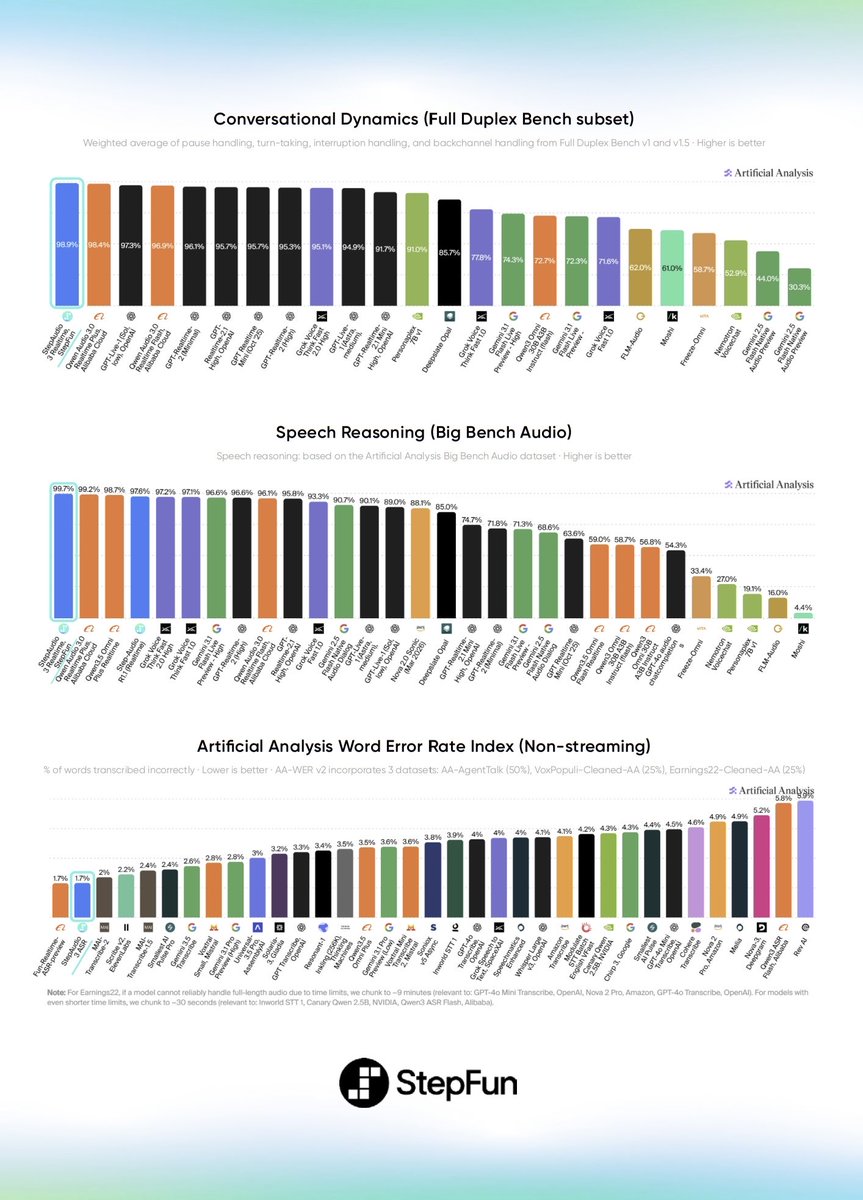
- In Artificial Analysis testing reported by ElevenLabs, v1 Max answered 98.8% of Big Bench Audio reasoning questions versus 75.9% for Mini, while starting to speak in 0.57s on average versus 0.62s.
- The gap widens on : v1 Max completed 87.1% of tool-use tasks and v1 Mini 60.3%, which is why ElevenLabs recommends Max for tool-heavy agents. On turn-taking (Full-Duplex-Bench) Mini scored slightly higher, 95.8% to 94.1%.
- The Realtime API follows OpenAI's Realtime spec over WebSocket, so existing OpenAI SDK code can switch by changing the endpoint and model name. WebRTC integrations must move to WebSocket first.
- The standalone API runs separately from ElevenAgents, so teams needing phone or WhatsApp channels, a knowledge base, or monitoring are told to build on ElevenAgents from the start.
Terms in this piece · Glossary
- LLM — A large language model — the neural network behind tools like Claude and ChatGPT, trained on huge amounts of text to predict what comes next.
- tool use — A model's ability to call external functions — run code, search the web, edit files — instead of only generating text.
- guardrails — The checks around a model that block bad inputs and outputs — filters, validators, and permission rules the model itself can't override.
Read the source elevenlabs.io
More from ElevenLabs editorial sitemap
Recommended reads
Comments
Checking sign-in…
Loading comments…