How Do Chinese Ai Companies Make Money
- Source
- epoch.ai
- Author
- Epoch AI publications
- Date
Context
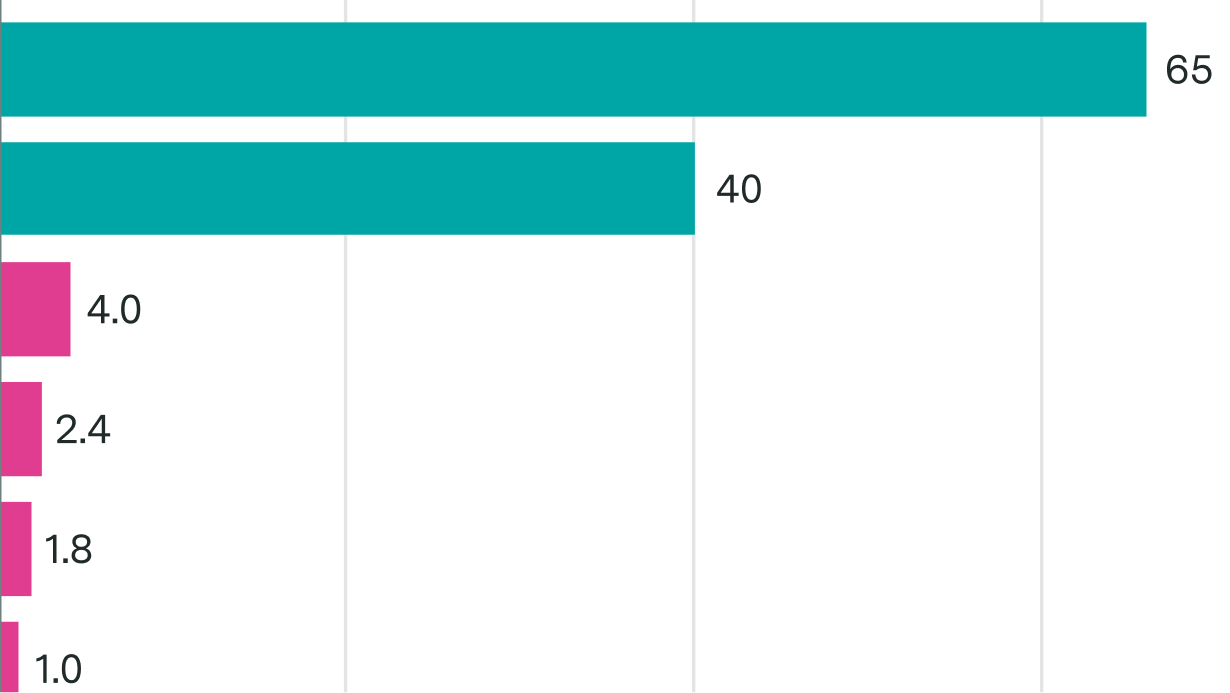
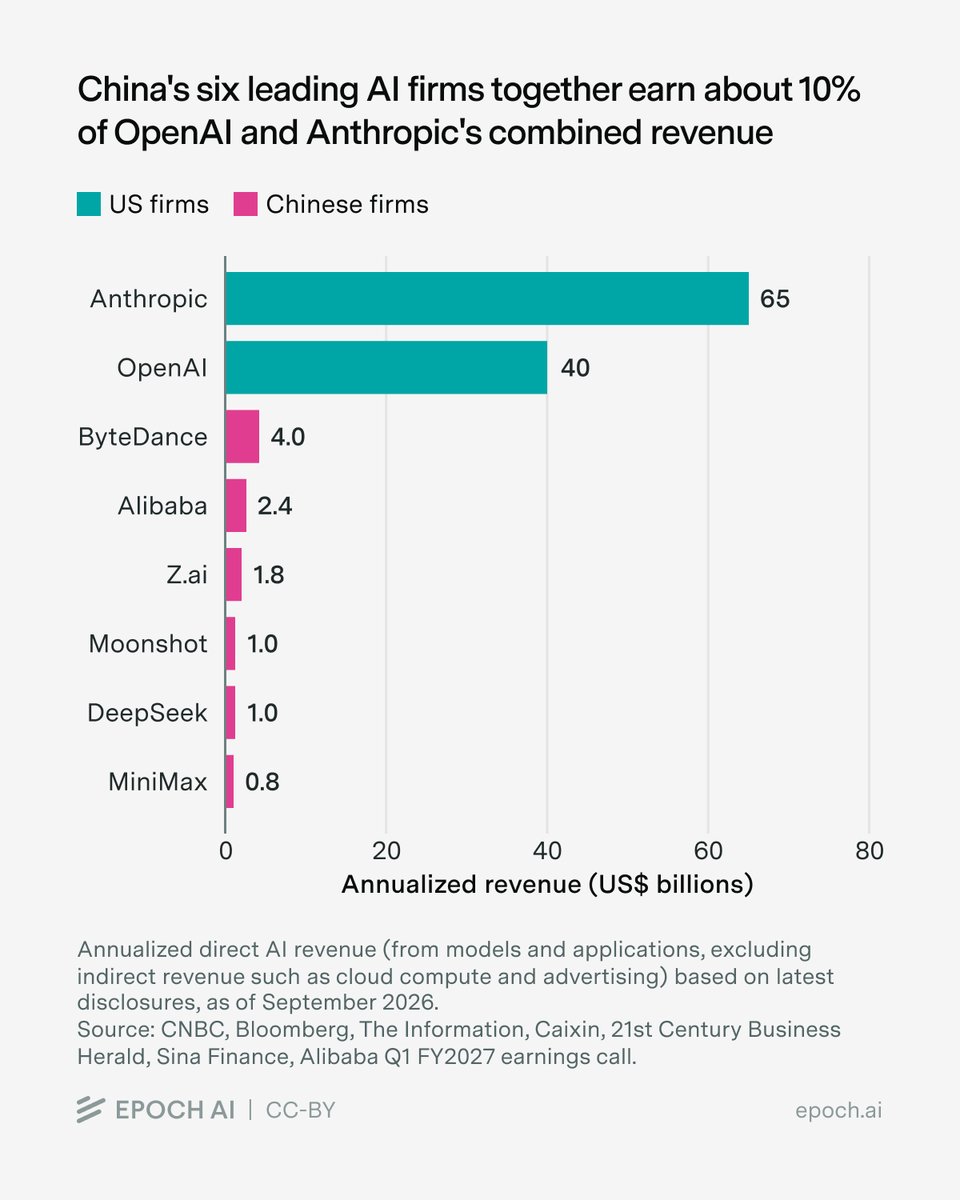
A 2026 analysis by Cheryl Wu and Anson Ho for Epoch AI estimates that, as of September 2026, China's six leading AI firms, Alibaba, ByteDance, Z.ai, Moonshot AI, DeepSeek and MiniMax, together earn about 10% of the AI-related revenue of OpenAI and Anthropic combined (epoch.ai). The authors sort their income into five streams: consumer apps, selling model access, enterprise and government projects, licensing fees, and indirect revenue from products that AI complements. For the four model-focused companies, selling API access is the dominant source. For Alibaba and ByteDance, the authors think indirect revenue may matter more, though they say public data cannot settle it.
The central tension is that releasing weights builds adoption but weakens pricing power, because anyone can host the same model. The report's clearest case is GLM 5.3 Flash: Z.ai listed it on OpenRouter, a marketplace that routes requests across hosting providers, at a 50% promotional discount on August 26 and released the weights the same day. Within a day there were twelve competing hosts; by September 15 there were 26, eight of them cheaper than Z.ai. Over those 20 days Z.ai's share of the model's OpenRouter fell from 88% to 22%, and its daily token volume dropped 70% even as total volume for the model grew 17%. A closed model, by contrast, is almost always offered at the same list price wherever it is served. DeepSeek is the exception on margins: its API gross margin is estimated at 70-80%, which the report links to scarce compute and efficient infrastructure, and, consistent with that high margin, only about 8% of estimated customer spending on DeepSeek models on OpenRouter reaches DeepSeek, the smallest share of the five labs.
The other streams have their own limits. MiniMax's consumer apps had a gross margin of only 4.7% in the first nine months of 2025, against 69.4% for its platform and enterprise services, likely because few users pay and those who do pay little, though the authors say they cannot be certain without cost data. Custom enterprise and government deployments are profitable but hard to scale, and Z.ai has been moving away from them: on-premises deployment fell from 73.7% of its revenue in 2025 to 13.5% in the first half of 2026. Licensing is mostly untested. Moonshot released Kimi K3 under a modified MIT license that requires large model-serving businesses to sign a separate agreement, but the authors note enforcement questions and say there is no public data on what it earns.
Alibaba and ByteDance can profit from AI adoption without charging much for models themselves. Alibaba sells the cloud compute that enterprise AI projects run on, and its CEO has said open-source models drive demand for its cloud. ByteDance's Seedance video model made AI-generated short dramas cheap to produce, and their producers buy heavy advertising on Douyin, which the authors use to sketch a rough, explicitly illustrative estimate of the ad spending involved. Their summary is that Chinese firms face the same problem as US ones, many users who are costly to serve and hard to convert, but from a position of less capable models and younger businesses, which may be why they have traded short-term revenue for wider diffusion.
- Epoch estimates that as of September 2026, China's six leading AI firms together earn about 10% of OpenAI and Anthropic's combined AI-related revenue.
- Consumer apps attract users but earn thin margins: MiniMax's AI-native apps had a 4.7% gross margin in the first nine months of 2025, which Epoch attributes to few paying users paying small amounts.
- erode API pricing power: Z.ai's share of GLM 5.3 Flash tokens on OpenRouter fell from 88% to 22% within 20 days of releasing the weights.
- Enterprise and government deployments are profitable but hard to scale: citing maintenance costs, Z.ai cut on-premise deployments from 73.7% of revenue in 2025 to 13.5% in H1 2026.
- For conglomerates, the payoff can be indirect: Epoch says Alibaba's and ByteDance's model releases support their existing compute sales and advertising revenue.
- token — The chunk of text a model reads and writes in — roughly three-quarters of a word — and the unit AI usage is billed in.
- open weights — A model whose trained parameters are published for anyone to download and run — unlike API-only models you can access but never possess.


Checking sign-in…
Loading comments…