NVIDIA Isaac ROS 5.0 Advances Agentic, Open Source Robotics Development
Source
blogs.nvidia.com
Author
Katie Washabaugh
Date
Context
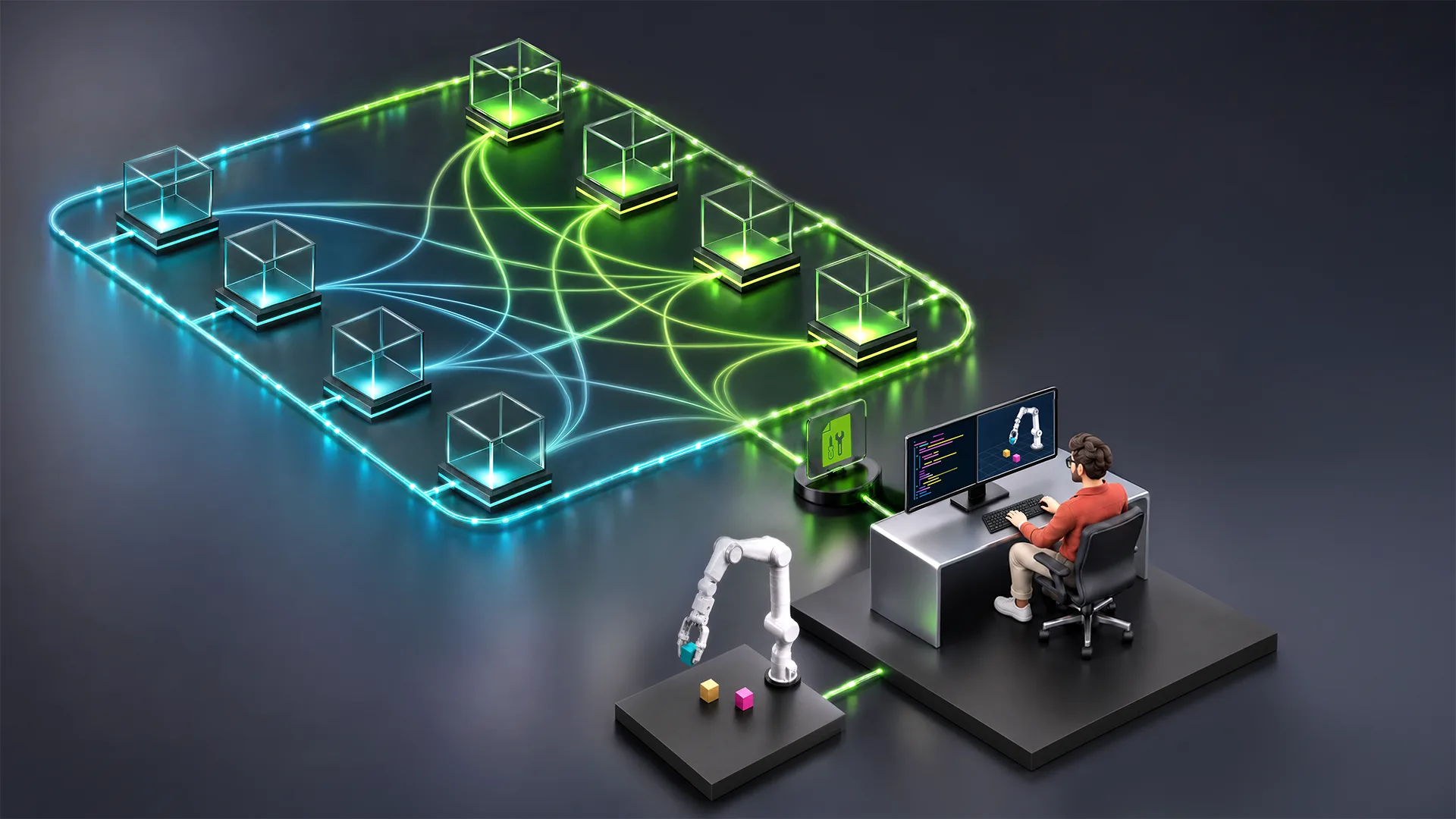
NVIDIA's Isaac ROS 5.0 adds reusable workflows that AI agents can follow while helping developers build robotics software. Its release announcement describes skills for setup and manipulation, together with documentation intended to make the software's tools and procedures understandable to coding agents.
One example is a FoundationStereo fine-tuningTaking a trained model and training it a bit more on your own examples so it gets better at one specific job.Full definition →agent skillA reusable instruction file that teaches an agent how to do one job well — the procedure, the tools, and what counts as done.Full definition →, which guides an AI agentAn AI system that doesn't just answer once but works toward a goal in a loop — taking actions, reading the results, and deciding what to do next.Full definition → in adapting a stereo-perception model to a developer's cameras and environment. NVIDIA's stated aim is more accurate perception for a given sensor configuration, though the announcement gives no measurement of that accuracy. The agent's role is to assist the development process, not to operate the robot.
Key takeaways · AI-distilled
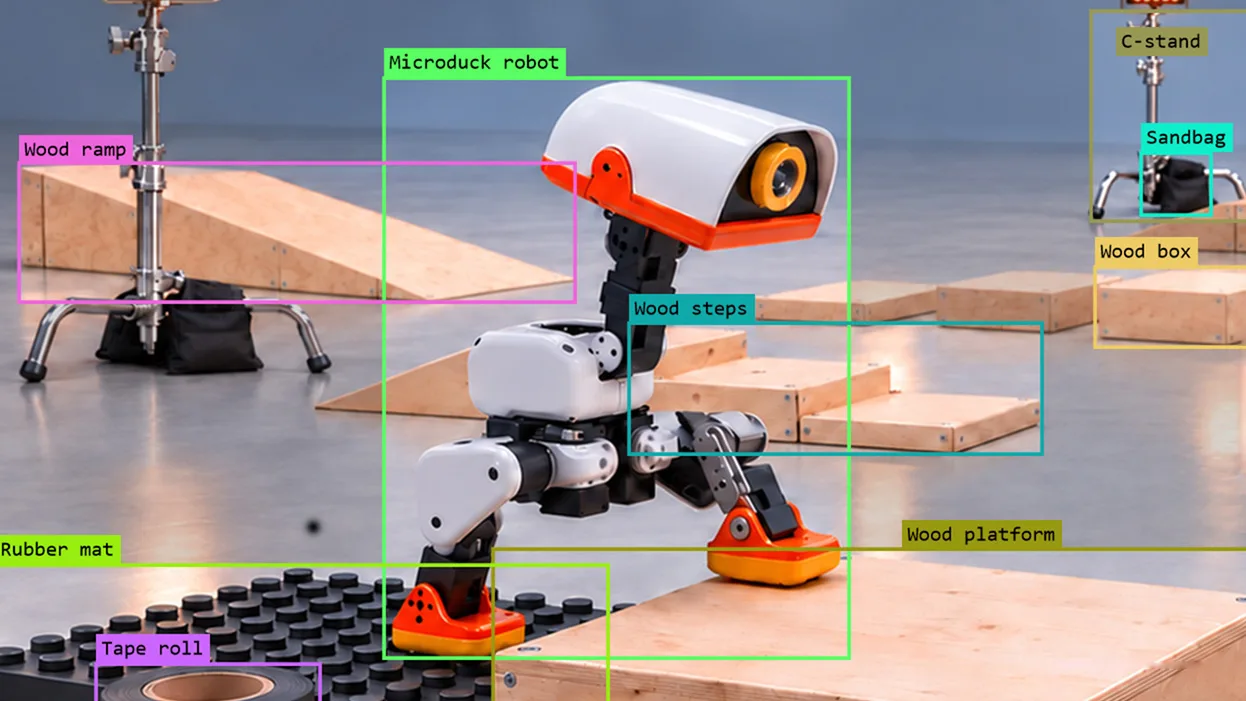
FoundationPose, NVIDIA's object pose estimation and tracking model, now ships an agent-ready inferenceRunning a trained model to get answers — the phase where AI is actually used, as opposed to trained.Full definition → library that tracks object position and orientation up to 5.5x faster than before.
NVIDIA contributed a standard data-handling interface to ROS Lyrical (via the Open Source Robotics Alliance) so robotics software can move data efficiently across different hardware, including GPUs, with CUDA as the reference implementation.
A new FoundationStereo fine-tuning skill lets an AI agent adapt NVIDIA's stereo perception model to a developer's specific cameras and environment, improving perception accuracy for that exact sensor setup rather than relying on a generic model.
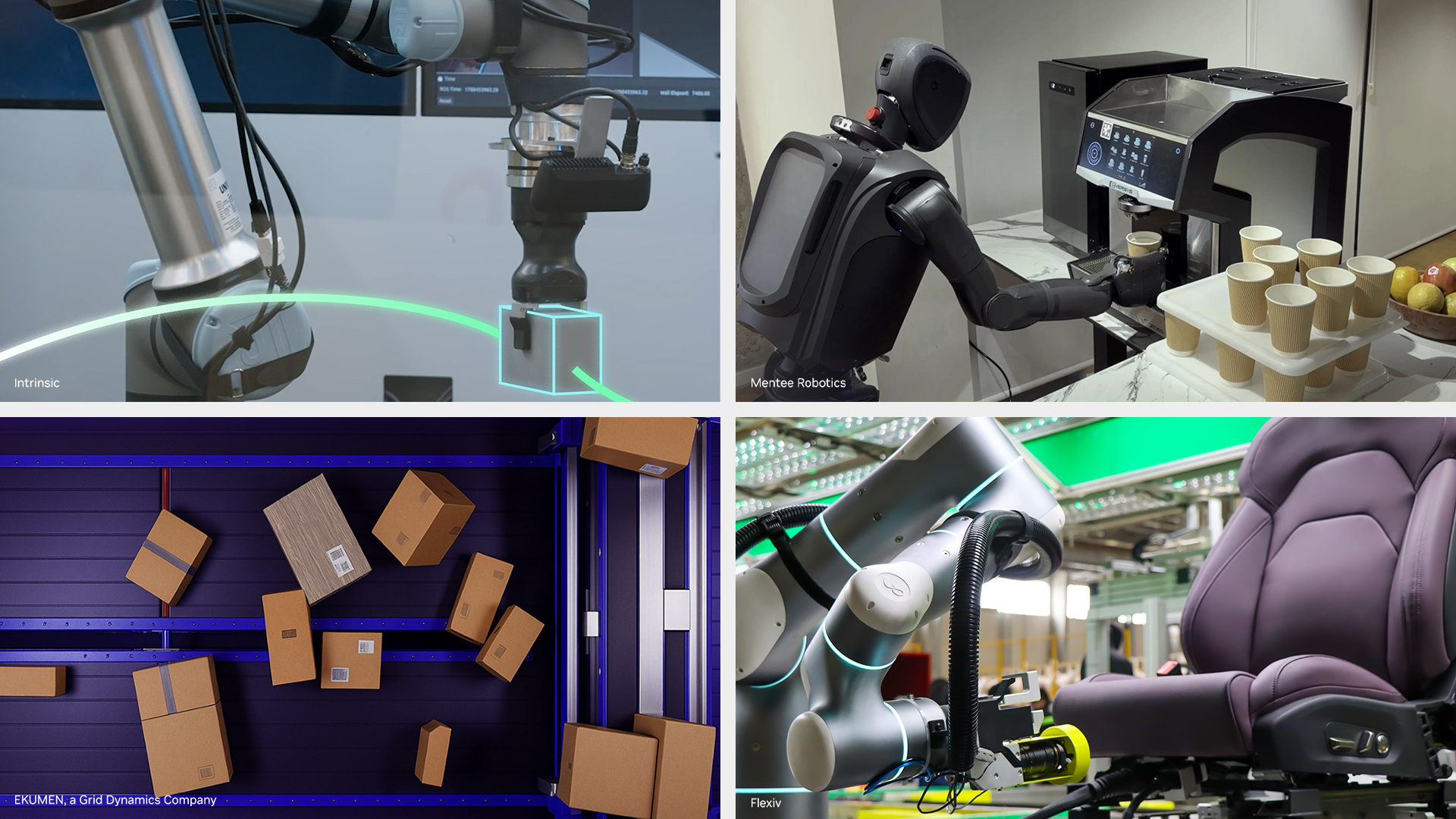
Ekumen uses the isaac_ros_cumotion GPU-accelerated motion planner to compute a collision-free path for a warehouse robot arm in roughly 2 to 5 milliseconds, validated in Isaac Sim before deployment.
The detection-plus-depth-estimation-plus-pose pick-and-place workflow is now packaged as a standalone, agent-ready skill usable outside Isaac ROS, not just as a built-in demo.
Terms in this piece · Glossary
fine-tuning — Taking a trained model and training it a bit more on your own examples so it gets better at one specific job.
agent skill — A reusable instruction file that teaches an agent how to do one job well — the procedure, the tools, and what counts as done.
AI agent — An AI system that doesn't just answer once but works toward a goal in a loop — taking actions, reading the results, and deciding what to do next.
inference — Running a trained model to get answers — the phase where AI is actually used, as opposed to trained.