Ori wires Claude Code, Codex, and OpenCode to OpenRouter with per-harness tuning
- Source
- x.com
- Date

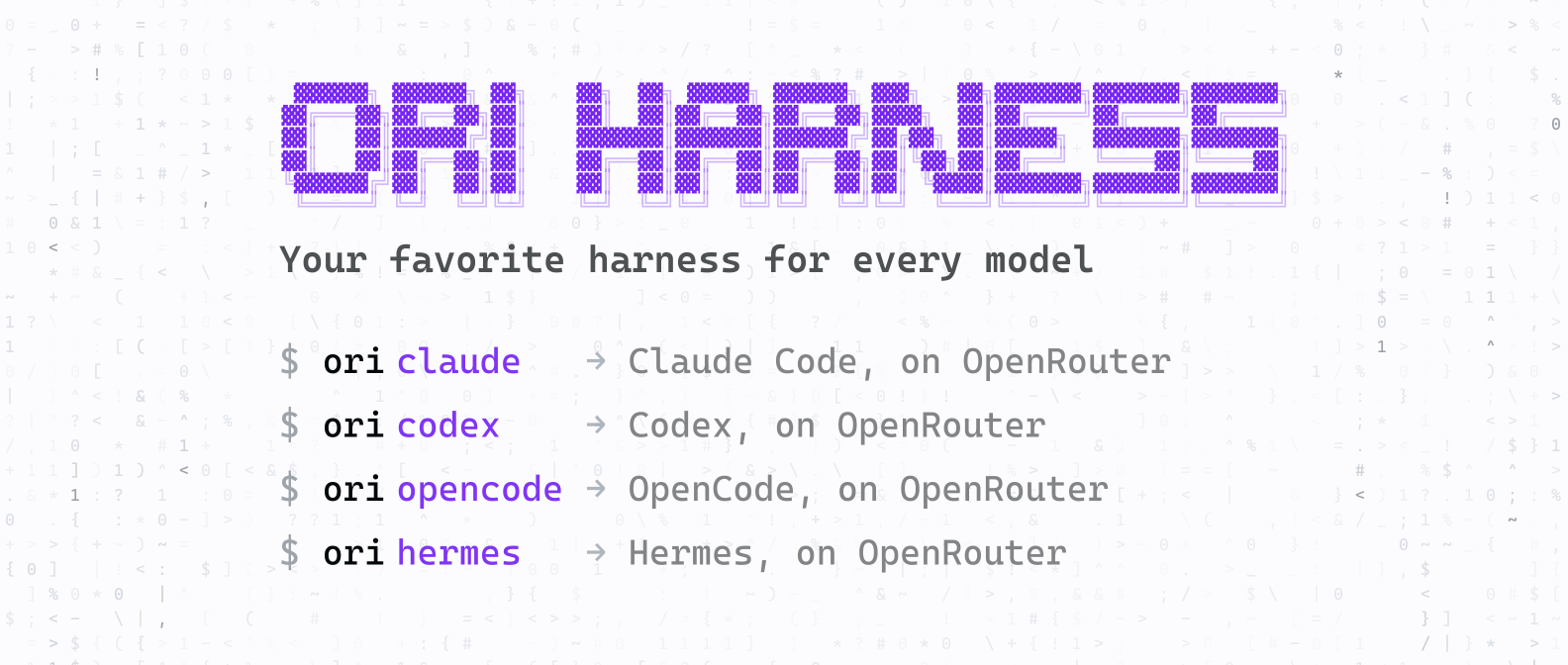
Introducing Ori Harness: the easiest way to use your favorite harness with OpenRouter. Ori configures Codex, Claude Code, OpenCode, and Hermes out of the box to work with OpenRouter, with settings optimized per harness, for any model.

Claude Opus serves from 8 endpoints across Anthropic, Bedrock, Vertex, and Azure. If one has a bad 20 minutes, you can keep going, without any retry logic.
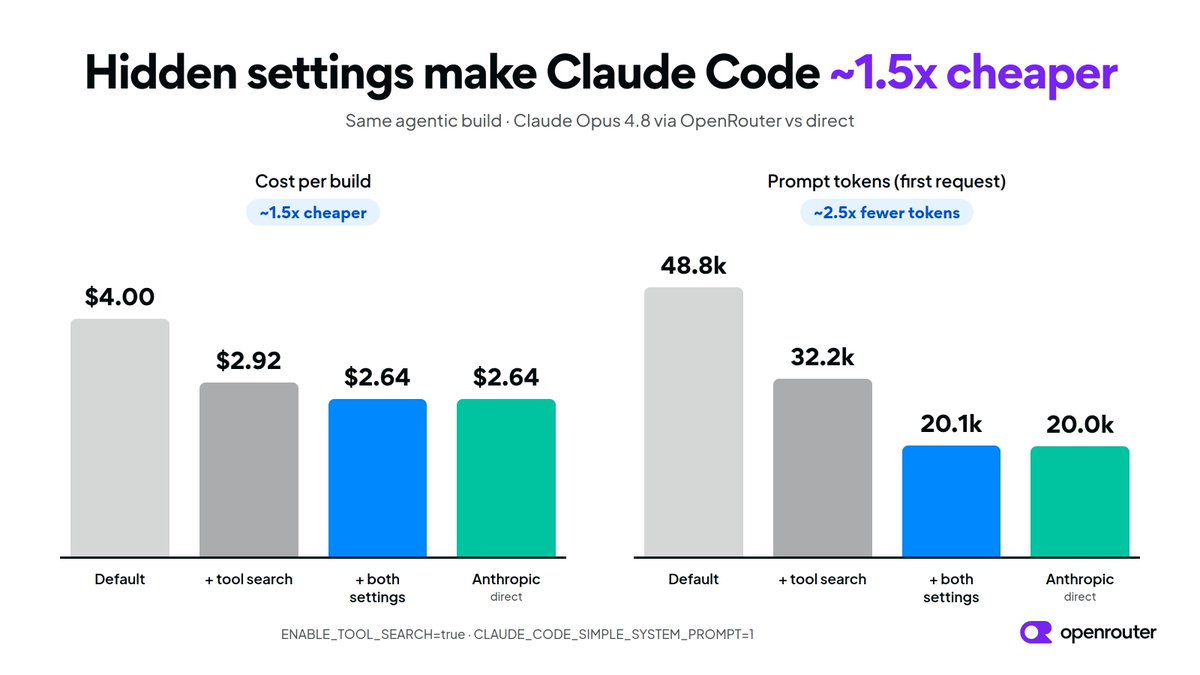
Where a harness behaves differently depending on the model behind it, ori adjusts the settings so you don't have to. In Claude Code, one setting alone nearly halves the system prompt and meaningfully reduces task length and cost, and it isn't set by default when using a gateway.
Install: curl -fsSL https://t.co/vROsUW01Hr | bash Blog: https://t.co/Mfj8ZYYGDO
Context
OpenRouter's Ori configures existing coding- programs to use its models, including settings that depend on the selected model. Its launch article uses Anthropic's Claude Code as an example: connecting through a gateway requires many environment settings, and tool search, which saves much of the for Anthropic models, is not supported by most open models, so Ori adjusts settings to the chosen model.
The attached chart illustrates why configuration matters. For one build run with Claude Opus 4.8, enabling tool search and a simpler system prompt reduced the reported cost per build from $4.00 to $2.64, matching the direct Anthropic figure in the same chart. That is evidence from the company's single example, not a general savings rate. Ori packages these configuration choices so users do not have to reproduce them manually.
- AI agent — An AI system that doesn't just answer once but works toward a goal in a loop — taking actions, reading the results, and deciding what to do next.
- system prompt — The standing instructions a model receives before any user input — defining its role, rules, tools, and tone for the whole conversation.
- agent harness — The scaffolding around a model that turns it into a working agent — the loop, the tools it can call, and the rules for when to stop.
Checking sign-in…
Loading comments…