Efficient Benchmarking Is Just Feature Selection And Multiple Regression 2026 05 25
Source
cohere.com
Author
Cohere editorial sitemap
Date
Why it matters
You can predict a model's full benchmark score from a small selected subset of questions, cutting evalA repeatable test for AI quality — a set of tasks plus scoring — used the way software teams use test suites, because model output is too variable to judge by eyeballing.Full definition → compute. The released library reproduces the method and compares it against IRT and anchor-point baselines.
Key takeaways · AI-distilled
Cohere researchers Sam Bowyer, Acyr Locatelli and Kris Cao frame efficient benchmarking, predicting a model's full benchmarkA standard public test set for comparing AI models — the shared scoreboards behind every "model X beats model Y" claim.Full definition → score from a subset of its questions, as multiple regression with feature selection.
Under that framing, the paper reports that existing efficient-benchmarking methods improve greatly just by using kernel ridge regression at the prediction stage.
Picking question subsets with minimum redundancy maximum relevance (mRMR), an information-theoretic feature-selection method, further lowered prediction error (MAE, RMSE) and raised rank correlation with true scores, except in very data-poor settings.
The authors say mRMR subsampling is much faster than competing methods that fit probabilistic models or run clustering, and more likely to select the same questions across random seeds or training splits.
Terms in this piece · Glossary
LLM — A large language model — the neural network behind tools like Claude and ChatGPT, trained on huge amounts of text to predict what comes next.
benchmark — A standard public test set for comparing AI models — the shared scoreboards behind every "model X beats model Y" claim.
eval — A repeatable test for AI quality — a set of tasks plus scoring — used the way software teams use test suites, because model output is too variable to judge by eyeballing.


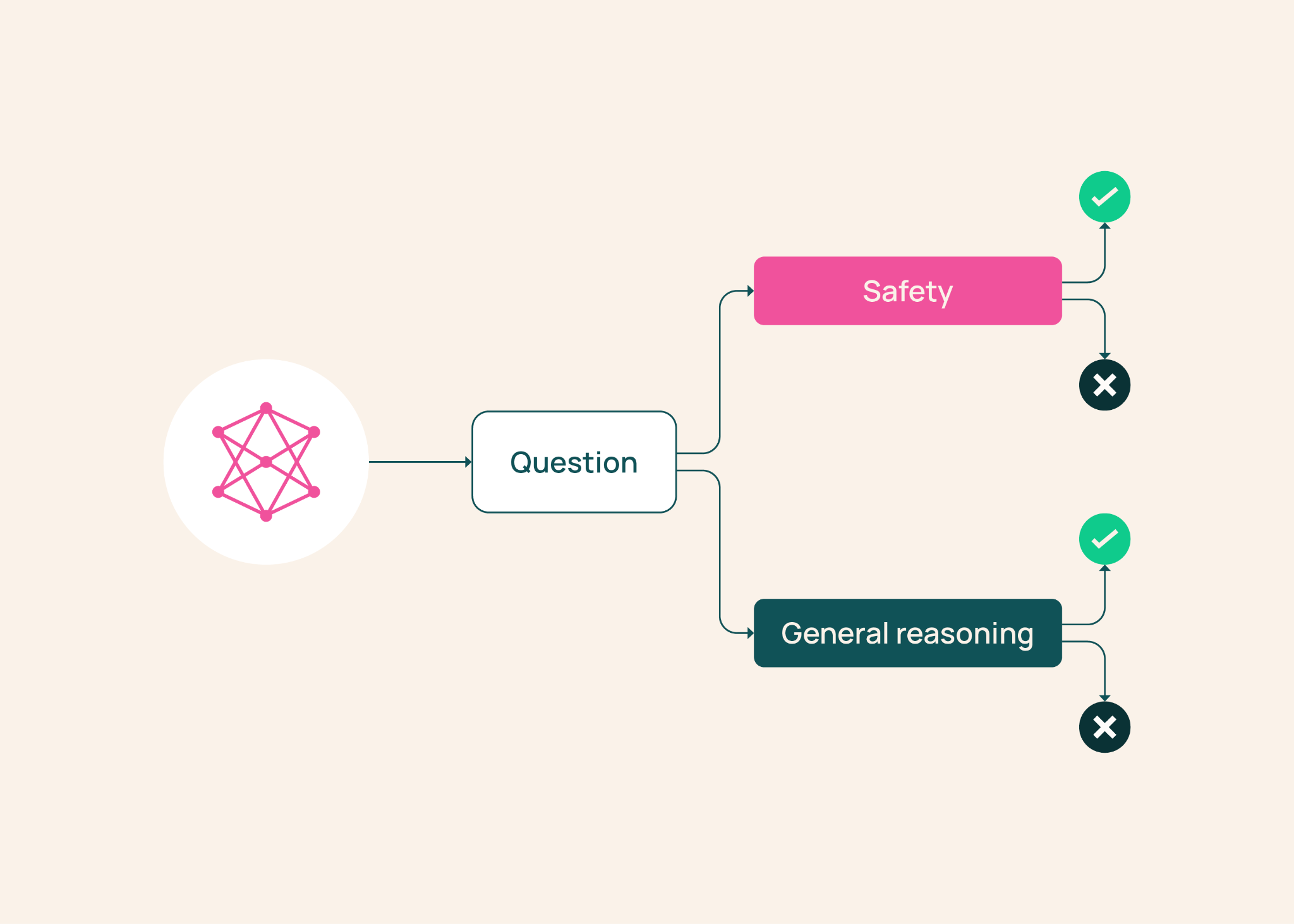 articleBenchMIRT: What are LLM benchmarks actually measuring?allenai.org
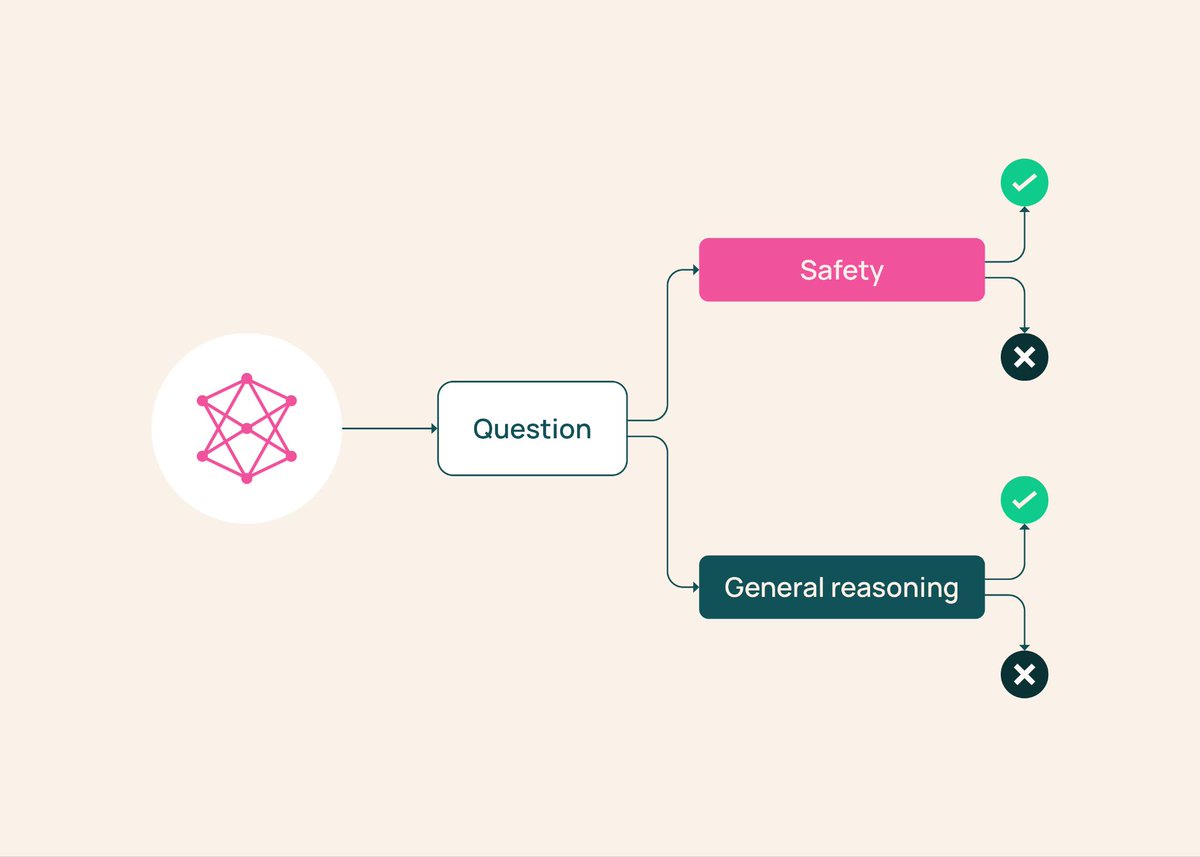 articleAi2 uses psychometrics to audit what LLM safety benchmarks measureAi2
 articleCoT-Core: Accelerating LLM Evaluation via CoT-Aware Coreset SelectionQihua Pan, Zhenheng Tang, Peijie Dong, Xiang Liu, Huacan Wang, Bo Li, Xiaowen Chu