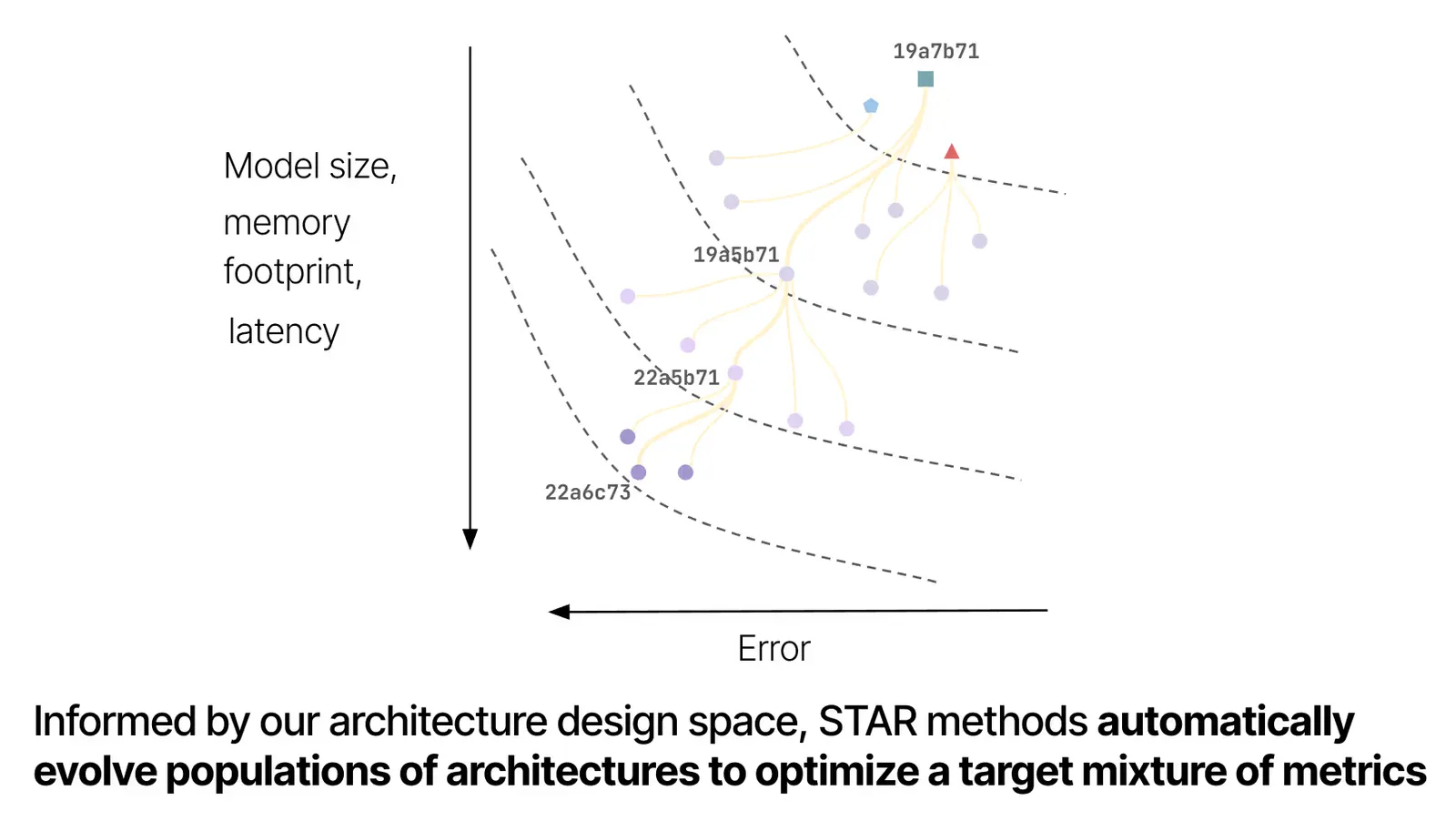
Liquid AI's STAR method searches for neural-network designs against chosen quality and resource requirements. It encodes a ModelA computational system that uses learned patterns to produce an output from information supplied to it.Full definition →'s computational components and their connections as numerical sequences, builds and evaluates candidate networks, then selects and recombines successful designs for another round. The objectives can include model size or memory requirements, as well as measured response LatencyThe time between asking for a result and having it, including the model's generation time, tool calls, retries and any queueing.Full definition → on target hardware. That makes deployment constraints part of the design search itself: a team can seek an architecture suited to its hardware instead of selecting solely for a quality score. Research account.
Terms in this piece · Glossary
Model — A computational system that uses learned patterns to produce an output from information supplied to it.
Latency — The time between asking for a result and having it, including the model's generation time, tool calls, retries and any queueing.
Process — A running instance of a program, with its own working memory, open files and identity.