Designing Multi-User Agents for Group Chats and Wearables
- Source
- youtube.com
- Author
- AI Engineer
- Date

Context
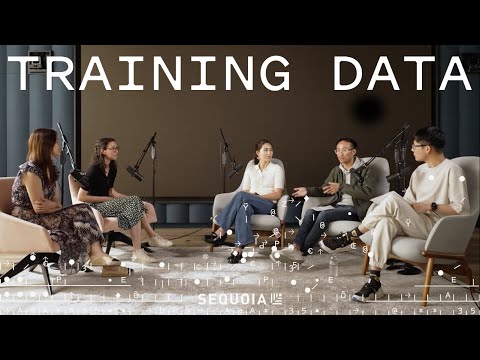
A shared assistant must decide who should receive an answer as well as what the answer should say. In this talk on group agents, the speaker describes a deployed assistant that, asked in a conference group how to reach the venue, replied by direct message instead of posting to the group. Another example describes a glasses-based assistant that spoke to the driver through the glasses rather than announcing through the car's audio system. These accounts illustrate an additional design requirement: information suitable for one participant may be unsuitable for everyone present. Recipient and output-channel selection therefore belong in the response process. The examples illustrate intended privacy behavior without establishing that it always succeeds.
- AI agent — An AI system that doesn't just answer once but works toward a goal in a loop — taking actions, reading the results, and deciding what to do next.
- context window — The maximum amount of text a model can consider at once — its working memory for the current conversation or task.
- prompt injection — An attack that hides instructions in content an AI will read — a webpage, email, or document — tricking it into following the attacker instead of the user.
“a shared assistant is not just a large model which is shared between different people but it's almost a new social contract”
Sai Krishna
“The memory is what the agent becomes and it's becoming in real time it's evolving in real time.”
Sai Krishna
“we can't secure an agentic system like we secure a large language model”
Sai Krishna
 videoHow to Write Your First AI Eval - SallyAnn DeLucia, Arize AI
 videoBuild Your Own Team of Managed Agents - Jack Wotherspoon, Google DeepMind
 videoHow to Build an AI Code Review Agent - Daksh Gupta, Greptile
 videoHow to Build Voice Agents That Don't Fall Apart When You Interrupt - Jesse Hall, LiveKit

Checking sign-in…
Loading comments…