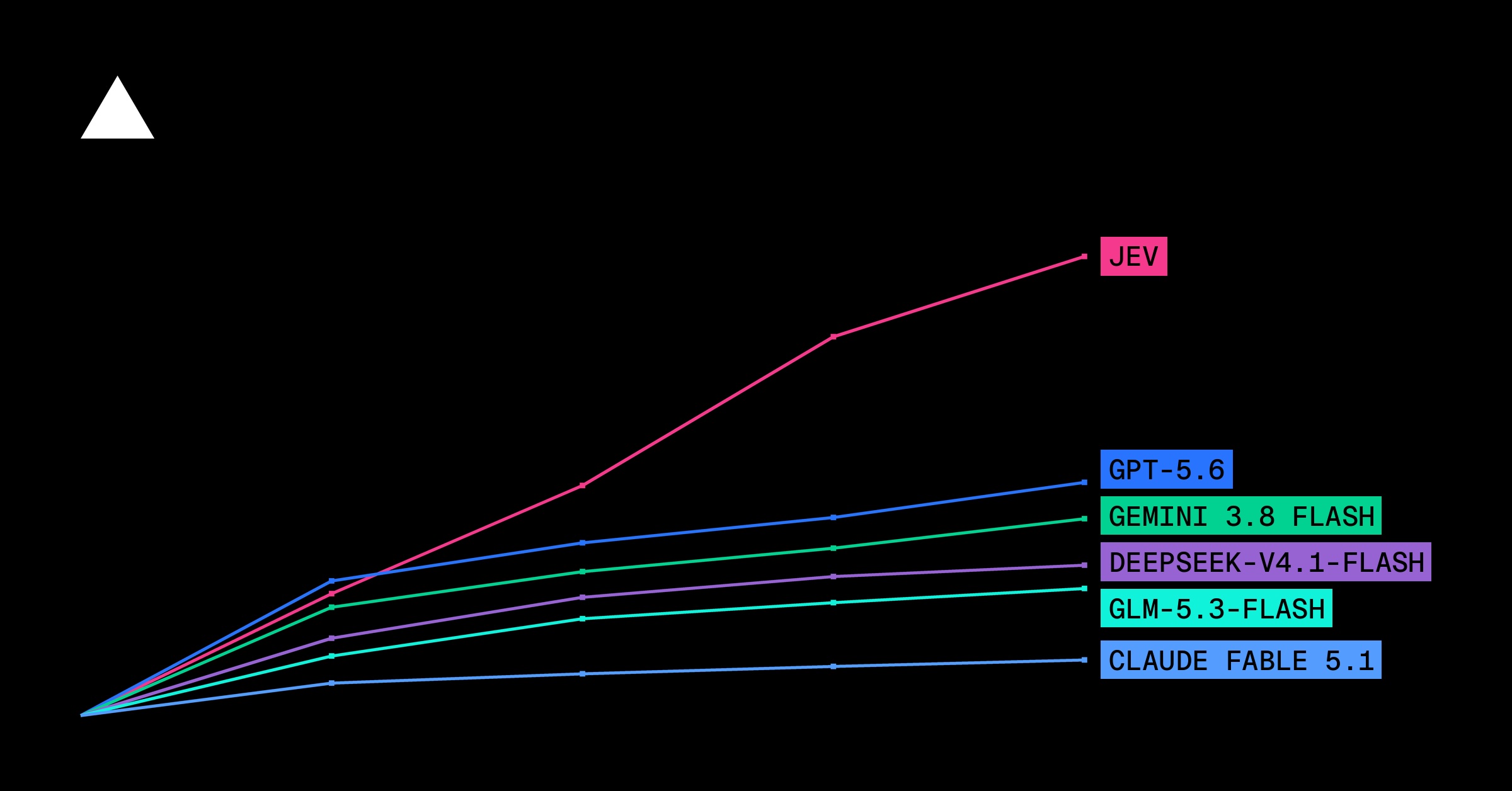
Together AI fine-tuned Qwen3.5 4B into a Jev-style classifier, published as together/Tev1-4B-experimental on its serverless platform. Given state, a question and labeled options as JSON, in Together's example it returns only the chosen option's label and key.
The recipe samples roughly 38,000 examples from MultiNLI, BoolQ, Banking77, AG News and SST-5 plus programmatic policy, routing and research-taxonomy sets. Together says keeping the set this small holds training to about $17 and roughly 25 minutes.
The walkthrough deploys the fine-tuningTaking a trained model and training it a bit more on your own examples so it gets better at one specific job.Full definition → to a dedicated Together endpoint on a single H100 80GB and ends by showing how to stop that endpoint, with the hosted Tev1-4B-experimental model as the alternative to running your own.
For direct API calls, Together says to set temperature=0, max_tokenThe chunk of text a model reads and writes in — roughly three-quarters of a word — and the unit AI usage is billed in.Full definition →=8 and disable thinking, with a system promptThe standing instructions a model receives before any user input — defining its role, rules, tools, and tone for the whole conversation.Full definition → telling the model to treat state as data, select exactly one option and return only its letter, because the public endpoint does not inject these defaults.
Terms in this piece · Glossary
fine-tuning — Taking a trained model and training it a bit more on your own examples so it gets better at one specific job.
token — The chunk of text a model reads and writes in — roughly three-quarters of a word — and the unit AI usage is billed in.
system prompt — The standing instructions a model receives before any user input — defining its role, rules, tools, and tone for the whole conversation.
Why it matters
Gives teams a cheap, concrete recipe to own a fast classification layer instead of depending on a hosted decision-model API for every bounded judgment call.