AI Model Co-Design: Hardware-Friendly LLM Design
- Source
- developer.nvidia.com
- Author
- Elizabeth Goodman
- Date
Context
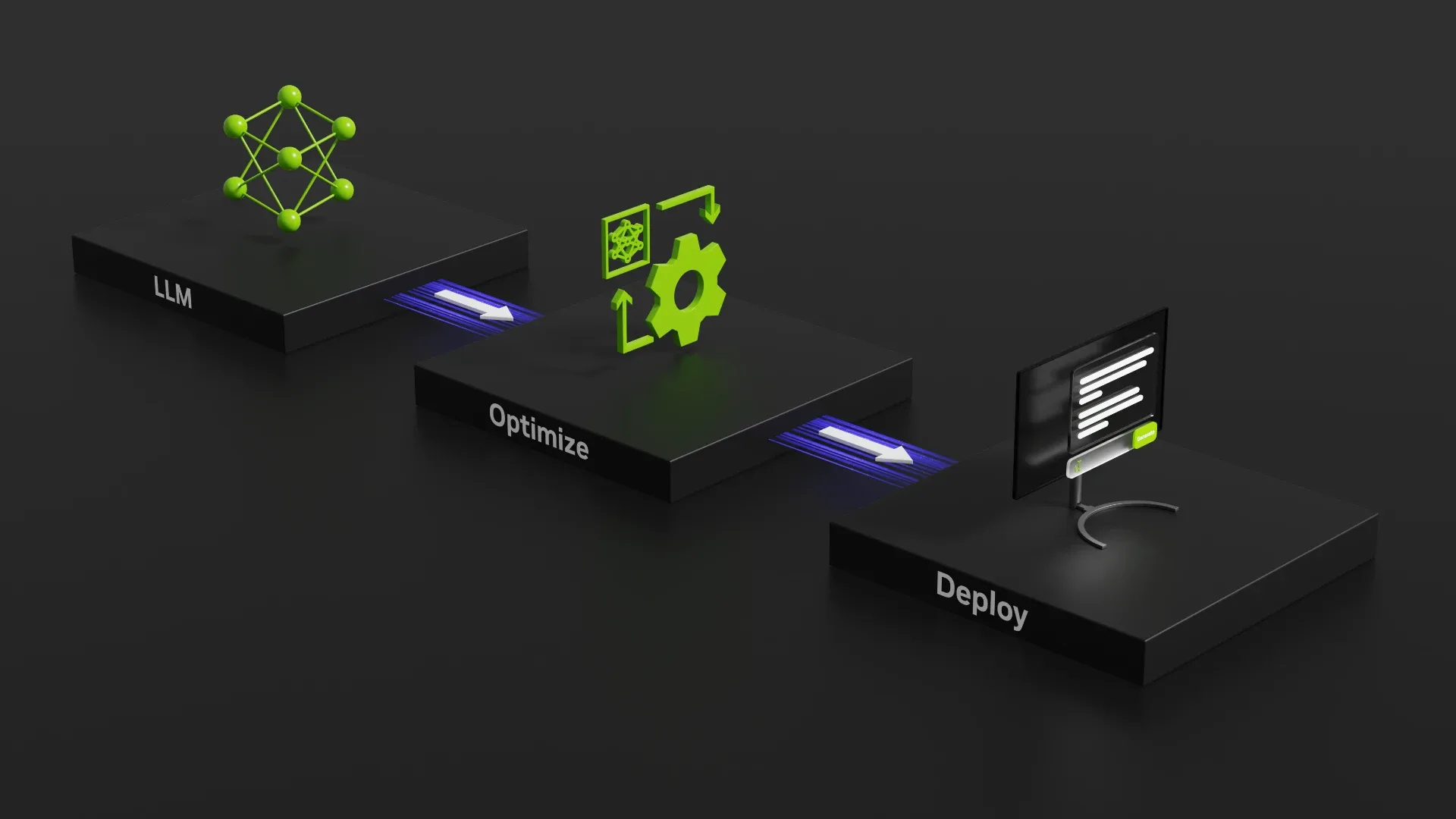
A can generate plenty of text across a data center while still feeling slow to each person using it. NVIDIA's hardware-design guide separates aggregate from responsiveness, which depends on waiting for the first output and subsequent text. A useful design must meet its response-time target while preserving accuracy. The guide explains this tradeoff.
The model's internal dimensions help determine that balance. GPU computation involves moving data as well as performing arithmetic; poorly chosen matrix dimensions can leave the processor waiting on memory. Designing those dimensions for the hardware can improve utilization. The guide therefore treats deployment requirements as inputs to model design, rather than something to address only after . Its linear-layer analysis provides the mechanism.
- Model — A computational system that uses learned patterns to produce an output from information supplied to it.
- throughput — How much model output a provider can generate over time, commonly measured in output tokens per second.
- Training — The process that adjusts a model using examples and a measure of how well it performs.
- mixture-of-experts — A model built from many specialist sub-networks where only a few activate per token, giving big-model capability at small-model running cost.
 articleDiagnose Distributed AI Workload Failures with NVIDIA Attribution
 articleKeep Distributed Training Running with Automated Workload Recovery
 articleMemory-Enforced GPU Sharing in Kubernetes with NVIDIA CUDA 13.4
 articleHow NVIDIA OpenShell Reference Architecture Secures and Governs AI Agent Workloads at Scale
Checking sign-in…
Loading comments…