Making LLMs faster without sacrificing accuracy
- Source
- amazon.science
- Publisher
- Amazon
- Date
Context
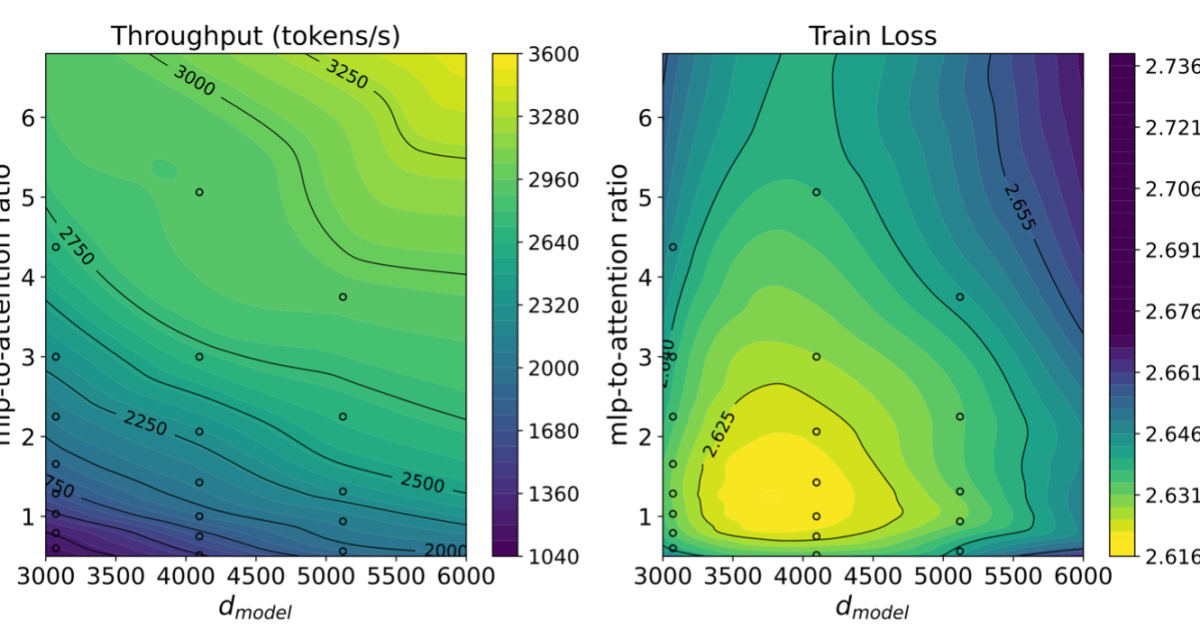
Models with the same parameter count can have different serving speeds because their internal organization differs. Amazon researchers trained more than 200 designs to estimate how architectural choices affect both accuracy and , then used those estimates to search for better combinations. Their research account presents Surefire as the resulting family designed around that tradeoff.
In one reported comparison, Surefire-1B delivered 21% higher throughput than Meta's Llama-3.2-1B using vLLM on an H200 GPU, with average accuracy of 55.4% versus 54.9%. The test used batches of 128, with 4,096 input and 1,024 output . This supports considering architecture when designing a model for a serving workload, with gains tied to the tested configuration.
- throughput — How much model output a provider can generate over time, commonly measured in output tokens per second.
- Token — A piece of text, such as a word, part of a word or a punctuation mark, that a language model represents as numbers and handles as a unit.
- attention — The mechanism that lets a model weigh which earlier words matter for the word it's currently processing — the core operation of a transformer.
- Inference — Using a trained model to produce an output from a supplied input.