Code-driven AI illustrations are more useful than images from dedicated image models
- Source
- simonwillison.net
- Publisher
- Simon Willison
- Date
Context
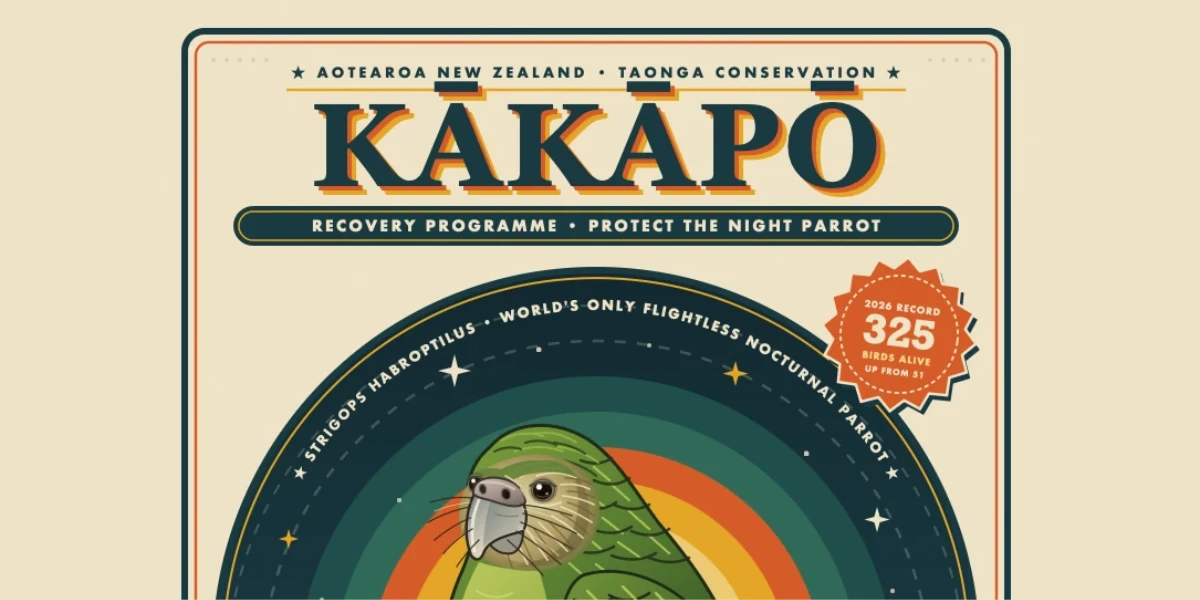
Simon Willison argues that for most illustration work, asking a text-output to write code that draws the image now beats asking a dedicated image model for pixels, and his reason is editability. Frontier LLMs released in the second half of 2026, he writes, have become much better at visual reasoning and design, and because what they produce is code, whether SVG, HTML and CSS, canvas drawing, Blender scripts, WebGPU shaders or PDF, you or the model can change one element later without the oddities of re-prompting an image generator. In his post he asked Gemini 4 Neon in Google's AI Studio for an SVG poster promoting the Kakapo recovery project in a 1970s graphic style, researching the details first. It took several rounds, partly because AI Studio does not render SVG, so the model could not see its own layout mistakes until he sent back images of text that did not fit. The model used Google searches for the poster's figures, and he says he checked them and they were all correct. Whatever one thinks of the design, its text can be edited directly in the SVG or visually in Inkscape, Adobe Illustrator or Boxy SVG.
Bitmap generators run from early leaders such as Stable Diffusion, DALL-E and Midjourney to newer LLM-driven tools such as Google's Nano Banana and OpenAI's ChatGPT Images. Willison credits the newer ones with editing existing images while preserving details, so a design can be iterated over several turns. He says they still produce glitches that show when you zoom in, draw text as shapes from the model rather than setting it in a real font, and are flat: you can describe or annotate a change, but you cannot take hold of one element or layer and move it. In an update he notes that Ideogram 4.0 claims bounding-box layout control through structured JSON prompts, an advance he had missed. He still sees a place for image models in photorealism. For explanatory diagrams, editable posters, UI components, visualizations and game assets he thinks code is the better bet, and he connects this to the recent surge in vibe game development, where models such as Claude Opus 5.5, GPT-6 Astra and Gemini 4 Neon make good-enough 3D models, textures and sprites entirely by writing code, a shift he described in October.
The commercial point is about Anthropic. After Nano Banana and ChatGPT Images, Willison thought Anthropic had a serious product gap, because enterprise customers who live in PowerPoint would expect a strong image model. Now Claude produces visually compelling presentations and website designs, and Claude Design offers a full design-system platform, all built on code-driven images. He calls this another variant of the bitter lesson, the idea that general methods eventually overtake specialized ones: he had assumed a specialist image model was necessary, and text-output LLMs kept improving until they could do visual design by writing code. This is one experienced observer's judgment from his own use, built on a single worked example rather than a measured comparison, and his update shows image models were also moving in ways he had not tracked.
- Simon Willison observes that frontier text-output LLMs released in the second half of 2026 are much better at visual reasoning and design, so asking one for a 2D image or 3D model as code is likely to give a useful and sometimes aesthetically impressive result.
- Because the picture is defined as code such as SVG, later changes avoid the oddities of iterating with an image-output model: you can edit the text in the directly or open it in Inkscape, Illustrator or Boxy SVG and adjust it visually.
- His Gemini 4 Neon poster test in AI Studio took several rounds of fixes, partly because AI Studio does not render SVGs, so the model could not spot its own visual mistakes without help. He checked the numbers it found via Google search and says all are correct.
- With a , any image that a file or script can produce is reachable: HTML and CSS, Canvas, Blender scripts, WebGPU shaders or PDF. He ties this to the rise of vibe game development, where code-built assets are tweaked and remixed by writing more code.
- He still sees dedicated image models as the right for photorealism, but notes they can glitch in fine detail, draw text without real font consistency and produce flat output with no editable layers, problems that code-driven images avoid.
- Large language model — A model trained on large amounts of data to process and generate language.
- File — A named unit of stored data that keeps its contents while no program is using it.
- Agent mode — A mode in which one agent can inspect, edit, run commands, and iterate toward an outcome.
- Tool — An operation that the software around a model makes available for the model to request, with a name, expected inputs and a kind of result.