UniRL runs one RL loop across diffusion, LLM and unified models
- Source
- x.com
- Date

🚀Introducing UniRL, an RL infra for unified multimodal models. Together with two new RL algorithms: DRPO and Flow-DPPO. One RL loop across diffusion/flow matching models, LLMs/VLMs, and unified multimodal models👇 Code: https://t.co/fhKEqqFpc8 (yes — U(you)-ni-(need) RL 😉)

1、Most RL stacks are built for one modality. UniRL applies a single post-training loop — generate → score → advantage → update → sync — across model families. Model and algorithm are two independent axes, so your coverage is the model × algorithm product, not a fixed recipe menu. 2、One loop, every modality: text→image, text/image→video, vision-language, text-only LLM and VLM, the LLM→diffusion prompt-enhancer, and unified autoregressive+diffusion generation (Hunyuan-Image 3 and Bagel) — a model class no single-purpose RL repo can even express. 3、Built to scale: pluggable rollout engines (train-side / SGLang / vLLM-Omni) behind one typed contract, FSDP2 sharding, and three deployment modes from a single config knob. 4、Two team-original algorithms headline the release: FlowDPPO: Policy optimization for flow/diffusion models with trust-region masks based on exact divergence (See our paper: Flow-DPPO: Divergence Proximal Policy Optimization for Flow Matching Models https://t.co/7TPFT72RDa) DRPO: LLM RL with a smooth, advantage-weighted quadratic regularizer (See our paper: Rethinking the Divergence Regularization in LLM RL [https://t.co/eXTnK1sCts])
Context
Tencent's UniRL applies a common reinforcement-learning workflow across language, image and video model families. It generates samples, scores them, estimates which performed better, updates the model and syncs the updated weights back to the generation workers. Sharing those stages gives researchers a common training structure for different kinds of output. Release thread, framework documentation.
The framework treats model and algorithm as independent dimensions that combine within a domain. Its documentation distinguishes algorithms for diffusion models from those for autoregressive language models, so the common loop supports multiple families without implying that every algorithm works with every model. Compatibility explanation.
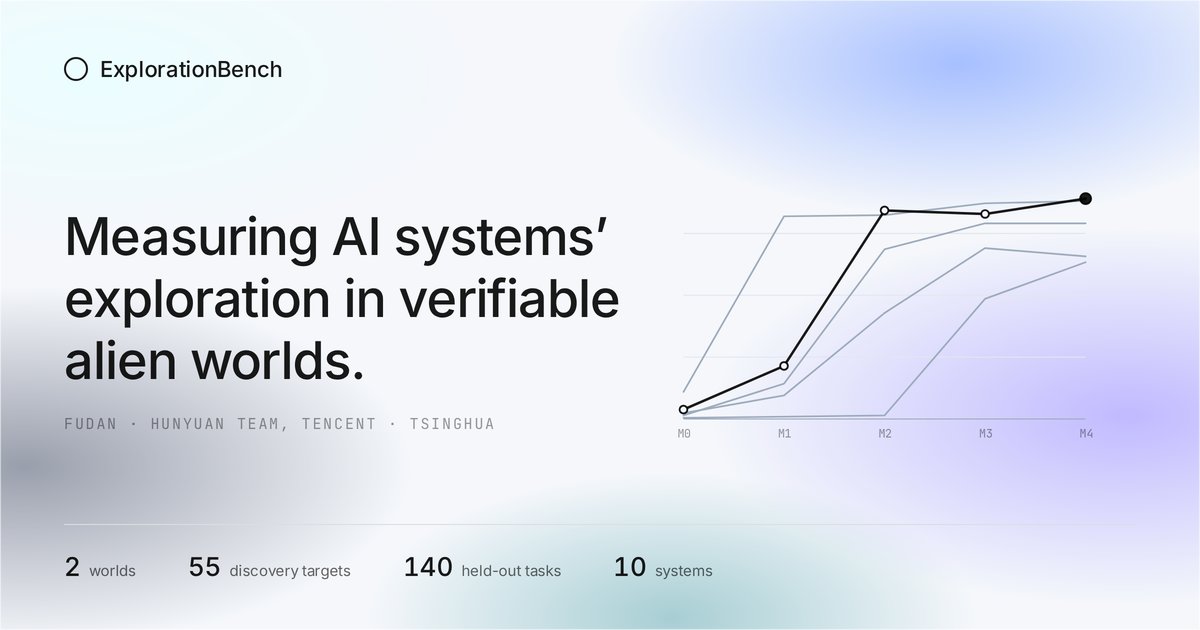 postExplorationBench tests how models explore, with exactly verifiable grading
 postHy Image3.5 preview is live. 🚀 Professional-grade image generation, +30% win…
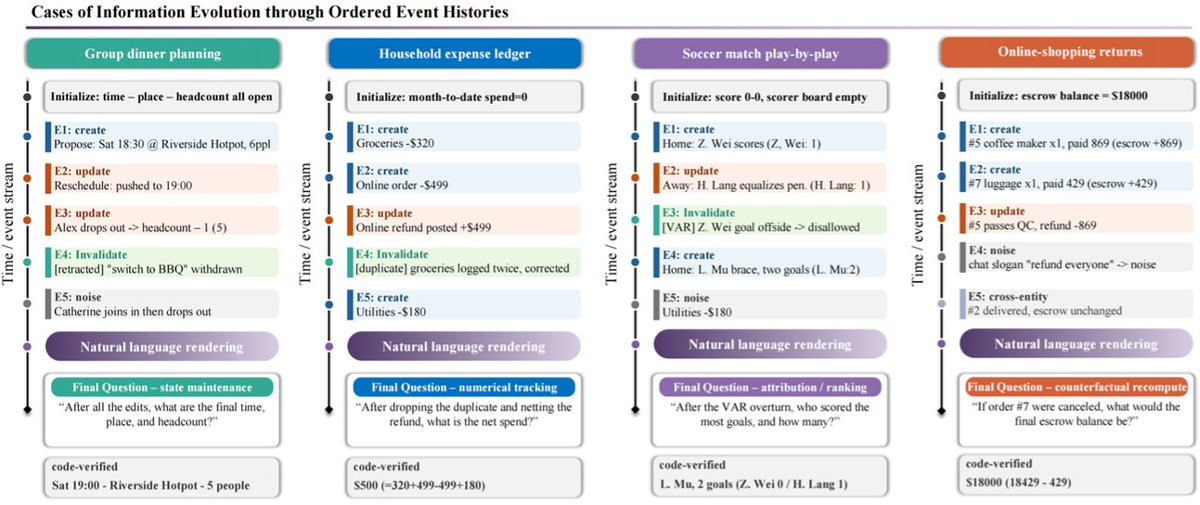 postTencent Hunyuan's EvolveScaler trips up frontier models on evolving facts
 postTencent Hunyuan open-sources AuK, a unified speech generation and editing model

Checking sign-in…
Loading comments…