Antidoom: retraining one token to stop reasoning models looping
- Source
- x.com
- Date

Today we release Antidoom, an open-source method that removes a common failure mode in reasoning models: the doom loop. Doom-loop rates before and after, with eval scores up across the board: > Early LFM2.5-2.6B checkpoint: 10.2% → 1.4% > Qwen3.5-4B: 22.9% → 1% (greedy sampling) 🧵

A doom loop happens when the model emits a span, then repeats it over and over until the context window runs out. Small reasoning models hit it most on hard math and coding. The usual fixes are stopgaps. Applying repetition_penalty can degrade quality. RL needs calibrated rewards and costly rollouts. (2/6)

Our approach is surgical. The loop almost always starts on one overtrained token, often an interruptive the model overproduces ("Wait," "So," "Alternatively"). We retrain that single token to prefer coherent alternatives and leave the rest of the distribution largely intact. (3/6)
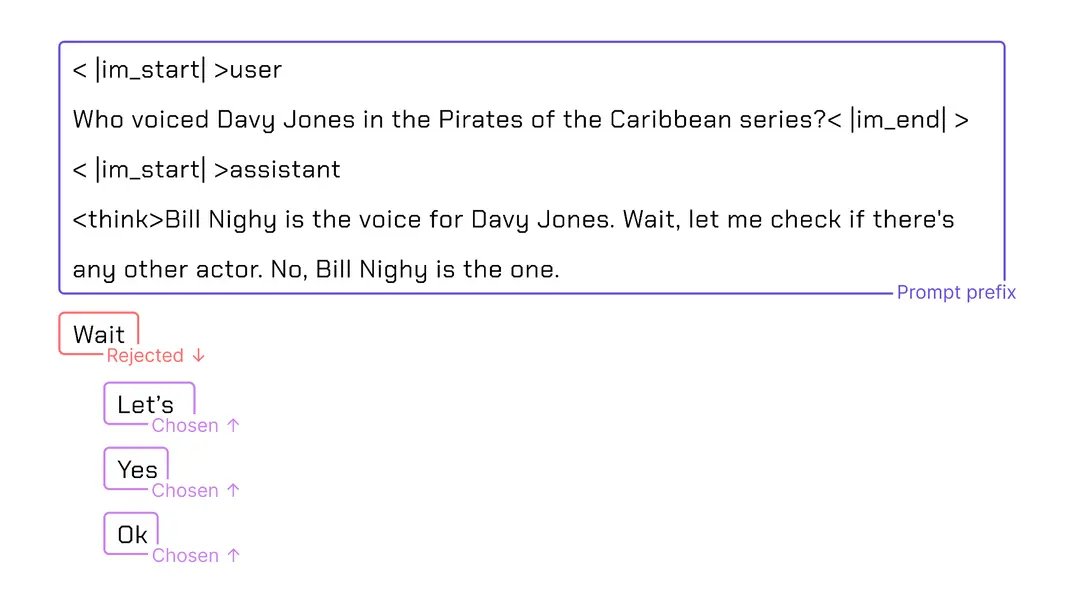
It runs on Final Token Preference Optimization (FTPO), in the DPO family: > trains only the trailing token, mid-generation > spreads probability across multiple chosen tokens > KL-like loss in logit space, so training doesn't disturb the rest of the vocabulary The training teaches the model nothing new. It clears the looping that blocked answers the model could already produce. (4/6)

Context
Liquid AI's Antidoom targets a failure in which a repeats the same passage until it exhausts the space available for its response. The training focuses on the next- choice where repetition begins, encouraging coherent alternatives while limiting changes to other choices. Method announcement.
For an early LFM2.5-2.6B checkpoint, the company reports reducing the looping rate from 10.2% to 1.4%. The intended benefit is letting the model finish answers that repetition would otherwise interrupt. The intervention targets a particular generation failure, and the remaining loop rate shows that the reported improvement was substantial but incomplete.
- reasoning model — A model trained to think — generating extended internal reasoning before answering — trading time and tokens for accuracy on hard problems.
- token — The chunk of text a model reads and writes in — roughly three-quarters of a word — and the unit AI usage is billed in.
- eval — A repeatable test for AI quality — a set of tasks plus scoring — used the way software teams use test suites, because model output is too variable to judge by eyeballing.
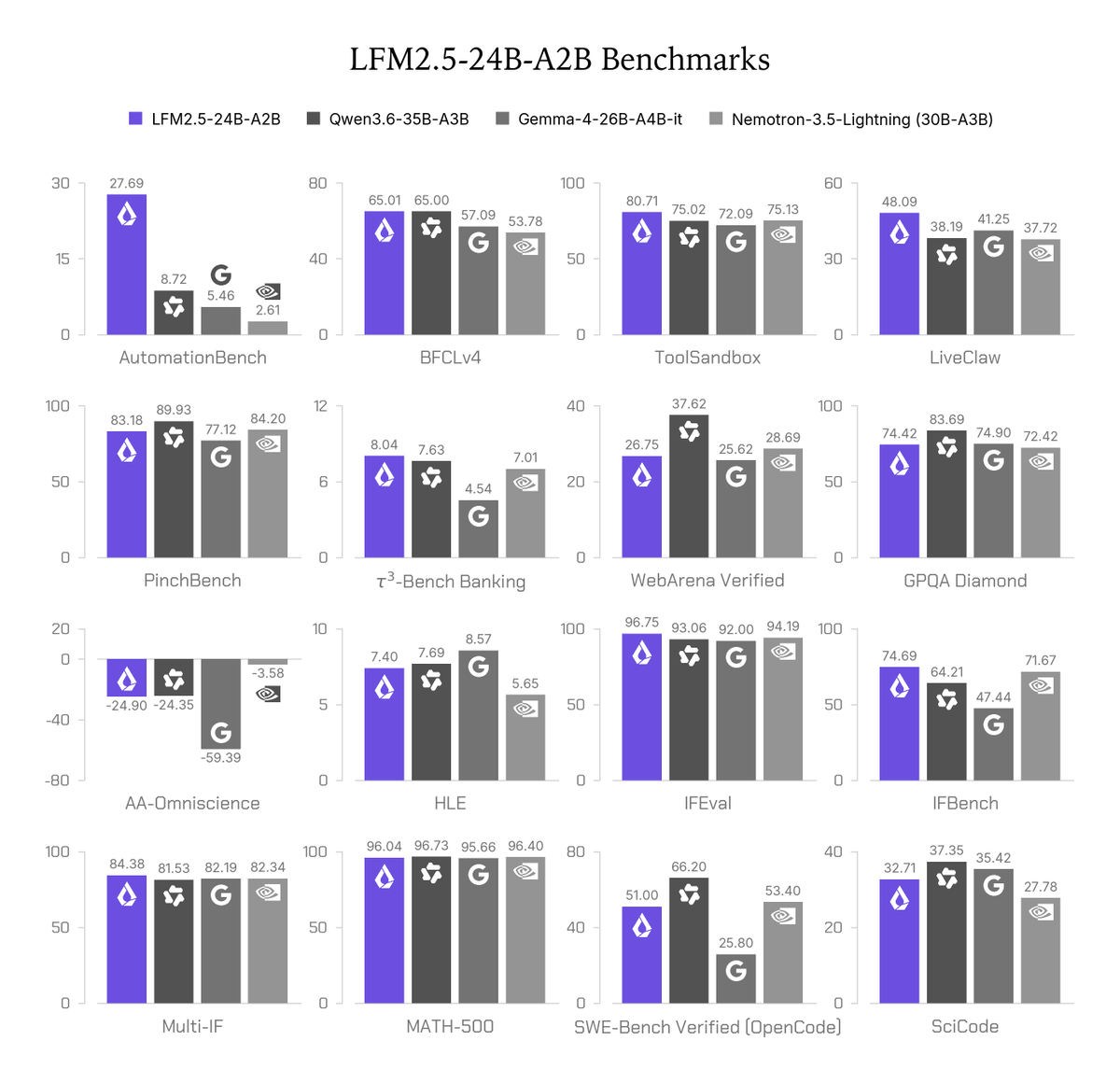 postLiquid AI ships LFM2.5-24B-A2B open weights for local agents
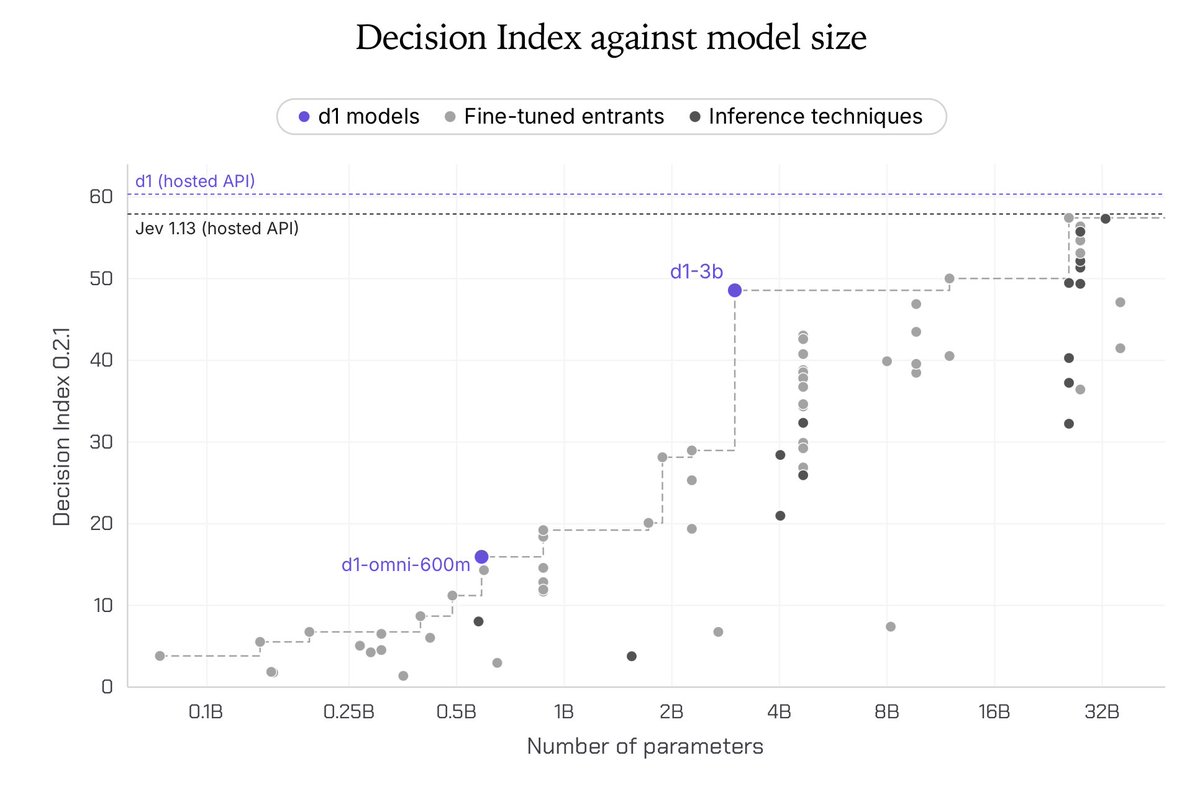 postToday we release Open d1: two open-weight multimodal models in our d1 decision…
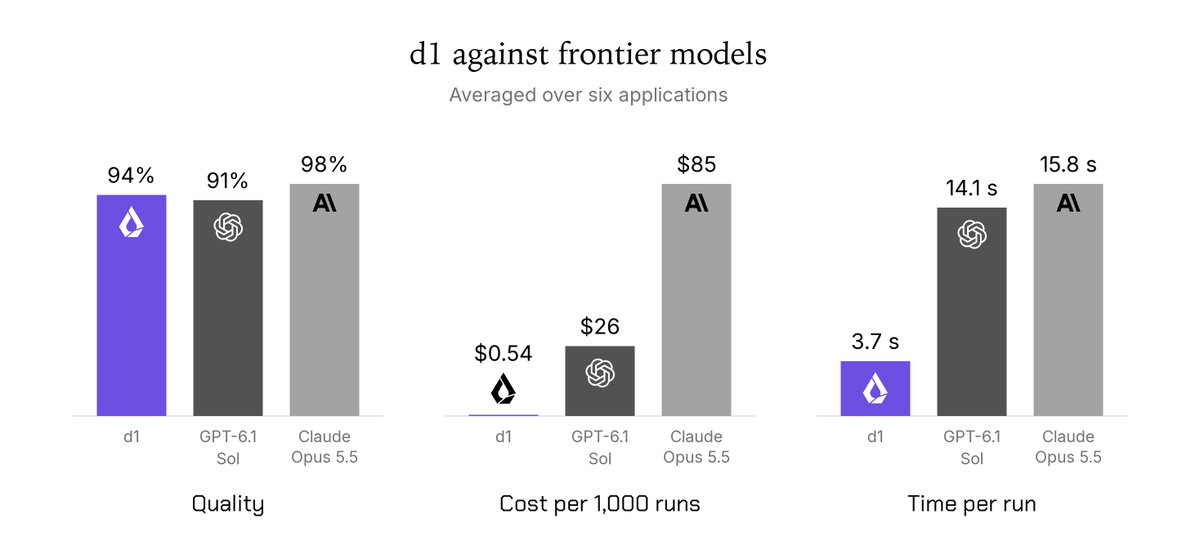 postLiquid AI's d1 decision model adds vision at a fraction of frontier cost
 articled1 is now available on @vercel AI gateway!We worked with the amazing vercel…

Checking sign-in…
Loading comments…