Daniela Rus directs MIT’s Computer Science and Artificial Intelligence Laboratory and co-founded Liquid AI. Her robotics research asks how machines can change their shape, coordinate with one another and act in physical environments.[1][2]
Start with Self-transforming robot blocks →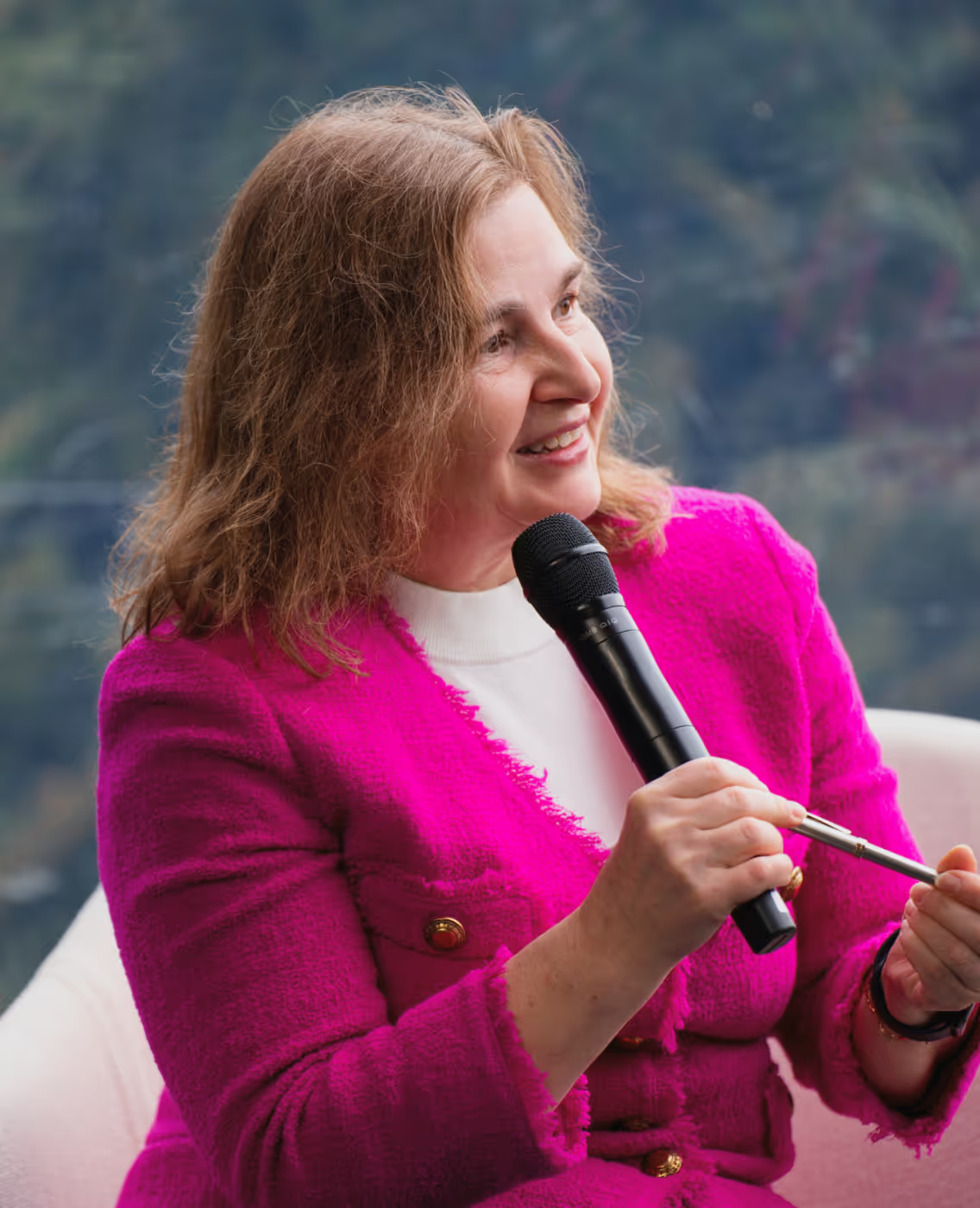
Education


Links
MIT CSAIL profile Liquid AI biography Curriculum vitaeDirector, CSAIL · MIT CSAIL
Co-founder · Liquid AI
Panasonic Professor of Computer Science · Massachusetts Institute of Technology
Career
Rus earned her doctorate at Cornell and held faculty positions at Dartmouth, where she established a robotics laboratory. She later moved to MIT and became CSAIL’s director in 2012. Her current MIT profile identifies her as the Panasonic Professor of Computer Science. Liquid AI lists her as a co-founder.[3][5][1][2]
Contributions
The M-Blocks project explores how a robot can be assembled from moving cubes. Each block contains a spinning flywheel; braking it transfers momentum to the cube so it can roll or jump. Magnets connect neighboring cubes. A later version adds face identifiers and communication so a fleet can recognize its arrangement and perform simple coordinated tasks. The reported demonstrations are steps toward reconfigurable robots, rather than evidence that a rescue-ready machine has been built.[4]
Ideas
Rus’s work spans the physical design of robots and the algorithms that control them. CSAIL projects include modular robots, underwater exploration, autonomous vehicles and tools for fabricating customized robots. That combination makes her research a useful entry point for understanding embodied AI: the body, sensors and environment constrain what an intelligent controller can do.[1]
Tools, writing & talks
Writing, research & talks
Start here
Self-transforming robot blocksnews.mit.eduAn illustrated account of M-Blocks, their flywheel-driven motion and magnetic connections.
Watch the block demonstrations, then read how momentum and magnets produce movement and connection. No robotics background is needed; separate the demonstrated coordinated tasks from the article’s proposed future uses.
Paper co-author[4]