Adding voice to an existing agent without touching its prompts or tools
- Source
- x.com
- Date

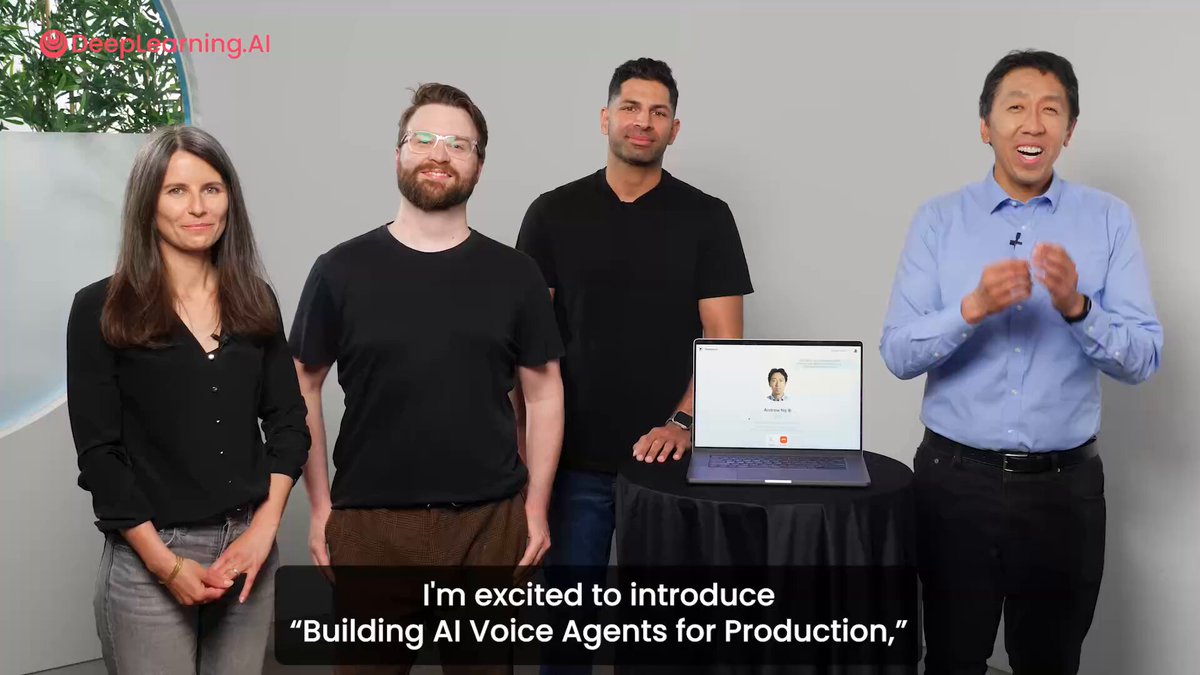
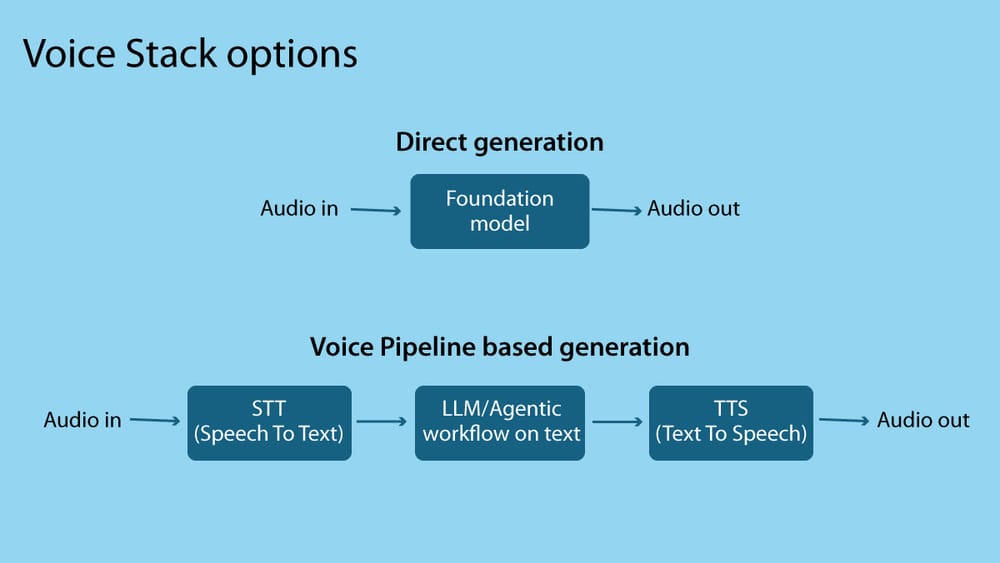
New course: Add voice to your AI agents and applications, built with @VocalBridge (disclosure: an AI Fund portfolio company) and taught by its CEO @_ashwyn. Voice applications historically required making a hard tradeoff: using fast voice-to-voice models that sacrifice reliability, or accurate speech-to-text pipelines that add latency. This course teaches you how to build voice agents that are both reliable and fast. You'll build three types of voice-enabled applications: a voice-interactive game where voice commands and mouse clicks work together over a single channel, an agent that gains a voice in about 10 lines of code without touching its prompts or tools, and an agent that places outbound phone calls using a make_phone_call function. Skills you'll gain: - Add a voice layer to an existing agent without rewriting your prompts, RAG pipeline, or tools - Give an agent the ability to place outbound calls and stream transcripts back live - Set up voice evaluation to score calls, catch regressions, and improve quality before deployment Join and add voice to your agents without overhauling your architecture:

Context
Adding voice need not require rebuilding an existing 's reasoning and tools. The course announced by Andrew Ng teaches a voice layer that preserves the agent's prompts, document retrieval, and callable functions. Its publisher description explains the division of work: a foreground agent handles real-time conversation while a handles reasoning. The useful design idea is to separate the spoken interaction from the application logic already doing the work. Ng presents this as an integration pattern taught in the course.
- AI agent — An AI system that doesn't just answer once but works toward a goal in a loop — taking actions, reading the results, and deciding what to do next.
- headless agent — An agent running with no one watching — in CI, on a schedule, or triggered by an event — with its output reviewed after the fact.
- RAG — Retrieval-augmented generation — fetching relevant documents first and pasting them into the model's context so it answers from your data instead of memory.
- streaming — Sending a model's response token by token as it is generated, so the reader sees text immediately instead of waiting for the whole answer.
Checking sign-in…
Loading comments…