How Anthropic Merges 30,000 Code Changes a Day - Manish Kapur, Sonar & Addy Osmani, Anthropic
- Source
- youtube.com
- Author
- AI Engineer
- Date
Context
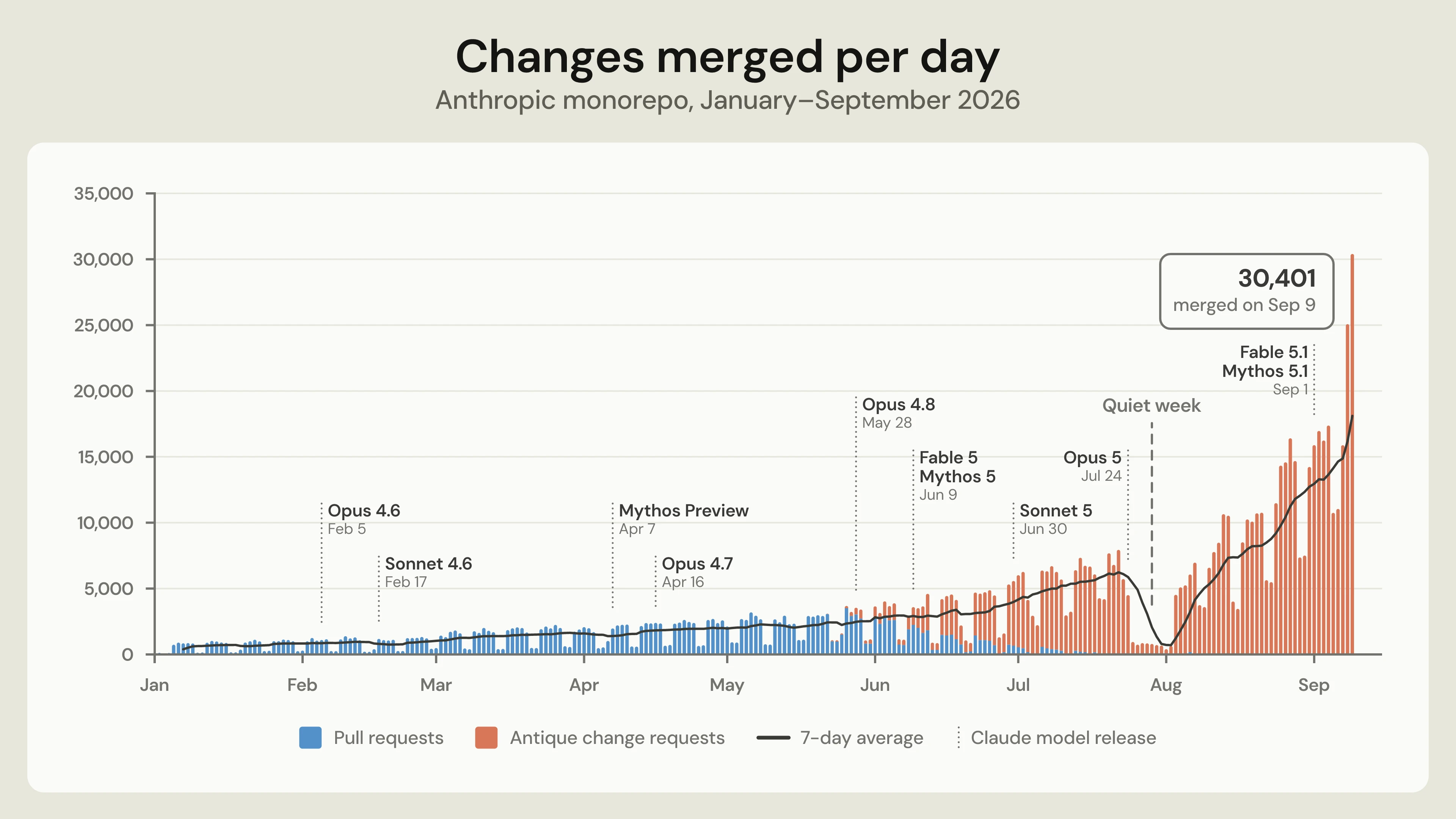
The number in the title comes from Anthropic's own monorepo, its single large shared codebase. In a post on the Claude Code blog that Addy Osmani co-wrote, Anthropic says the changes landing there each day went from about 2,500 in May to more than 30,000 in September. The post introduces that figure by noting that when agents write code, the number of changes goes up fast. No team can read that much code line by line. This conversation between Osmani and Manish Kapur of Sonar, a company that sells code-quality checking tools, is about what review looks like instead. According to the talk's description, Claude does the first pass of review, backed by real verification evidence, and the speakers argue that every loop in a software factory needs independent verification in several layers.
The blog post describes those layers for the Claude Code team. Before a pull request exists, Claude is asked to run the tests, build and linter and show the output, and a second reviews the diff with fresh . On each pull request, several agents hunt for bugs at once, a separate group votes on every finding, and only findings that enough of them agree are real get posted. A separate security review runs as well, and an open finding from either review blocks the merge. A classifier then reads the change and sets its risk tier, which decides whether it needs no human approval, one person, or two, and an agent's approval never counts as a person's. The post reports that from June to September merged pull requests to Claude Code's codebase more than doubled while the share that had to be reverted fell by more than 40 percent. Those are Anthropic's internal measurements.
No transcript of the talk could be retrieved, so this explanation does not cover what the speakers actually said. The description also promises new data from Sonar's State of Code survey, a distinction between light and dark software factories, and a lightning round on labeling agent-written pull requests and when it is safe to merge. Those parts are not explained here. The blog post is covered separately on VibeLeaderboard.
- AI agent — An AI system that doesn't just answer once but works toward a goal in a loop — taking actions, reading the results, and deciding what to do next.
- context window — The maximum amount of text a model can consider at once — its working memory for the current conversation or task.
 videoVoice AI Where One Wrong Question Breaks the Rules - Shiv Indap, Upstart & Brooke Hopkins, Coval
 video78% Wanted This AI Feature. Almost Nobody Used It - Supriya Subudhi, Bumble
 videoWhen Running Your Own AI Models Beats Paying for APIs - Steven Latré, imec
 videoHow to Decide What Your AI Agent Should Remember - Wojciech Pluta, Oracle

Checking sign-in…
Loading comments…