When to Use Encode-Prefill-Decode Disaggregation to Accelerate Multimodal Model Serving
- Source
- developer.nvidia.com
- Author
- Tanya Lenz
- Date
Context
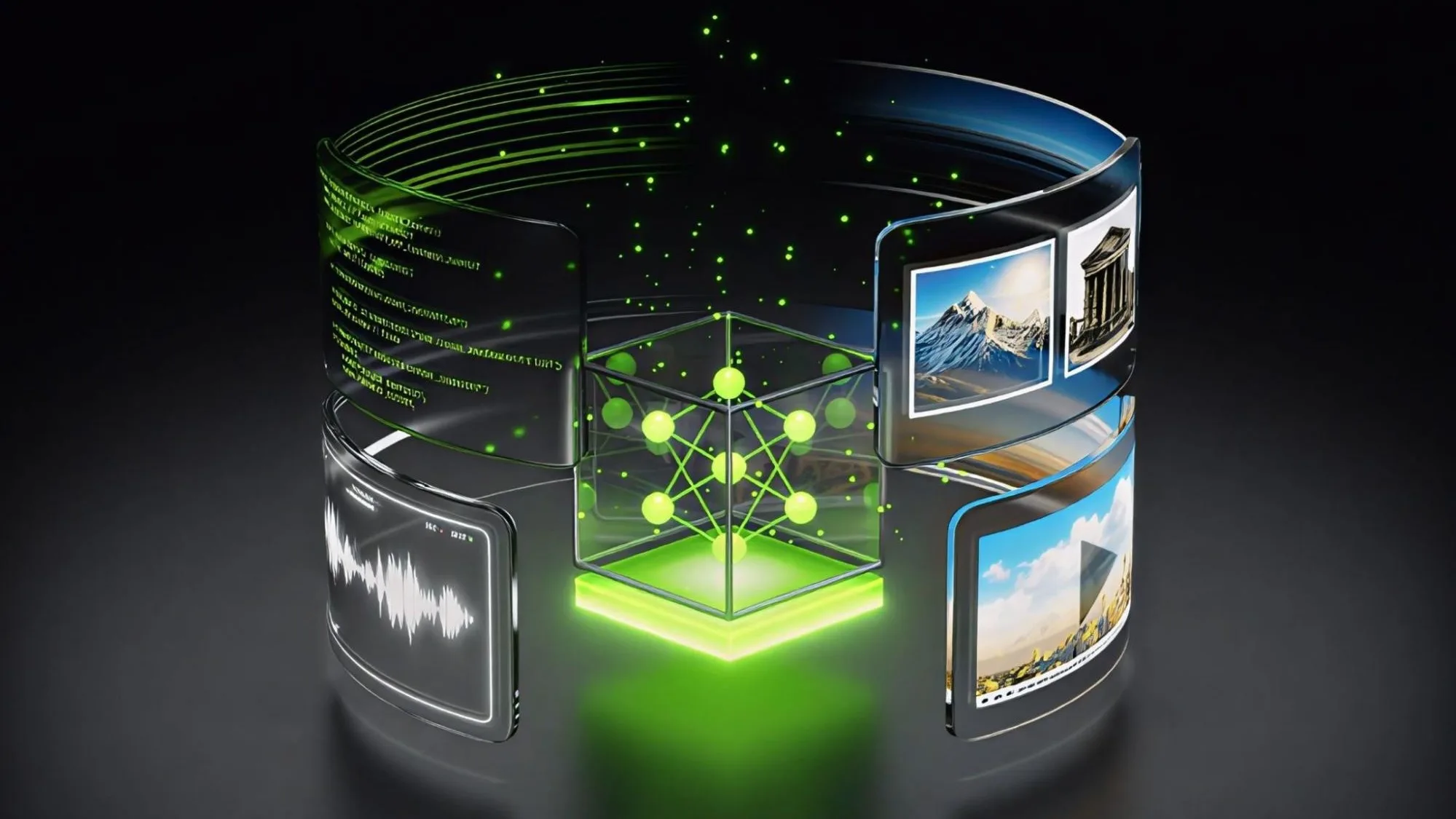
An image-heavy AI request can delay text-only requests when both share a worker that must finish processing images before starting the language-model work. NVIDIA describes how its Dynamo serving framework separates image encoding, which converts images into model inputs, from processing the prompt and generating the answer.
Separate workers can schedule image processing independently, allowing text requests to proceed without waiting for it. They can share GPUs or use a separate hardware tier. The technical article explains why the benefit depends on workload: separation helps when image processing is a substantial bottleneck, while long answers leave more time dominated by text generation and can make the added coordination less worthwhile.
- multimodal — A model that works with more than text — reading images, audio, or video, and sometimes generating them too.
- token — The chunk of text a model reads and writes in — roughly three-quarters of a word — and the unit AI usage is billed in.
“Vision encoding can take hundreds of milliseconds or longer.”
“As shown in Figure 1, 43% of TTFT was spent before ViT even started.”
“Without it, every image looks like the same placeholder token to the router.”
“Encode disaggregation can reduce TTFT and increase same-SLO goodput only in certain scenarios.”
 articleScaling NVIDIA TensorRT Performance Optimization Beyond a Single Build Route with the Global Performance Tuner, Part 2
 articleAccelerating Mamba-2 with High-Performance Forward Pass Kernels in NVIDIA CUDA Tile
 articleScale Agentic Coding Workflows with Meta’s Muse Spark Open on NVIDIA GB300 NVL72
 articleOptimizing Agent Reliability and Tool Calling Efficiency for Chip Design Using NVIDIA NeMo Gym
Checking sign-in…
Loading comments…