Artificial Analysis Capability Indices V1 1
- Source
- artificialanalysis.ai
- Author
- Artificial Analysis articles
- Date
Context
A domain-specific model ranking depends on which skills the evaluator chooses to represent that domain. Artificial Analysis' Capability Indices update maps occupational tasks to benchmarks and uses those mappings to assign weights. Version 1.1 changes those ingredients, for example adding domain slices of a workflow-automation and an agentic knowledge-work test while dropping a customer-interaction benchmark from most indices.
That makes the index a weighted proxy for the work, rather than a direct measurement of an entire job. Changes to its ingredients or weights can alter results even without a new model release. The methodology is useful for narrowing a comparison, but the fit between a team's actual tasks and the benchmark mix remains a separate question.
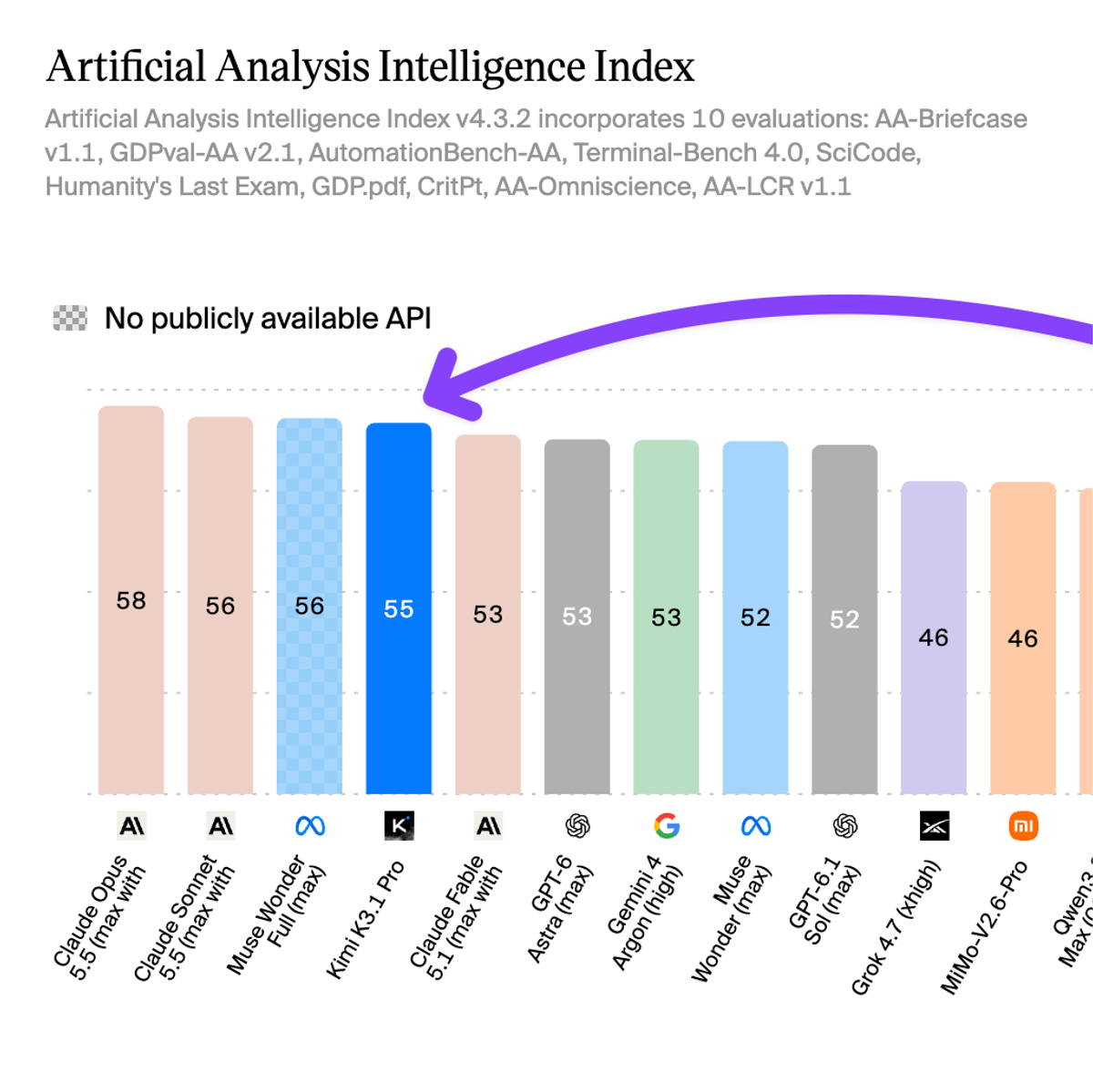
- The Capability Indices map tasks from O*NET occupations to the benchmarks that represent them, weighting each benchmark by how often its capability appears across those tasks; v1.1 draws on slices of Intelligence Index v4.2 and v4.3 evaluations.
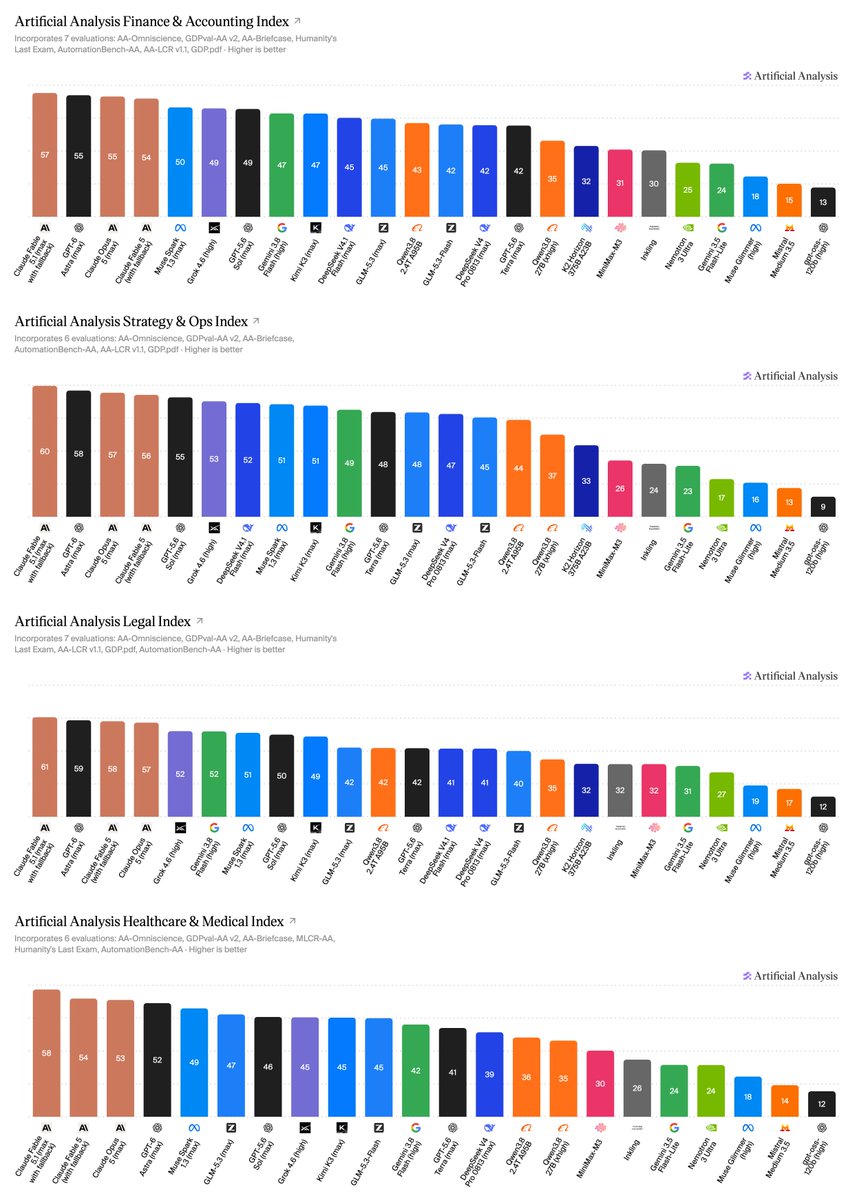
- Agentic Customer Interaction (τ³-Banking) is dropped from Finance, Strategy & Ops, Legal and Healthcare, and agentic from AutomationBench-AA slices is added, weighted 30% in Strategy & Ops, 10% in Finance and Healthcare, and 5% in Legal.
- Engineering swaps Terminal-Bench v2.1 for v4.0 and raises terminal use from 5% to 15%, while removing GPQA Diamond from its reasoning slot; Healthcare adds MLCR-AA long- reasoning over clinical records at 15%.
- AA-Briefcase joins GDPval-AA v2 in every index's agentic knowledge work slot, and GDP.pdf joins LCR for long context in Finance, Strategy & Ops and Legal; Economics raises knowledge work from 15% to 25% and cuts long-context reasoning from 15% to 5%.
- benchmark — A standard public test set for comparing AI models — the shared scoreboards behind every "model X beats model Y" claim.
- tool use — A model's ability to call external functions — run code, search the web, edit files — instead of only generating text.
- context window — The maximum amount of text a model can consider at once — its working memory for the current conversation or task.


Checking sign-in…
Loading comments…