How to Self-Host a Validated AI Coding Assistant with NVIDIA NeMo Guardrails
- Source
- developer.nvidia.com
- Author
- Tanya Lenz
- Date

Context
A coding assistant's usefulness can be evaluated by following its changes through review and into production. NVIDIA's self-hosting tutorial proposes marking assisted commits and pull requests, then connecting merged changes to incident and revert records. Teams can compare review time, rollbacks, and escaped defects with their baseline workflow. The tagging requires configuration and activation; it is not automatic detection of every assisted change. This gives a team evidence for tightening its usage policy or pausing a rollout when outcomes deteriorate. The article supplies a proposed measurement pipeline, without reporting an achieved reduction in defects.
- guardrails — The checks around a model that block bad inputs and outputs — filters, validators, and permission rules the model itself can't override.
“Three common issues are: the source cannot leave the network, the assistant occasionally invents package names that introduce supply-chain risk, and there is no audit trail when a generated change ships a defect.”
Tanya Lenz
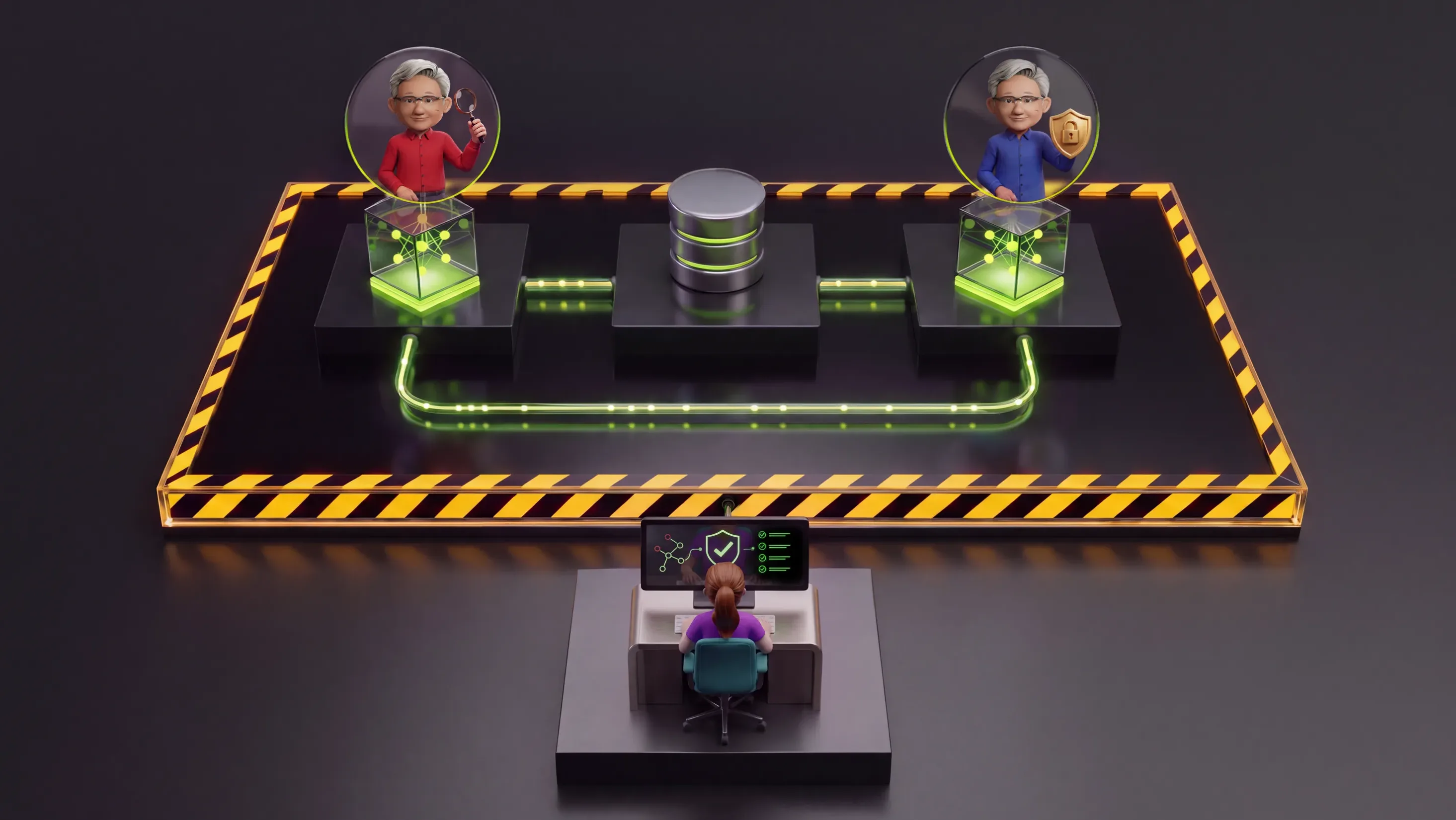
“The important design choice is that the model is not the control plane. The model proposes code, but policy enforcement, dependency verification, source traceability, and outcome measurement live outside the model in systems that engineering teams already trust.”
Tanya Lenz
“The model invents a plausible-looking package name, an attacker registers that name in a public registry, and the hallucinated dependency ships real malware to anyone who installs the suggestion.”
Tanya Lenz
“Do not use this trailer as a blame mechanism. Its job is measurement. The useful question is not whether a particular developer used AI, but whether AI-assisted changes have a different review latency, rollback rate, or defect escape rate than the baseline.”
Tanya Lenz
“The acceptance rate is not enough. It conflates trivial completions with meaningful engineering work. The metrics that matter are defect escape rate, rollback frequency, review latency, and incident count, broken out by AI-assisted versus baseline.”
Tanya Lenz
 articleScaling NVIDIA TensorRT Performance Optimization Beyond a Single Build Route with the Global Performance Tuner, Part 2
 articleAccelerating Mamba-2 with High-Performance Forward Pass Kernels in NVIDIA CUDA Tile
 articleScale Agentic Coding Workflows with Meta’s Muse Spark Open on NVIDIA GB300 NVL72
 articleOptimizing Agent Reliability and Tool Calling Efficiency for Chip Design Using NVIDIA NeMo Gym
Checking sign-in…
Loading comments…