The Bitter Lesson versus The Garbage Can
- Source
- oneusefulthing.org
- Author
- Ethan Mollick
- Date
Context
Could a company teach AI what good work looks like without first documenting every step employees take? Ethan Mollick poses that question in The Bitter Lesson versus The Garbage Can. His proposed alternative is to define satisfactory outputs, such as a sales report, and train an against those outcomes while allowing it to find its own method.
The attraction is avoiding an exhaustive reconstruction of messy, partly unwritten workflows. But Mollick leaves the central premise unresolved: an organization may depend on informal knowledge and constraints that judging finished outputs does not capture. The essay presents a competing approach to enterprise automation whose success turns on whether quality can be specified well enough.
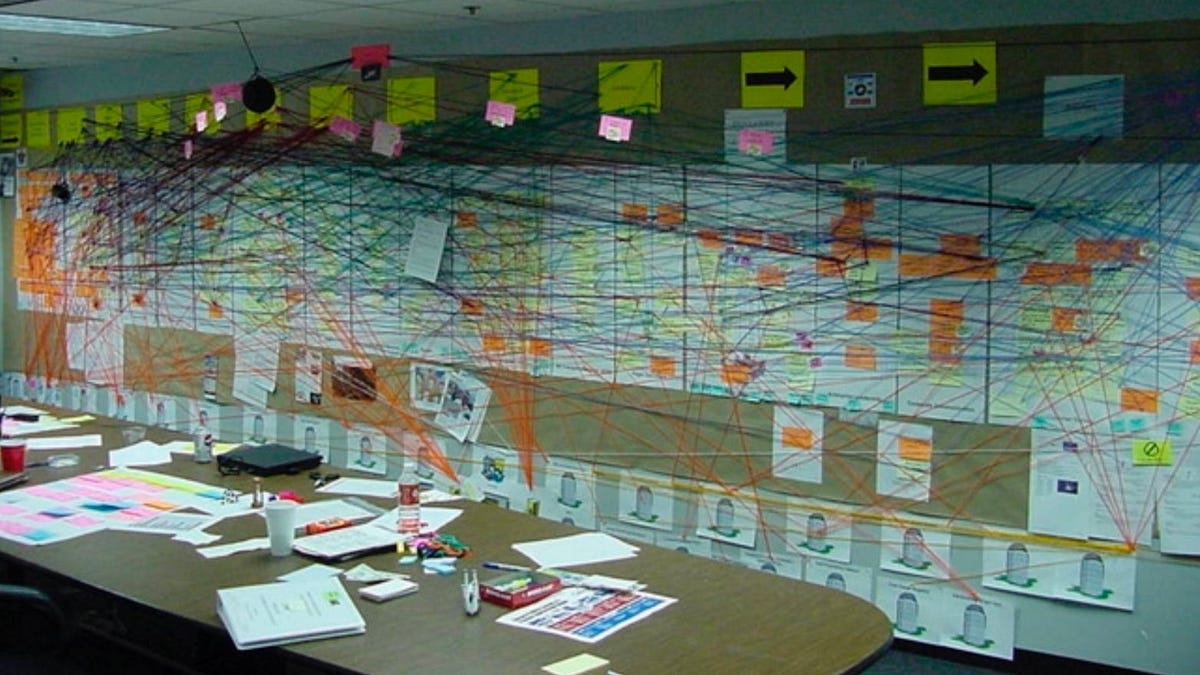
- Ruthanne Huising studied teams mapping their own company's real workflows. They found processes whose outputs nobody used and effort duplicated across groups. Walked through the map, the CEO admitted his grasp on his own operation had been imaginary.
- This is why rule-based automation stalls in companies: it needs documented processes, and the pathways real organizations run on were negotiated between people rather than designed and written down. 43% of US workers use AI already, but informally, on their own tasks.
- The two agent philosophies side by side: Manus is hand-built, hundreds of lines of , always opening by writing itself a to-do list. ChatGPT agent was trained by reinforcement learning on the quality of finished outputs and follows no visible script.
- Same prompt, different rigor. Asked for an unrecorded number, Deep Blue's chess rating, the hand-crafted agent settled for a speculative Reddit thread while the outcome-trained one found published sources. Asked for a working Excel file, only the latter's opened cleanly.
- The asymmetry that decides the race: improving a hand-crafted agent takes more human crafting, improving an outcome-trained one takes more chips and more examples. One scales with scarce , the other with money.
- AI agent — An AI system that doesn't just answer once but works toward a goal in a loop — taking actions, reading the results, and deciding what to do next.
- system prompt — The standing instructions a model receives before any user input — defining its role, rules, tools, and tone for the whole conversation.
- attention — The mechanism that lets a model weigh which earlier words matter for the word it's currently processing — the core operation of a transformer.
“The CEO, after being walked through the map, sat down, put his head on the table, and said, "This is even more fucked up than I imagined."”
“encoding human understanding into an AI tends to be worse than just letting the AI figure out how to solve the problem, and adding enough computing power until it can do it better than any human”
“To improve Manus will involve more careful crafting and bespoke work, to improve ChatGPT agents simply requires more computer chips and more examples.”
“Instead of untangling every broken process, he just needs to define success and let AI navigate the mess.”





Checking sign-in…
Loading comments…