Hands-On With Gemini 4: Top-Tier Model, Weaker Multi-Agent Harness
- Source
- x.com
- Publisher
- Ethan Mollick
- Date

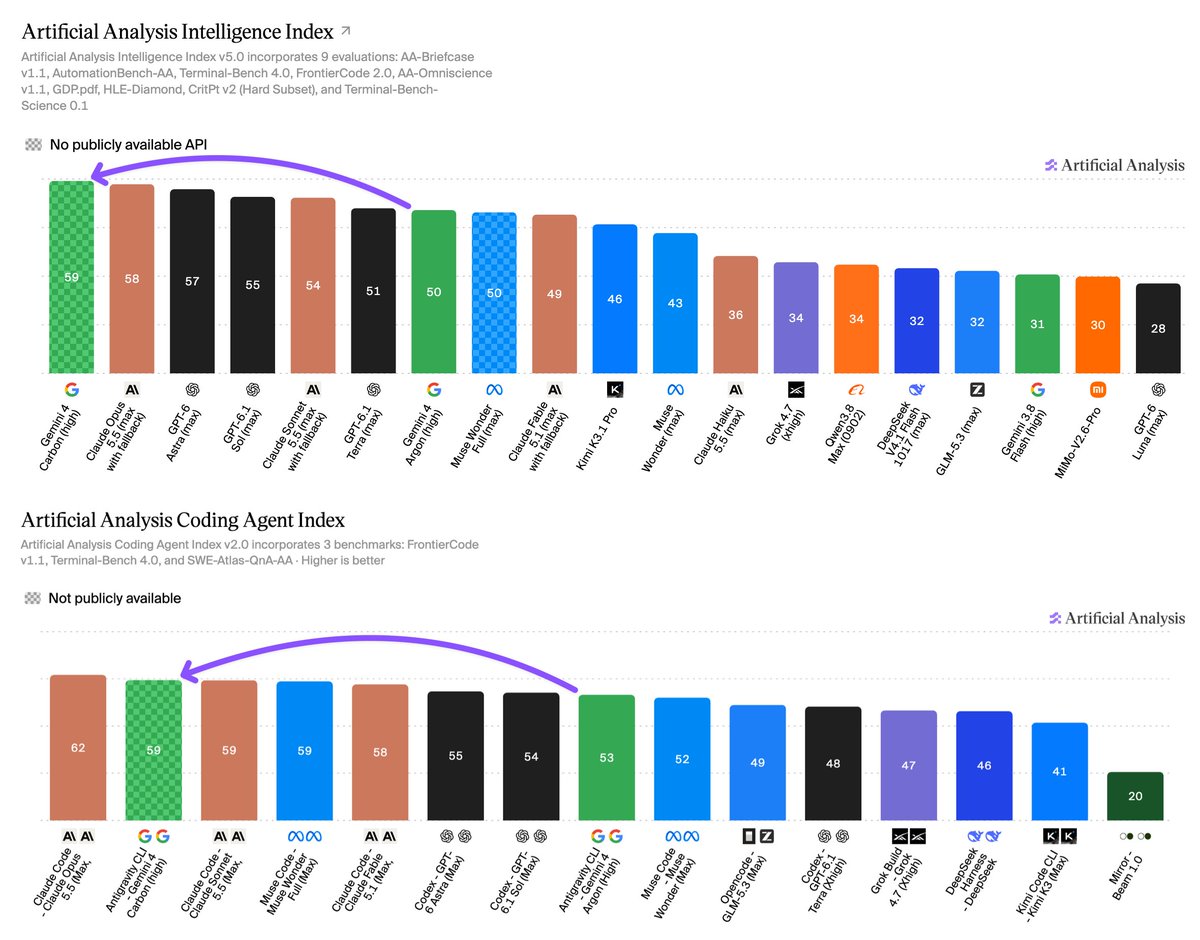
I spent a decent amount of time with Gemini 4 before launch. Overall, Gemini 4 is a big jump over previous Gemini models and it is the first non-OpenAI/Anthropic model to pass the Fable/Mythos/Astra bar. It is also much more pleasant and more agentic then previous Gemini models, without the weird personality issues that you often found in Gemini 3 series models. In fact, a big advantage is that has a very different personality and sense of taste than Claude or Astra, making it a good addition to the AI world. On the usefulness side, in some areas it is at least at par with OpenAI and Anthropic (it is quite creative and a good writer), but in others it lags, including at complex multi-agent work. It has a tendency to be too certain about its conclusions and a little lazy, issues not helped by the Antigravity harness not being quite as good as the competition. Still, I expect to see rapid improvements in model abilities using Gemini 4 as a base. Here is a fun example: "create the ultimate brutalist city builder. you should have lots of controls over buildings in ways that are delightful and inuitive to people who just want to play, but are sophisticated and deep for people who…

Context
Ethan Mollick came away from prelaunch time with Gemini 4 with a split verdict: a strong model that lags when the work turns into complex jobs. In the post, Mollick calls Gemini 4 a big jump over earlier Gemini models, more pleasant and more agentic, and free of the odd personality problems of the Gemini 3 series. Mollick also describes it as the first model from outside OpenAI and Anthropic to clear the bar set by Fable, Mythos and Astra.
The weaknesses are specific. Mollick puts Gemini 4 at least on par with OpenAI and Anthropic models in some areas, naming creativity and writing, but says it lags in others, including complex multi-agent work. The post points to a tendency to be too certain of its conclusions and "a little lazy", and adds that Antigravity, the Mollick used, is not quite as good as the competition. A harness is the software around a model that hands it tools and runs its steps as an agent, so a weak one can drag down results that a reader might blame on the model alone.
This is a first-person assessment, not a controlled test. The post does not separate how much of the multi-agent weakness comes from the model and how much from Antigravity. Mollick also shared a brutalist city-builder run through three setups as a side-by-side example, but only one of the linked builds could be read for this explanation, and the links do not show which produced it, so this explanation does not judge the builds against one another. Mollick still expects rapid improvement in models built on Gemini 4.
- multi-agent — Using several AI agents on one problem — splitting work in parallel, checking each other, or filling different roles like planner and reviewer.
- Harness — The software that sends a model its context, recognizes tool calls, runs or refuses them, returns results and keeps the record.
- Prompt — Information or instructions supplied to a model; in a chat, the request you type is often called your prompt.
- Setup — The combination of a model, a harness, its connections and the path the task's data takes, considered together for a task.