Voice activity detection breaks in cafés, and turn-taking is why
- Source
- x.com
- Date

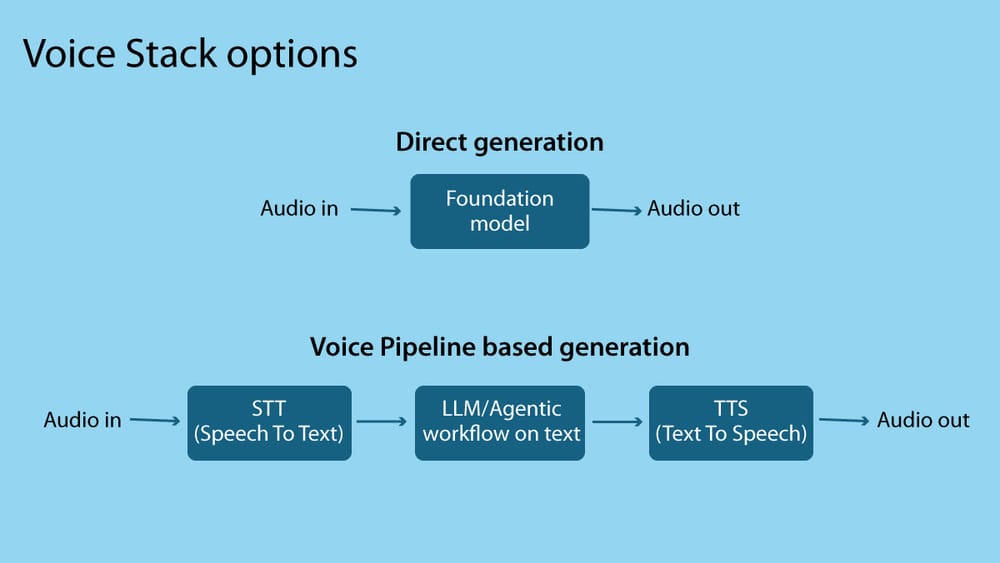
Continuing from last week’s post on the rise of the Voice Stack, there’s an area that today’s voice-based systems often struggle with: Voice Activity Detection (VAD) and the turn-taking paradigm of communication. When communicating with a text-based chatbot, the turns are clear: You write something, then the bot does, then you do, and so on. The success of text-based chatbots with clear turn-taking has influenced the design of voice-based bots, most of which also use the turn-taking paradigm. A key part of building such a system is a VAD component to detect when the user is talking. This allows our software to take the parts of the audio stream in which the user is saying something and pass that to the model for the user’s turn. It also supports interruption in a limited way, whereby if a user insistently interrupts the AI system while it is talking, eventually the VAD system will realize the user is talking, shut off the AI’s output, and let the user take a turn. This works reasonably well in quiet environments. However, VAD systems today struggle with noisy environments, particularly when the background noise is from other human speech. For example, if you are in a noisy cafe…
Context
Detecting speech is different from knowing whether the intended user is speaking. In his voice-interface analysis, Andrew Ng explains how nearby conversation can make a voice activity detector trigger a false interruption or misjudge when a turn ends. Moshi explores a different arrangement: it models the user's speech and its own as parallel audio streams, which the paper's abstract says allows explicit speaker turns to be removed. It addresses the turn-taking constraint; it does not establish that background-speaker confusion has been solved.





Checking sign-in…
Loading comments…