Why voice agents fail at the audio layer, not the LLM
- Source
- x.com
- Date


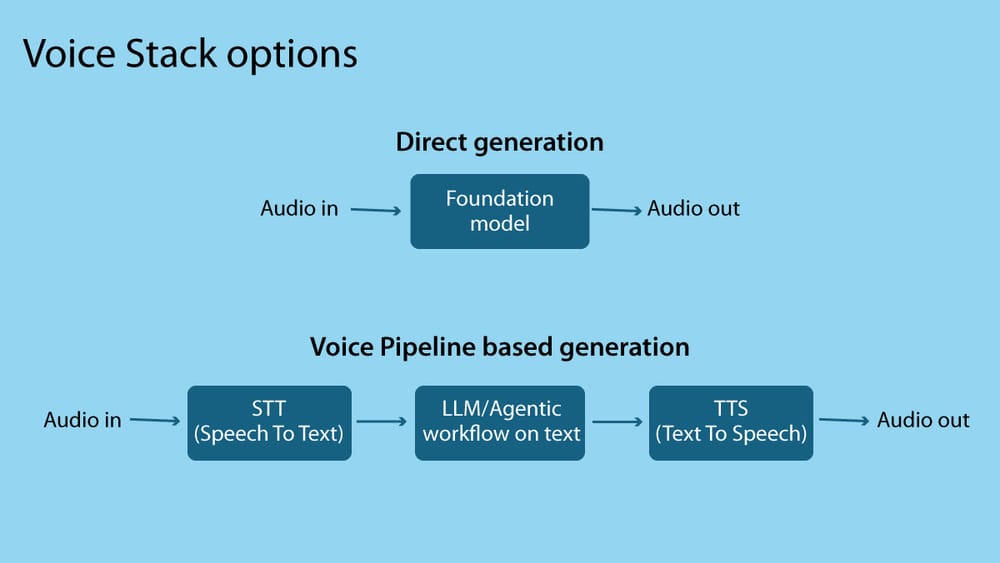
When a voice agent misbehaves, most teams blame: ❌ The LLM ❌ The prompt ❌ The agent The problem usually started when the audio was still audio.
Bad audio breaks voice AI in two ways: 1. Higher word error rate (WER) 2. Agents that interrupt themselves or stop talking because they mistake background noise for a human speaker
Here's the catch: A perfect transcript doesn't guarantee a good voice agent. Your model can recognize every word...and still respond to the wrong speaker or the wrong interruption.
Context
A voice assistant can transcribe words correctly and still respond to the wrong person. Deepgram, which develops speech recognition systems, argues in its engineering thread that background speech or the assistant's own echoed audio can trigger unwanted interruptions. The thread separates identifying different speakers from deciding which speaker the assistant should follow. That second decision must also accommodate someone handing over the phone. On Deepgram's account, judging a voice means checking whom it listens to and when it stops speaking, alongside transcription accuracy.
- AI agent — An AI system that doesn't just answer once but works toward a goal in a loop — taking actions, reading the results, and deciding what to do next.
- LLM — A large language model — the neural network behind tools like Claude and ChatGPT, trained on huge amounts of text to predict what comes next.



Checking sign-in…
Loading comments…