Can a Cloud-Native Harness Make Agents Reliable Beyond the Desktop?
- Source
- latent.space
- Author
- Richard MacManus
- Date
Context
Stacklok, a startup led by Kubernetes creators Craig McLuckie and Joe Beda, is building Mecatl, an open source coding- meant to run in the cloud instead of on a laptop. A harness is the program that loops a language model through tool calls while carrying forward. In Latent Space's report, Beda says desktop-first harnesses typically start with the loop, local execution and session state in one process, and that moving them into a container or virtual machine causes lifecycle problems, such as not being able to safely pause an agent that is waiting for a person.
Mecatl keeps the independent of the client, model provider, state store and execution environment, so shell commands, session management and memory can live in separately managed systems rather than files on disk. Stacklok targets large enterprises, which Beda expects to govern agent interactions the way they govern email. Its commercial product is a control plane for identity, policy and auditing. These are the founders' claims about a project begun in June; the article reports no comparison with other harnesses.
- Mecatl, Stacklok's open-source harness started in June, keeps the agent loop independent of client, model provider, state store and execution environment, and splits out , bash, sessions and memory instead of keeping JSONL files on disk.
- Joe Beda says lifting a desktop harness into VMs, containers or sandboxes causes lifecycle problems, such as safely pausing (quiescing) an agent while it waits for human input.
- ToolHive, Stacklok's open-source MCP platform, began as a way to run MCP servers in Docker on the desktop and grew into a Kubernetes-based gateway, registry and operator.
- Its AI Gateway, not yet open source, handles access control, budgets, reporting and provider routing but not task-based model choice; Craig McLuckie says that routing belongs in the harness, which has more context.
- Stacklok sells the "enterprise spine": identity, authorization, policy and auditing across the open-source parts. McLuckie says most customers are banks, semiconductor companies and telcos.
- agent harness — The scaffolding around a model that turns it into a working agent — the loop, the tools it can call, and the rules for when to stop.
- context window — The maximum amount of text a model can consider at once — its working memory for the current conversation or task.
- agentic loop — The cycle an agent runs in: decide, call a tool, read the result, decide again — repeating until the goal is met or a stop condition fires.
- tool use — A model's ability to call external functions — run code, search the web, edit files — instead of only generating text.
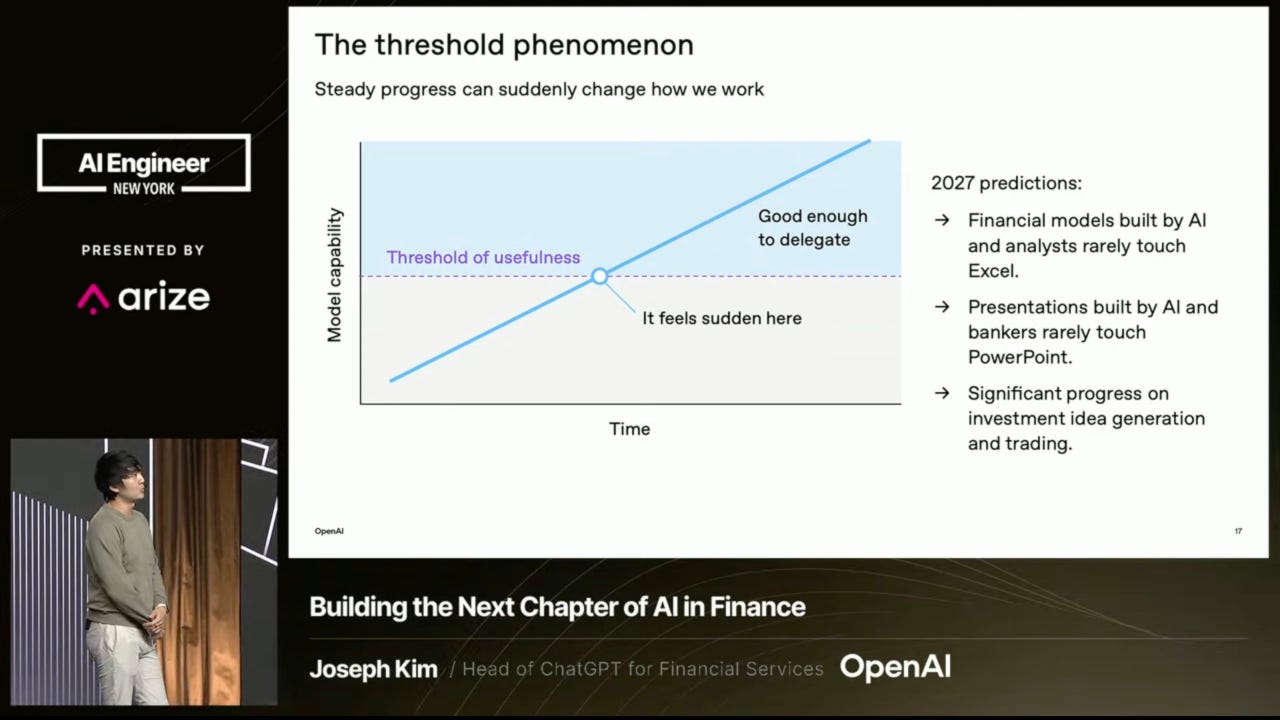 articleCrossing the Threshold: How OpenAI and Anthropic Approach Autonomy and Safety in Financial Agents
 articleHow Anthropic’s Dynamic Workflows Coordinate Claude Agents
 articleInside-Out AI: Rebuilding Airbnb Behind the Scenes and Across the Guest Experience
 articleRunway’s WorldPrompt and the Engineering of Real-Time Worlds
 articleHarness Engineering: Anatomy, Architecture, and Evolution of Coding Agents -- A Source-Code Study of Eleven SystemsPaul Barbaste, Tristan Darrigol, Germain Vu, Tom Wiltberger
 videoHarness Engineering: Building the Production Cage for Powerful Domain Agents — Mike Chambers, AWSAI Engineer
 articleMaking every harness durablePranay Prakash
Checking sign-in…
Loading comments…