OpenRouter's Auto Router now follows real market spend per task type
- Source
- x.com
- Date

We shipped a major upgrade to the Auto Router: https://t.co/MewkWfiOm0 It now routes based on what the market actually uses for each type of task. When the market migrates a workload to a new model, the router follows within days. Benchmarks & more 👇

We verified it against benchmarks across five domains: knowledge, agents, search, research, and coding. At the default cost tier, it matches or beats the old router in most domains while spending less. At the max tier, it outperforms the old router across all five, including 60.7% vs 2.4% on SWE-Atlas QnA.

Cost efficiency was the bar for the default tier. On MMLU Pro, the new router scored within 1.4 points of the old one at roughly a third of the cost ($140.93 vs $393.34). To reduce cache rebuilds, the router keeps multi-turn conversations on one model until it's no longer a leading choice for the task.

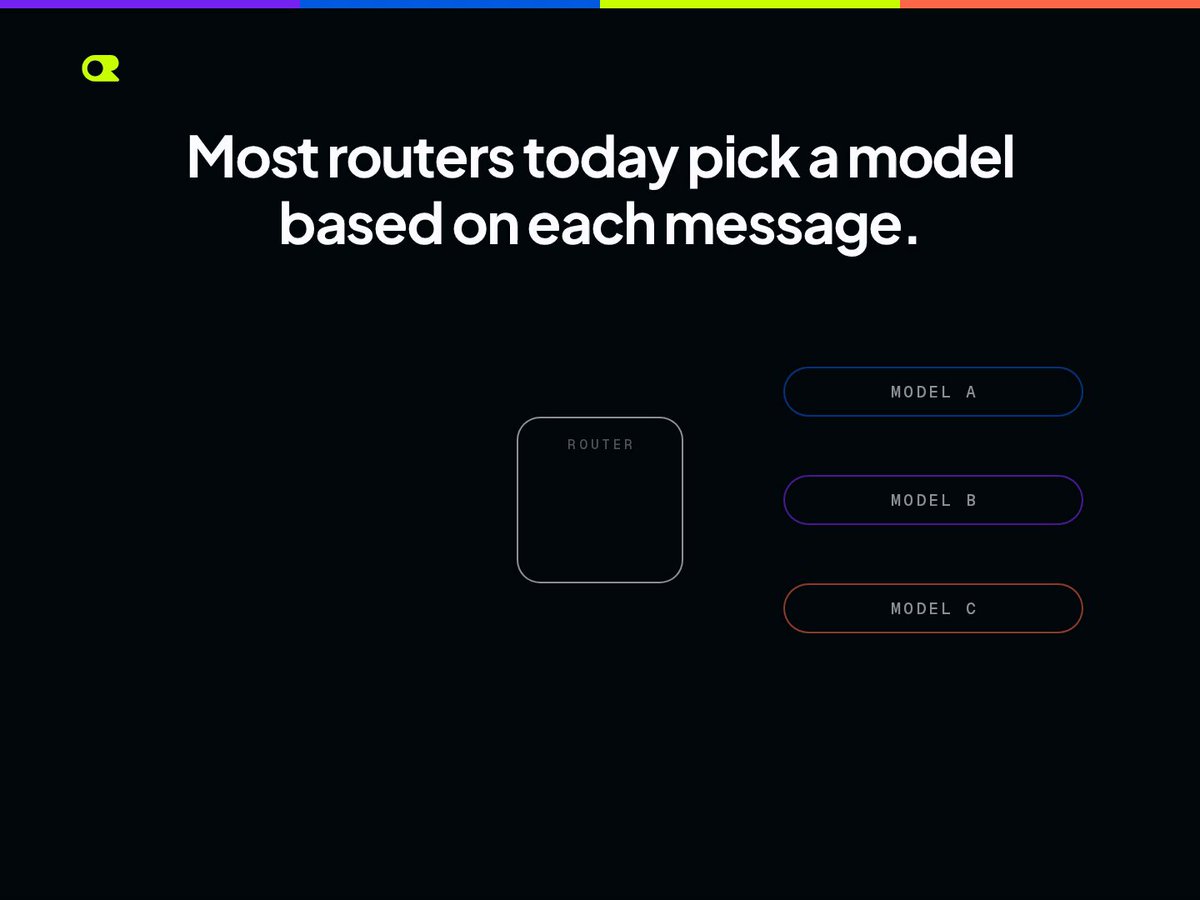
How it works: A lightweight classifier assigns each prompt one of ~30 task types, then the router ranks models by the community's real spend share for that task over the past 7 days and applies your cost_tier (low through max). Rankings come from aggregate anonymized spend statistics, and prompts are classified in-flight without retention. Here's the current routing curve, but you can see it dynamically update on

Context
OpenRouter's updated Auto Router chooses models partly by where customers spend money on similar tasks. Its technical announcement describes a classifier that assigns a prompt to roughly 30 task categories, then consults the preceding seven days of spending and applies the user's cost tier and model restrictions. The intent is for selection to follow changing usage without developers continually choosing a replacement model themselves.
Spending supplies the selection signal; it does not directly measure whether a particular request succeeded. The router also prefers to keep a conversation on its previous model while that model remains a leading candidate, reducing unnecessary switches that would rebuild cached input. This combines adaptation across tasks with some continuity within a conversation.

Checking sign-in…
Loading comments…