Frontier Model Cost and Open-Weights Popularity is Driving Demand for Model Routing
- Source
- latent.space
- Author
- Richard MacManus
- Date

Context
Glean, an enterprise AI platform, describes as a decision that improves through feedback from actual work. Employees can choose a model, administrators can restrict the choices, and an automatic mode selects one for each task. Its co-founder Arvind Jain says the company watches when users move to another model after an unsatisfactory result. Interview account.
Jain also says Glean reruns a small fraction of tasks behind the scenes with alternative models, some cheaper and some more expensive, then uses AI-based judges to assess how well the router chose. This gives the router evidence about whether another option would have served a task better. The feedback loop explains how routing can adapt to a company's workload instead of relying only on general model rankings. Evaluation process.
- model routing — Sending each request to a model chosen by the difficulty of the task, rather than using one model for everything.
- eval — A repeatable test for AI quality — a set of tasks plus scoring — used the way software teams use test suites, because model output is too variable to judge by eyeballing.
- open weights — A model whose trained parameters are published for anyone to download and run — unlike API-only models you can access but never possess.
- LLM — A large language model — the neural network behind tools like Claude and ChatGPT, trained on huge amounts of text to predict what comes next.
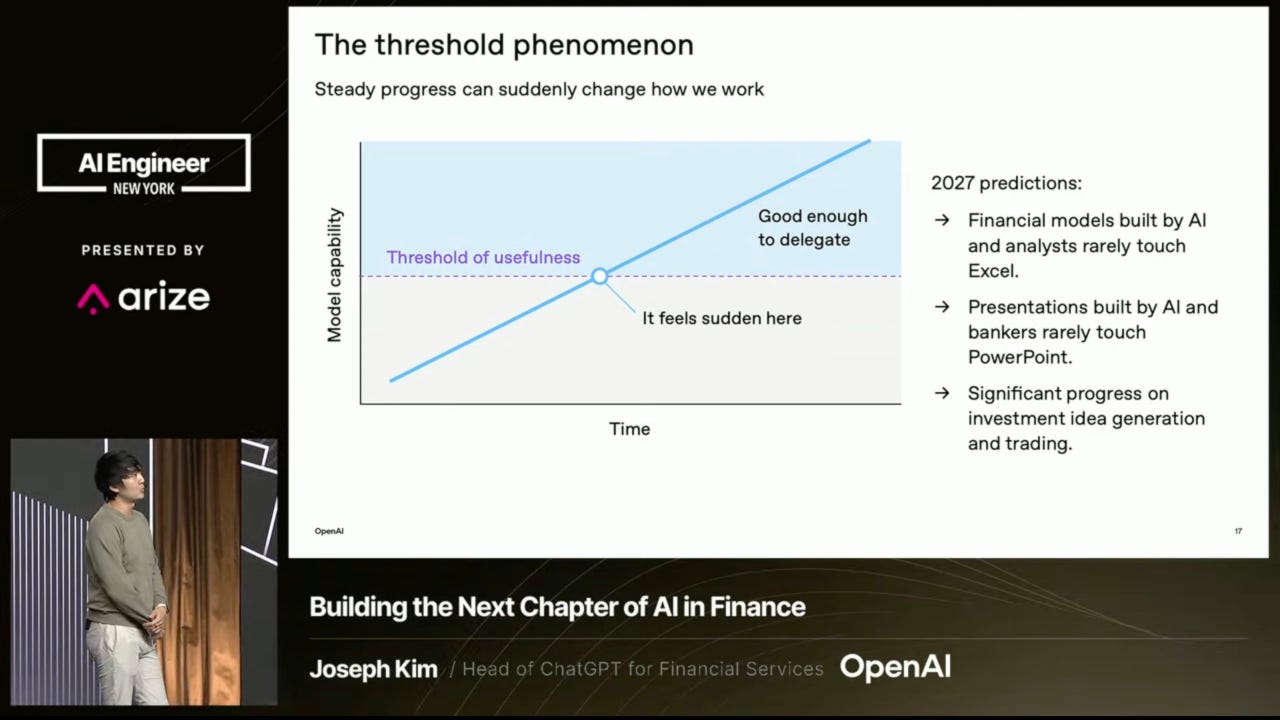 articleCrossing the Threshold: How OpenAI and Anthropic Approach Autonomy and Safety in Financial Agents
 articleHow Anthropic’s Dynamic Workflows Coordinate Claude Agents
 articleCan a Cloud-Native Harness Make Agents Reliable Beyond the Desktop?
 articleInside-Out AI: Rebuilding Airbnb Behind the Scenes and Across the Guest Experience


Checking sign-in…
Loading comments…