AI Native by Design: Lessons Learned from Building NVIDIA TensorRT Model Connect
- Source
- developer.nvidia.com
- Author
- Tanya Lenz
- Date
Context
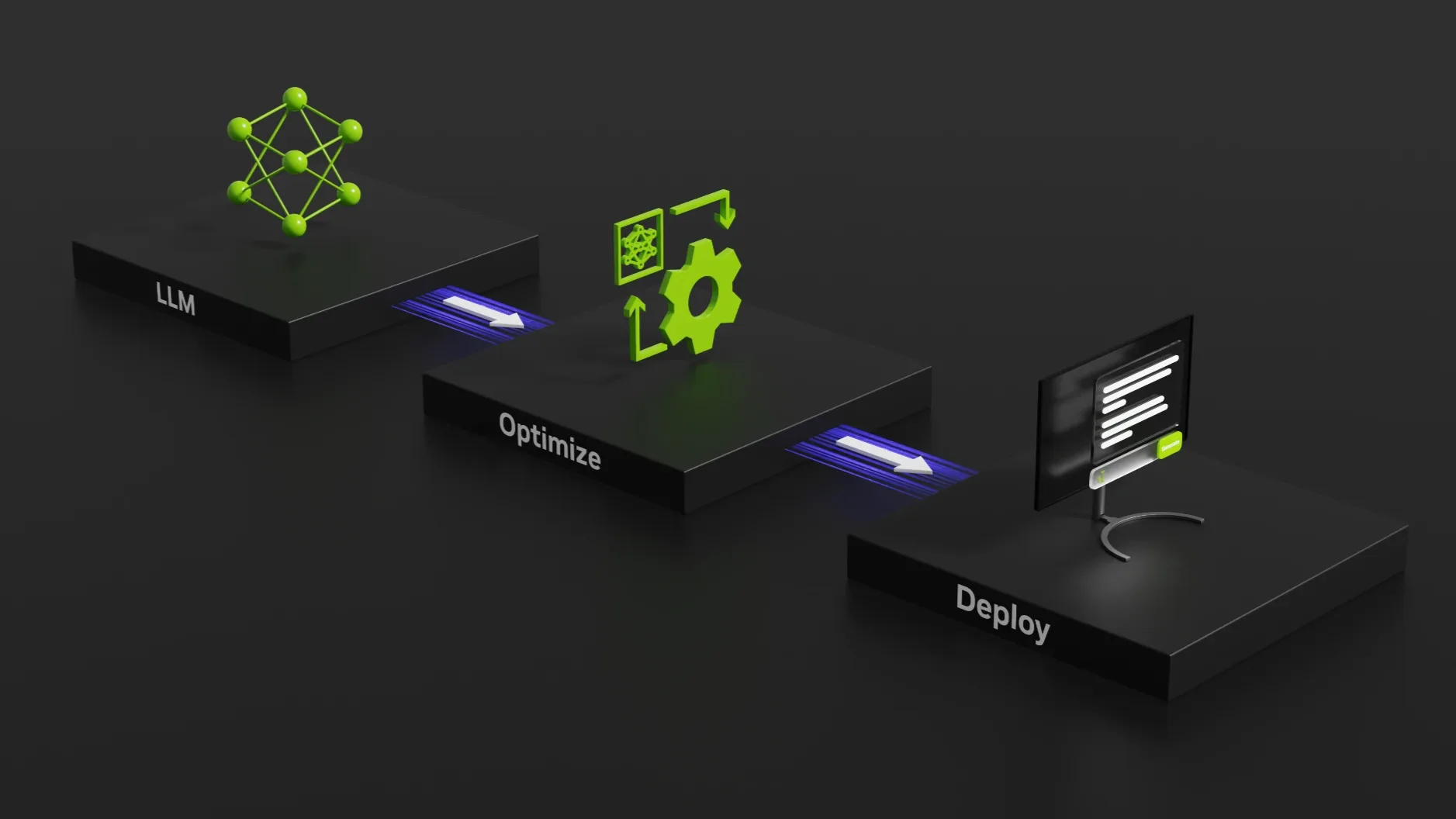
NVIDIA's TensorRT Model Connect, an open-source collection of C++ reference implementations for running AI models with its TensorRT software, was built around coding agents that work on small, separately checked changes. Model-specific knowledge stays with each model family, so agents can work on different families in parallel while limiting how far a faulty change can spread.
The engineering account describes reference comparisons, reproducible tests, and an independent QA role that tries to falsify each implementation's claims. It treats automated validation as the production constraint on how much generated code becomes usable software, and notes that shared build, runtime, and CI infrastructure can still affect several families. NVIDIA's earlier introduction explains the checkpoint-to-C++ deployment workflow this project supports.
- NVIDIA says the 128 model families tested on GB300 as of the July 29, 2026 release are not a measure of productivity. The count shows the project grows by adding independent units, not by extending one serial integration path.
- TensorRT Model Connect has three layers: TensorRT and CUDA as the stable base, Model Connect as a faster-moving integration layer, and per-family code that owns its builders, runtime pipelines, helper kernels, config and validation evidence.
- NVIDIA accepts duplicated code between similar model families, since shared abstractions couple unrelated tasks and add merge conflicts. Code moves to shared infrastructure only when several independent owners need the same assumption-free contract.
- NVIDIA treats passing checks plus a bad artifact found by a human as a false success: reproduce it, encode the missing invariant, harden the procedure. QA shares the CI pipeline but acts as an organizationally independent red team.
- NVIDIA lists open limits for the preview: more parallel agents can raise validation demand faster than accepted output, reference implementations are not infallible oracles, isolation cannot stop shared-infrastructure failures, and humans start most tasks.
 articleScaling NVIDIA TensorRT Performance Optimization Beyond a Single Build Route with the Global Performance Tuner, Part 2
 articleAccelerating Mamba-2 with High-Performance Forward Pass Kernels in NVIDIA CUDA Tile
 articleScale Agentic Coding Workflows with Meta’s Muse Spark Open on NVIDIA GB300 NVL72
 articleOptimizing Agent Reliability and Tool Calling Efficiency for Chip Design Using NVIDIA NeMo Gym
Checking sign-in…
Loading comments…