Claude Messages API adds server-side message threads in beta
- Source
- x.com
- Date
Anthropic put message threads into public beta on the Claude Messages API. The server now caches conversation state between turns, so a client sends only the new messages and the ID of the prior message rather than resending the entire conversation on every request. Anthropic says this lets Claude begin responding sooner. Until now the Messages API was stateless: every turn of a multi-turn app or agent loop carried the whole history, so request payloads grew with each step. Threads move that state to the server, which matters most for long-running agents whose transcripts are large. The announcement did not cover pricing, limits or how long thread state is retained, so those terms are still open for teams deciding whether to move production traffic onto the beta.

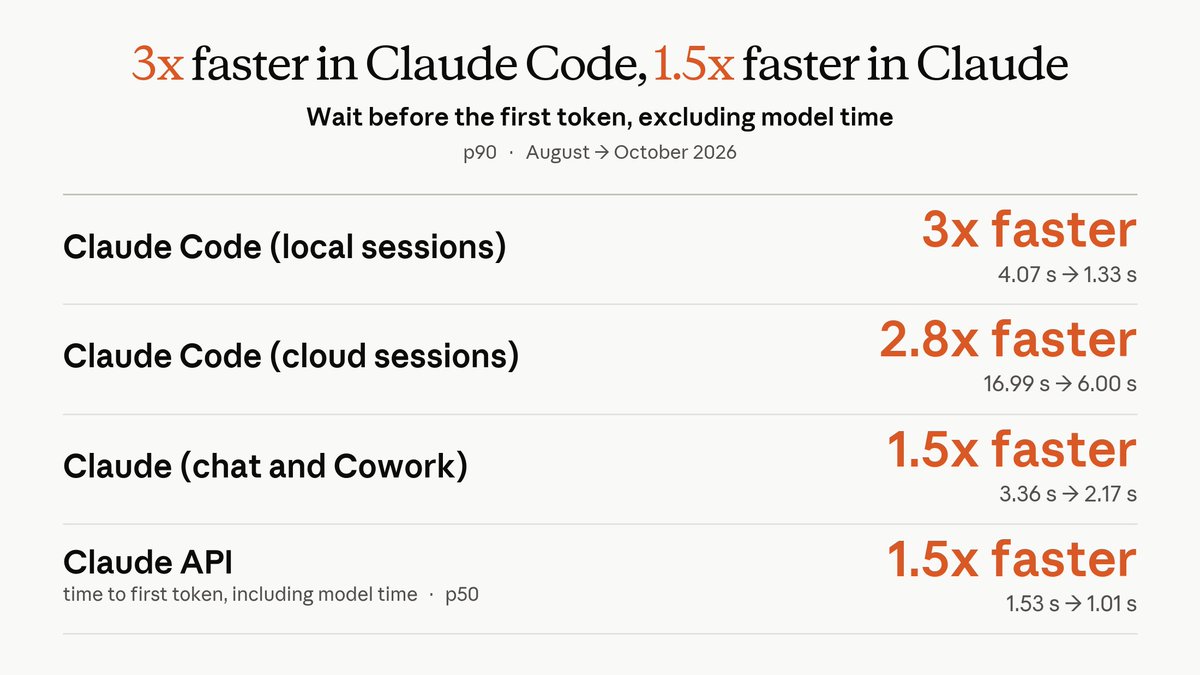
Message threads are now in public beta on the Messages API. The API caches your conversation on the server between turns, so instead of resending the full conversation, you send only new messages and the previous message ID, and Claude starts responding sooner.

Context
Anthropic has put message threads into public beta on its Messages API, the interface developers call to send Claude a conversation and get its reply. Without a thread, every turn of a chat or uploads the whole conversation again, and the API validates and tokenizes all of it again. With a thread, the first request sends the full conversation along with the and tools, and the API stores it under the ID of Claude's response. Each later request sends only the new messages and the ID of the previous response, and the API rebuilds the conversation before it calls the model (Anthropic documentation).
The benefit is speed. The ClaudeDevs announcement says Claude "starts responding sooner," and the documentation says the wait for the first token stays lower and steadier as a conversation grows, with long agent loops gaining most. Neither gives a measured figure. The post says the API caches the conversation, but that storage is not : the documentation says a thread "does not cache your prompt for you," and developers who want prompt caching still request it with its own cache_control setting. Threads do not change pricing or rate limits.
The stored copy is brief and best-effort. A thread expires five minutes after its last request, and the API deletes it no more than an hour after its last use. It is held in memory and never written to durable storage, and the feature is not eligible for zero data retention. When the API can no longer continue a thread, the request returns a 404 error, and the has to resend the full conversation to start a new thread. Anthropic tells developers that their application stays the source of truth and should keep its own copy of every message; the SDK's thread helper keeps that copy in memory only, and performs the resend automatically.
- Agent loop — A cycle in which an agent observes, decides, acts, and interprets the result.
- system prompt — The standing instructions a model receives before any user input — defining its role, rules, tools, and tone for the whole conversation.
- prompt caching — Reusing the model's processed form of a repeated prompt prefix so subsequent calls skip re-reading it, cutting cost and latency substantially.
- Application — Software arranged so that a person can use it; in this course, the software around a model that accepts your request, prepares the context and shows the reply.

Checking sign-in…
Loading comments…