Eleven V4
- Source
- elevenlabs.io
- Author
- ElevenLabs editorial sitemap
- Date
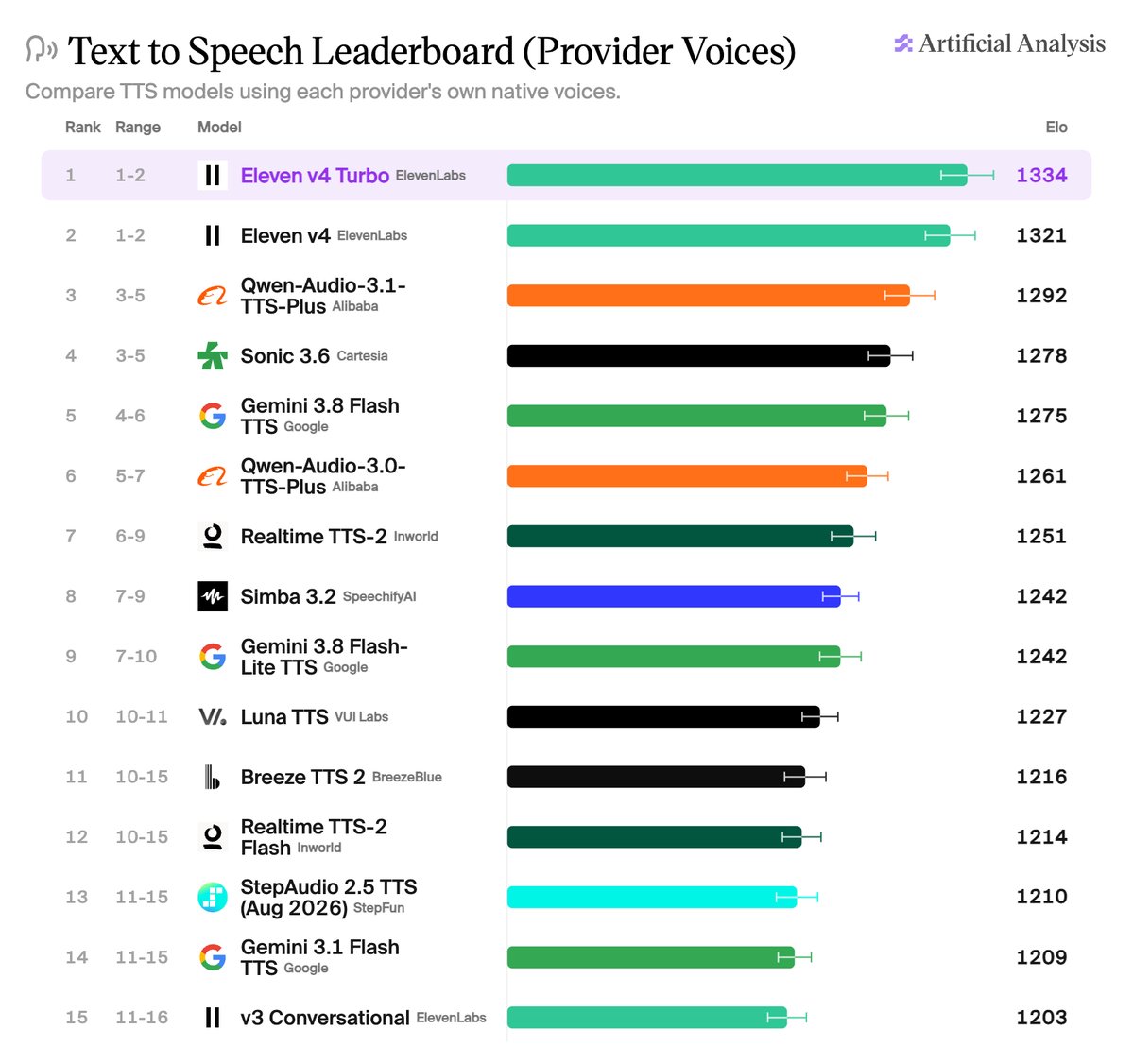
Eleven v4 adds inline tags for controlling delivery, such as emotion and sound effects, along with better consistency across multiple speakers, improved voice cloning and phoneme support. The Turbo variant targets live agents with roughly 100ms median latency. In ElevenAgents, v4 Turbo is paired with the company's transcription and turn-taking models, supports more than 90 languages, allows switching language in the middle of a call and includes a pronunciation dictionary for brand and place names. Latency is usually the binding constraint for voice agents, so a faster voice frees budget for the model and tools behind it. The ranking and listener-preference claims in the announcement are vendor-reported, so test with your own scripts and languages before switching.
Context
ElevenLabs' Eleven v4 gives creators more ways to direct how generated speech is performed. Its launch article describes natural-language delivery instructions and inline audio tags for emotion, accents and sound effects. This gives a narrator or character a specified delivery alongside the words being spoken.
The company also says the model uses a scene's when generating dialogue and preserves speaker identity across lines and regenerated passages. Those capabilities target a practical production problem: changing a performance without losing the character's recognizable voice. The announcement makes v4 available through ElevenCreative, ElevenAgents and the API.
- ElevenLabs bases its ~75% listener preference claim on blind head-to-head tests against Cartesia Sonic 3.6, Inworld TTS-2 and two Gemini 3.8 TTS models, with graders judging expressiveness and naturalness and ties counted as half.
- Separate from v4 Turbo's ~100ms median latency, ElevenLabs reports a median time from request to audible speech of ~150ms over WebSocket , with network latency measured and removed for all compared systems.
- Both models support more than 90 languages, and ElevenLabs says a voice recorded in one language can speak another with a native accent while keeping its identity, with less drift back to the source accent.
- According to the post, Instant Voice Clones can now capture a voice from just 10 seconds of audio, and v4 adds Professional Voice Clone support for the highest-fidelity use cases.
- ElevenLabs says request stitching, which chains generations together for long-form content, is significantly more reliable in v4, improving long projects in Studio and the Reader app.
- context window — The maximum amount of text a model can consider at once — its working memory for the current conversation or task.
- inference — Running a trained model to get answers — the phase where AI is actually used, as opposed to trained.
- streaming — Sending a model's response token by token as it is generated, so the reader sees text immediately instead of waiting for the whole answer.

Checking sign-in…
Loading comments…