Accelerating vision-language models with LFM2.5-VL-DSpark
- Source
- huggingface.co
- Date
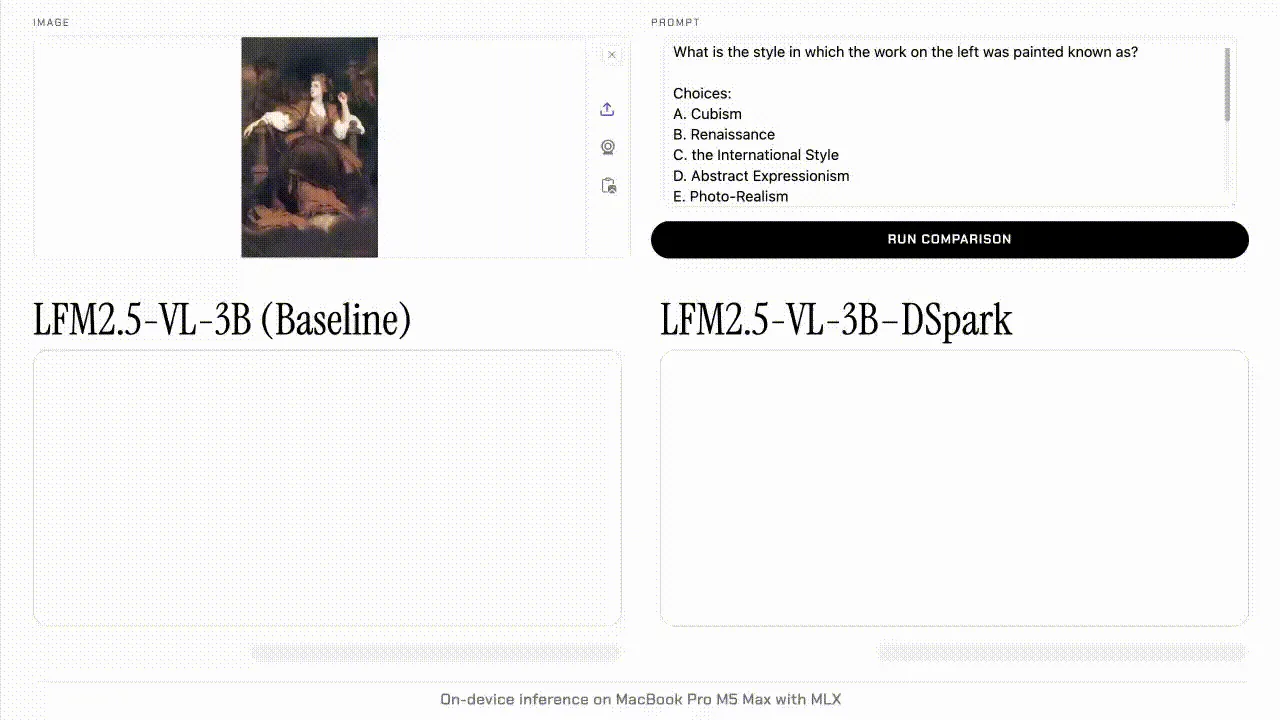
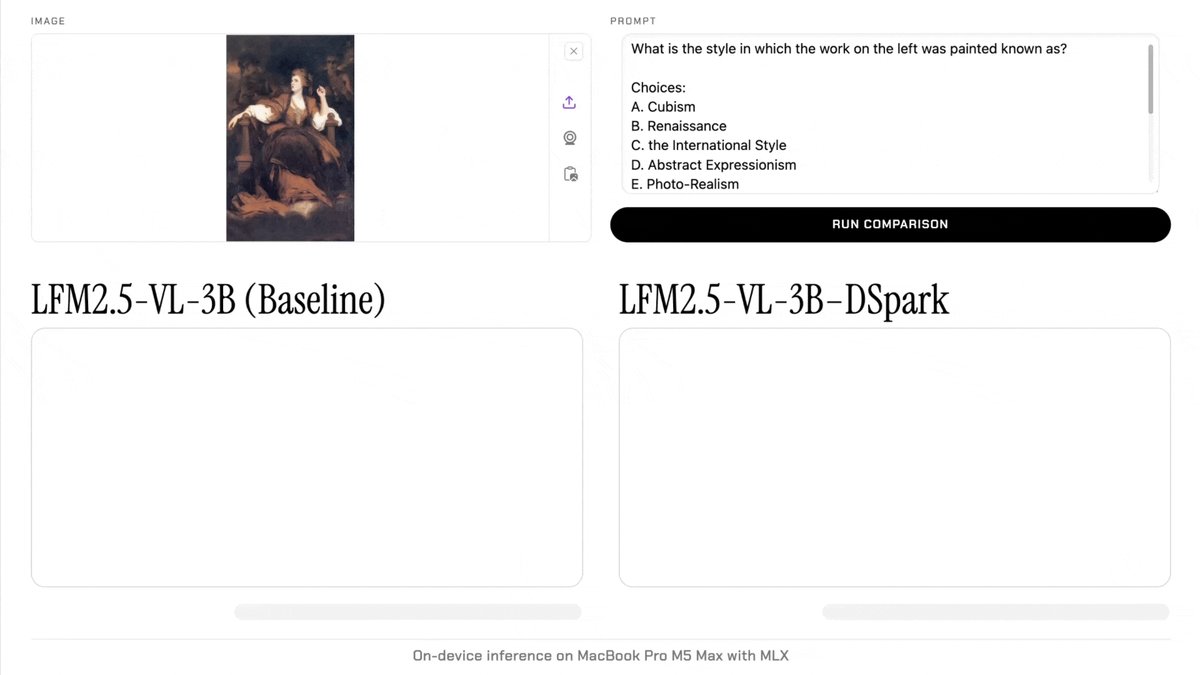
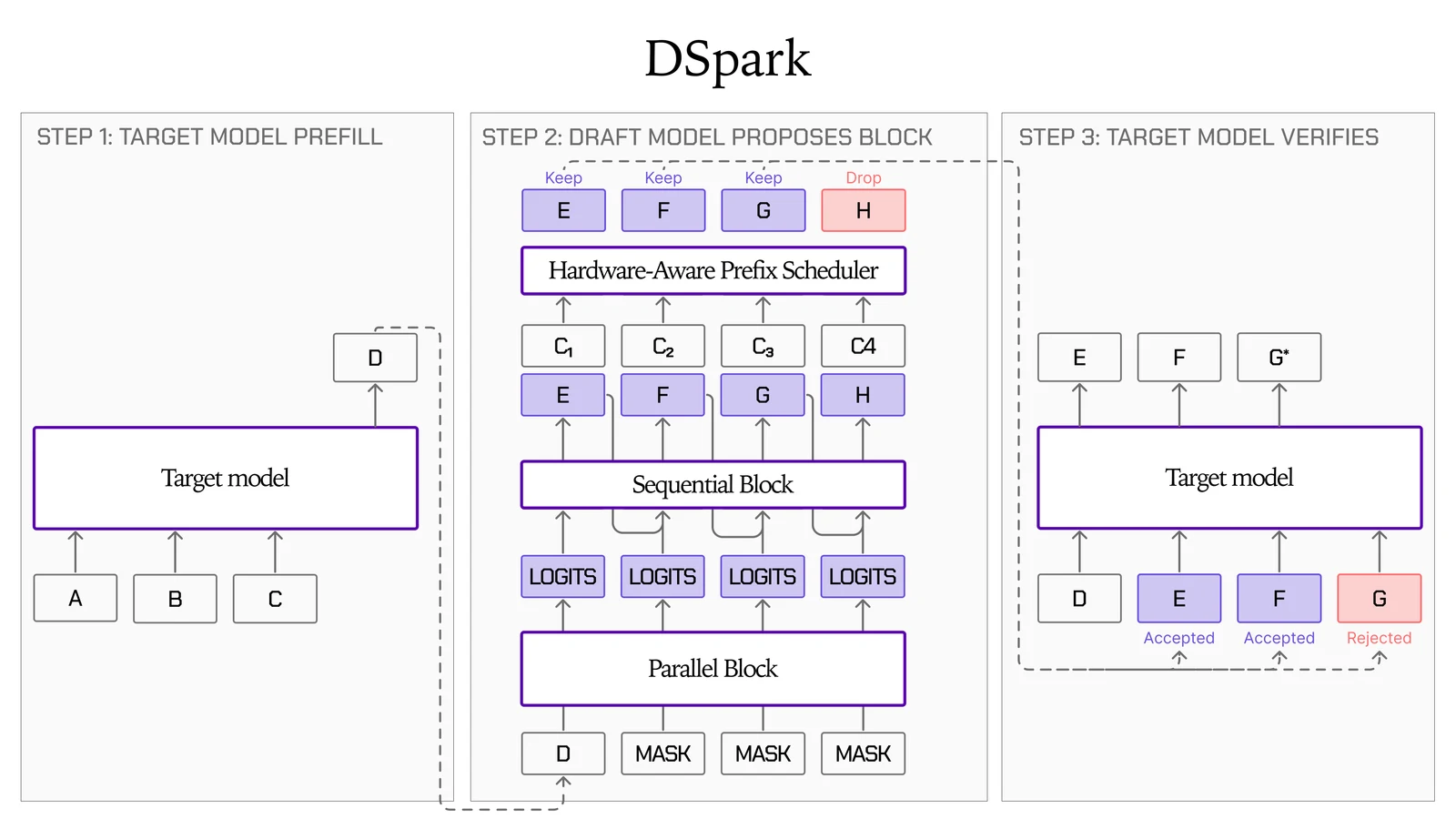
Speculative decoding, where a small draft model proposes tokens that a larger model verifies in parallel, is well established for text models but less common for vision-language models. Liquid AI's LFM2.5-VL-DSpark applies it to its 3-billion-parameter LFM2.5-VL model. The drafter shares representations with the main model and adds only 8.9% more parameters. Liquid reports decoding up to 3.13 times faster on MLX, 2.14 times on llama.cpp and 2.66 times on SGLang, with output quality unchanged because the full model still verifies every token. Support in all three runtimes is available from release, which makes it usable for both on-device and server deployments without custom integration work. The release is labeled experimental, and speedups from speculative decoding depend on how often the drafter's guesses are accepted, so results on real workloads may differ from the published figures.
Context
Liquid AI extends its earlier text-model drafters to a model that answers questions about images. A small companion model proposes several output for the main model to verify together. The release explanation reports 2.04 to 2.66 times faster text generation on a single H100 using SGLang, with one request at a time and deterministic decoding.
Whole-request gains were smaller, at 1.64 to 2.27 times, because image encoding and initial prompt processing still take the same work. This explains why a large improvement in answer-generation speed produces a smaller reduction in the total wait for a visual answer.
- token — The chunk of text a model reads and writes in — roughly three-quarters of a word — and the unit AI usage is billed in.
Checking sign-in…
Loading comments…