Opus 4.5's price cut to $5/$25 per million tokens roughly halves index run cost, but 60% higher token use means real savings are smaller than the headline suggests.
Key takeaways · AI-distilled
Artificial Analysis' November 2025 Opus 4.5 report found that lower tokenThe chunk of text a model reads and writes in — roughly three-quarters of a word — and the unit AI usage is billed in.Full definition → prices did not translate into an equally large task-cost reduction. The model used more tokens than Opus 4.1, while the evaluated index cost fell from about $3,100 to $1,500.
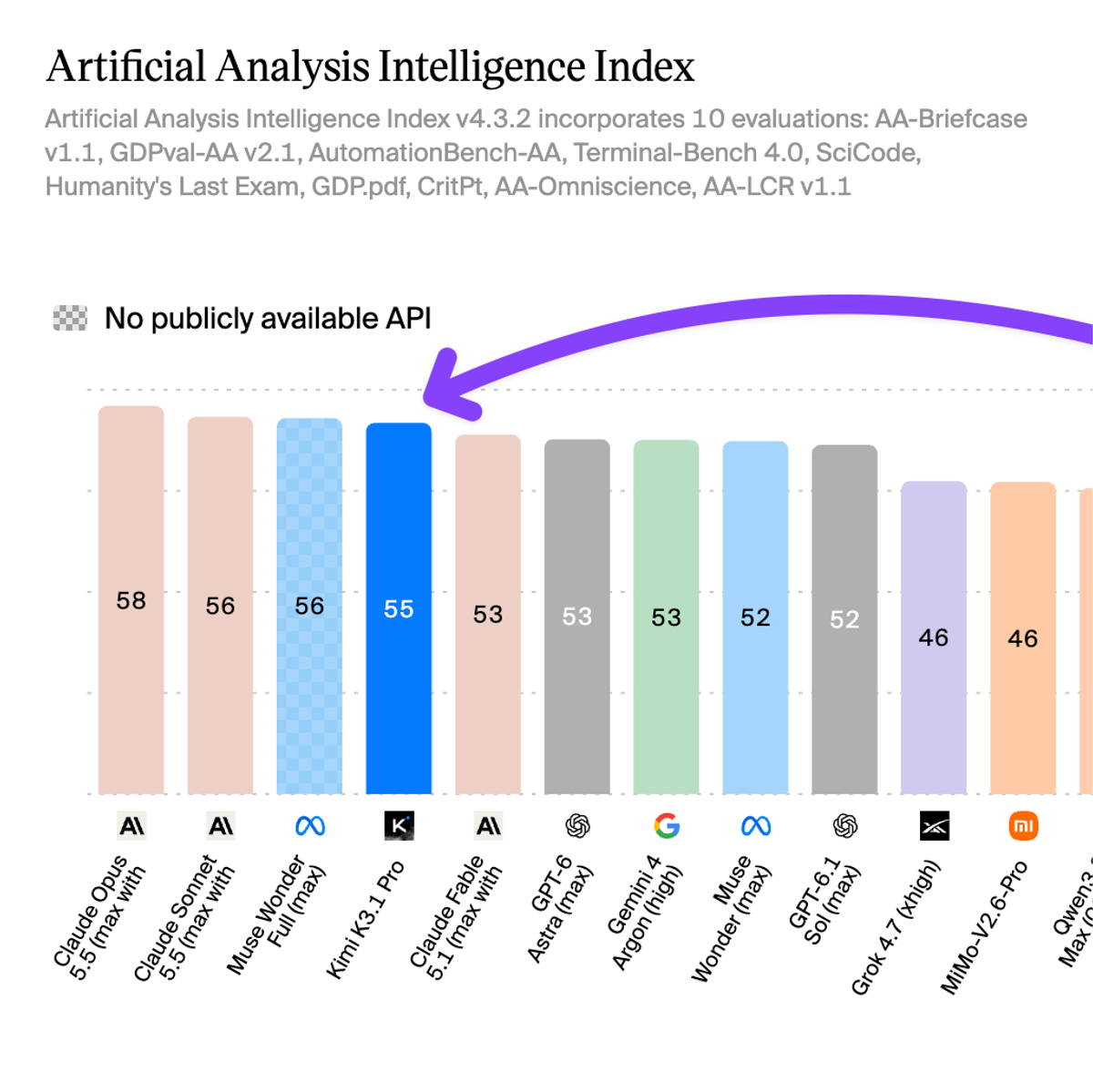
In November 2025, Opus 4.5 scored 70 with reasoning and 60 without it on Artificial Analysis' then-current Intelligence Index. Reasoning configuration was therefore part of the result, not an interchangeable deployment detail.
Artificial Analysis identified coding, agentic tasks and long-context windowThe maximum amount of text a model can consider at once — its working memory for the current conversation or task.Full definition → reasoning as major Opus 4.5 improvements over Sonnet 4.5 in November 2025. Individual benchmarkA standard public test set for comparing AI models — the shared scoreboards behind every "model X beats model Y" claim.Full definition → results showed where the aggregate gain came from.
Terms in this piece · Glossary
token — The chunk of text a model reads and writes in — roughly three-quarters of a word — and the unit AI usage is billed in.
context window — The maximum amount of text a model can consider at once — its working memory for the current conversation or task.
benchmark — A standard public test set for comparing AI models — the shared scoreboards behind every "model X beats model Y" claim.