From User Sequences to Scaling Laws: A Multi-Stage Architecture for Meta’s Ads Ranking
Source
engineering.fb.com
Date
Context
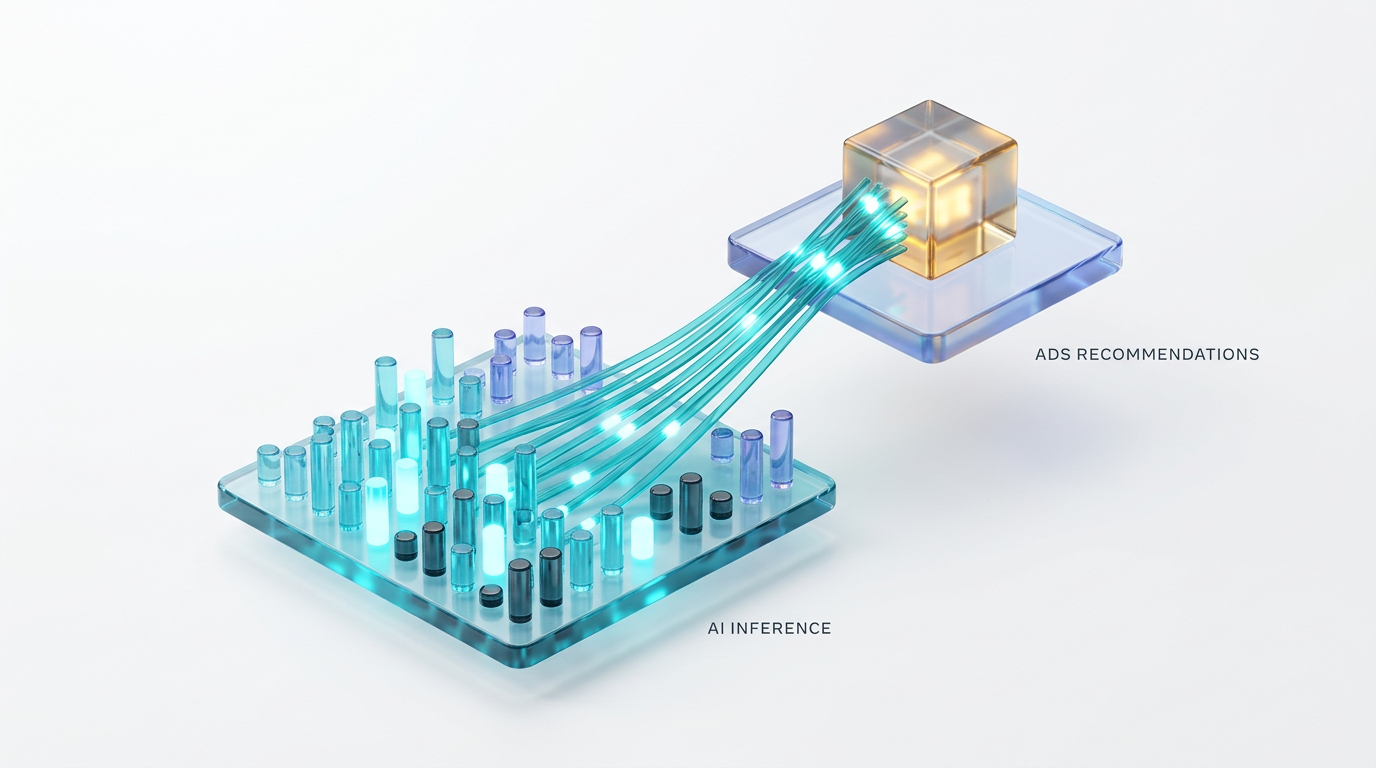
Meta's two-stage ads-ranking architecture processes long user histories before an ad-ranking request arrives. An offline model produces a cached numerical representation of a user's behavior, independently of any particular ad. A faster online model combines that representation with fresh user signals and information about the ads being considered, according to the architecture account.
The separation gives the expensive history model room to grow without putting all of its work inside the request's latency budget. Computation still happens, but its reusable result is prepared asynchronously; the online stage concentrates on the current ranking decision.
Terms in this piece · Glossary
attention — The mechanism that lets a model weigh which earlier words matter for the word it's currently processing — the core operation of a transformer.